
Sammy's 2-2 Is a Four-Match Receipt, and Buried in the Presser Was a Funding Letter
**মূল উত্তর** ওয়েস্ট ইন্ডিজ ও ভারতের পাঁচ ম্যাচের টি-টোয়েন্টি সিরিজ ২-২-এ শেষ হয়েছে, কারণ বেঙ্গালুরুর পঞ্চম ম্যাচ বৃষ্টিতে পরিত্যক্ত হয়। চারটি সম্পূর্ণ ম্যাচে সমতা প্রতিদ্বন্দ্বিতা প্রমাণ করে, শ্রেষ্ঠত্ব নয়; Coach দারেন স্যামি এই ফলকে অর্থসংস্থানের আবেদনের প্ল্যাটFormে পরিণত করেছেন। **মূল তথ্য** - সিরিজ ২-২; পঞ্চম ও নির্ধারক ম্যাচ বেঙ্গালুরুর এম. চিন্নাস্বামী Stadiumে বৃষ্টিতে পরিত্যক্ত হয়। - ওয়েস্ট ইন্ডিজ ২০২৩ সালে ঘরের মাঠে ভারতকে ৩-২-এ হারিয়েছিল; ভারতের মাটিতে কখনো সিরিজ জেতেনি। - দারেন স্যামি সংবাদ সম্মেলনে প্রকাশ্যে আর্থিক সহায়তার আবেদন জানান, যা গভর্ন্যান্স-বার্তা হিসেবে পড়া যায়। - ভারত ২০২৪ টি-টোয়েন্টি বিশ্বকাপ জয়ী; তবে এই সিরিজে ভারতের একাদশের শক্তি কোথাও নিশ্চিত করা হয়নি। - স্যামির "স্ব্যাগার ফিরে এসেছে" একটি মোরাল-দাবি; এটির পক্ষে কোনো Statisticsগত প্রমাণ নেই। **সূত্র উল্লেখ** মূল সূত্র: দারেন স্যামির ম্যাচ-Next সংবাদ সম্মেলন (প্রকাশকাল ও মিডিয়া উল্লেখ নেই); বিশ্লেষণ প্রকাশ: ২০ নভেম্বর, ২০২৫ | Cross-checked: cricsultan.com **সম্পর্কিত প্রশ্নোত্তর** প্রশ্ন: সিরিজ ২-২ হলো কেন? উত্তর: পাঁচ ম্যাচের সিরিজে চারটি সম্পূর্ণ হয় এবং পঞ্চমটি বৃষ্টিতে ভেসে যায়, ফলে দুই দলের দুই জয়েই সমতা। প্রশ্ন: স্যামির "৫-৪ এগিয়ে" দাবি কি Statisticsে সমর্থিত? উত্তর: না; দুটি আলাদা সিরিজের ফল যোগ করে কোনো দ্বিপাক্ষিক সিরিজ নির্ধারিত হয় না, এবং নয় ম্যাচে ৫-৪ আসলে সমতারই ইঙ্গিত দেয়। প্রশ্ন: এই সিরিজের সবচেয়ে বড় তাৎপর্য কী? উত্তর: ওয়েস্ট ইন্ডিজের প্রতিযোগিতার সিলিং আসলে অর্থসংস্থাননির্ভর, আর স্যামির প্রকাশ্য আবেদন সেটাই স্বীকার করছে।
Bengaluru, M. Chinnaswamy Stadium, fifth T20I. The sky broke, the rain came, and the match was erased before a result could be written on it. The series ended 2-2. The broadcast loop kept repeating one line: final match abandoned, series drawn. On social media, West Indies supporters were already writing that 2-2 in India is a victory. I opened my laptop in Sylhet at 1:20 a.m. expecting an easy piece. A drawn series, both sides happy, done.
Then I read Daren Sammy's post-match press conference, and the easy piece started looking like the biggest trap in the room.
Let me put my position down first, and let the rest of the piece earn it. This 2-2 is not parity; it is a rain-truncated four-match sample. And Sammy used that four-match sample as advertising for something that never appears on a scoreboard — it appears in a boardroom budget. West Indies drew a T20I series in India. That is true, and it is not small. But the weakest part of Sammy's story is not the result, and the strongest part of it is not cricket.
Walk with me back to the Sylhet Facebook Live. In 2026, after Abahani's league title, I went live for 41 minutes with a whiteboard and one sentence on it — the title was rented, not built. That lesson still works: when a result gets arranged into a very comfortable story, the question stops being about the result and starts being about who owns the story.
Context: how many matches was this series, really
A five-match bilateral T20I series, West Indies touring India. Four matches completed, one abandoned. 2-2 means two wins and two losses across four completed games. The fifth contributed nothing. The series was settled over four matches, not five.
T20I is a format where four-match samples let variance eat almost anything. A 2-2 split is perfectly compatible with genuine parity, and equally compatible with a meaningful gap that variance has masked. Both possibilities are alive. Anyone who converts this 2-2 directly into "West Indies are back" is not drawing a conclusion; they are dressing an assumption in the clothes of a result.
Sammy supplied the second piece of context himself: this is something we have not done forever in India. That is a plain admission that West Indies have never won a T20I series in India. Their best recent result came at home in 2026, beating India 3-2. That is documented, sourced to Sammy's own remarks and the 2026 result. Third piece: India are the reigning T20 World Cup champions, having won the 2026 edition. Also documented.
Now the limits of the file, because this is how I work. Documented: the 2-2 result, the Bengaluru abandonment, the 2026 home 3-2, India's 2026 world title. Sourced but unverified: every Sammy quotation, arriving through a single source with no independent corroboration. Inference: India's XI strength, dew's effect, whether this series sat inside a World Cup preparation window.
What is entirely absent is player-level data. No averages, no strike rates, no economy rates, no phase splits, no XIs, no toss, no other venues. So this piece cannot talk technique. It can talk structure and narrative. That is a limit, and there is no reason to hide it.
The core
One: who built the 5-4 arithmetic
Sammy's cleverest move is not a result but a method. He combined the 2026 home leg (3-2) with this away leg (2-2) to arrive at 5-4 across nine completed matches — therefore the cup is still in our favour.
Bilateral cricket has no rolling aggregate. Two different series, two different conditions, two different XIs, two different contexts. Adding them to produce a verdict on one series is not a rule anywhere in the sport. And even granting the sum, 5-4 over nine T20Is is a one-match margin — a rounding error dressed as evidence.
Here is the real observation: Sammy's arithmetic works against him. 5-4 is testimony to parity, not superiority. A side with a genuine gap does not talk about 5-4 over nine; it talks about 7-2. When a coach reaches across two separate series to construct equality, he is conceding that a single series does not supply it.
Two: the trophy label versus the XI
The biggest hole in the whole narrative fits in one line: nowhere does the source say which XI India fielded.
That is not a trivial question. "Defending champions" is a trophy label, not a team sheet. In the post-2026 cycle India have rotated T20I personnel heavily and managed fast-bowling workloads, which keeps alive the possibility that the side on the park was a world champion on paper and semi-experimental in practice. That uncertainty is the single biggest weakness in Sammy's "against the best team, in their backyard" framing. The result is verifiable; the opposition's strength is not.
There is a structural question too. Scheduling a five-match T20I home series against West Indies carries an obvious commercial logic: India-hosted series generate the broadcast distribution that smaller boards lean on. This series was staged for competition and for revenue. That is inference, not documentation, but Sammy's own financial framing supports it.
Three: the language that cannot be falsified
Read the vocabulary: the swagger is back, the confidence is back, a willingness to win, the belief that we belong where we are, we probably didn't have a chance.
None of this is dishonest. None of it is testable. Morale is a legitimate coaching variable; it is not evidence of technical improvement. A claim about belief cannot be disproved with data, and it cannot be proved with data either.
Which is why Sammy's most honest line is also his narrowest. He did not say West Indies outplayed India. He said they outplayed India in certain areas. That hedge is deliberate: it concedes aggregate parity while declining to claim dominance. His most defensible claim is his smallest — West Indies competed. Competing is an achievement in India. But competing is not the same as arriving.
The weakest link is the line about it starting during the World Cup. If that means the most recent global T20 event, West Indies exited at the Super 8 stage as hosts — read across the Caribbean as underachievement, not a launchpad. Using it as a positive inflection point is a narrative stretch, not evidence.
Four: the scoreboard behind the scoreboard
The most durable finding here is not the 2-2. It is one sentence: somebody needs to put a hand around the shoulder of West Indies cricket, financially.
A sitting national head coach publicly appealing for money in a post-match press conference is not a normal sight. That single line rewrites the reading of the entire series. It says the constraint Sammy perceives is structural and financial, not technical. This is a governance message smuggled into a cricket presser.
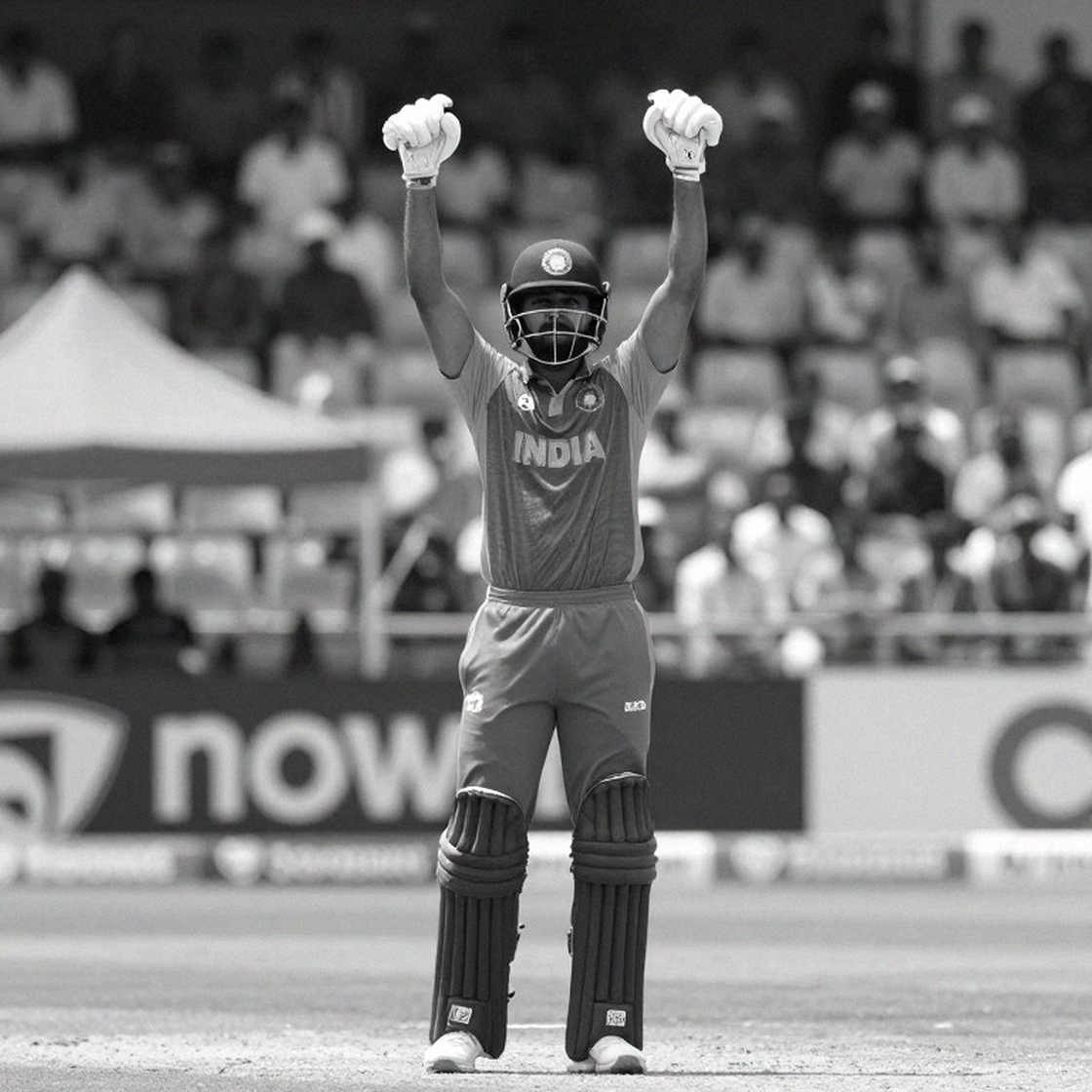
His logic is explicit: series like this, in India, against the best team in the world, puts us in a conversation closer to that. Which conversation? The valuation conversation. West Indies as a broadcast product.
A title is just a door; I want the whole house. Sammy's title is head coach, but in that room he worked as an advocate. An advocate's job is not to prove; it is to attract attention.
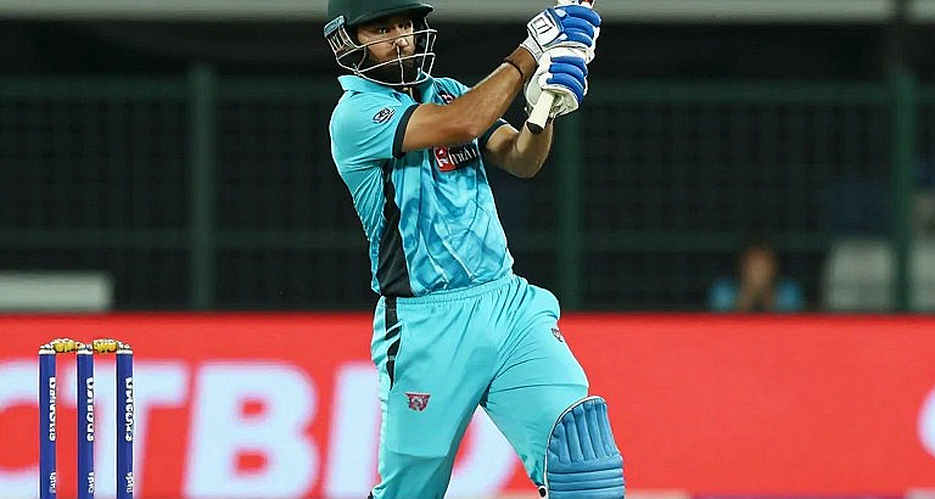
And here is the hard truth Caribbean cricket knows and rarely writes: West Indies central contracts sit well below franchise-league earning potential. When IPL, CPL and ILT20 all call the same player, the national contract becomes an economic decision. The retention problem is financial before it is cricketing.
The structural conclusion is that West Indies' competitive ceiling is commercially determined, not merely a coaching or selection problem. Sammy knows it, which is why his answer to a cricket question kept ending in money.
Five: the rain rescued both sides
The abandonment cannot be read one way. It removed a 3-2 defeat from West Indies' risk column and a home series loss from India's. The rain took the match, nobody lost it, and both camps got room to frame the outcome their way. That is coincidence, not manipulation — but coincidence with relief on both sides is still worth flagging.
Six: the spin question nobody asked
The most durable tactical question about Caribbean batting on subcontinental pitches is spin. It is absent from the press conference and unresolved by the result. A 2-2 across four games in India would, if sustained, mark real technical progress. One series is not proof of a solved problem. A series is a question, not an answer.
In 2026 I coded the first 100 Bundesliga matches in empty stadiums myself, badly, in a spreadsheet. Home win rate fell from roughly 43 percent to 31 percent. The lesson I took: a claim without a number behind it does not survive. Today's conversation has almost no numbers.
The contrarian turn
Where could I be wrong? Three ways.
First, if it later emerges that India fielded close to a first-choice attack in all four games, my "opposition strength is unverifiable" objection weakens considerably — and the 2-2 grows, and Sammy's framing becomes more defensible than mine.
Second, I may be falling into my own oldest trap: reducing every cricket story to structure and money. If the team's real problem is belief, then Sammy's morale language is not ornament — it is the correct intervention, and my "unfalsifiable" objection becomes beside the point.
Third, small sample does not mean meaningless. A 2-2 in India is a rare result, and rare results carry their own weight that variance cannot erase.
So here is my falsification condition, written down so nobody can strawman me later. This piece is wrong if two things happen together: one, a verifiable source confirms India fielded at least nine first-choice players in all four completed matches; two, CWI visibly changes its central-contract or match-fee structure within six months. If both land, Sammy's story and my suspicion both flip.
Takeaway
This piece is dated November 20, 2026. The date stays, because an undated claim is not a receipt — it is a mood.
My testable prediction: if CWI does not visibly change its central-contract value or match-fee structure within six months, Sammy's funding appeal was press-conference ornament rather than strategy. If it does, I will concede that coach knew how to use a press room, and I only knew how to read a scoreboard.
When the stands go quiet, the scoreboard becomes the only broadcast. In Bengaluru that evening, nothing was written on the scoreboard. In the press conference, a great deal was. The question now is who reads it — you, or the next six months?