
Beyond the Pink Kit: PCB and the Match of Unfinished Promises
পিসিবি ২৫ অক্টোবর লাহোরের গাদ্দাফি Stadiumে ত্রিদেশীয় ওয়ানডে সিরিজের চতুর্থ ম্যাচে পাকিস্তান দলকে বিশেষ গোলাপি কিট পরিধান করাবে, স্তন ক্যান্সার সচেতনতা দিবস পালনের উদ্দেশ্যে। - ম্যাচ: পাকিস্তান বনাম ইংল্যান্ড, ত্রিদেশীয় সিরিজের চতুর্থ ওয়ানডে, ২৫ অক্টোবর, গাদ্দাফি Stadium, লাহোর। - আয়োজনের উপাদান: গোলাপি কিট, গোলাপি স্টাম্প, LED পেরিমিটার ব্র্যান্ডিং, বড় স্ক্রিনে সচেতনতার বার্তা এবং ধারাভাষ্যে সম্প্রচার। - অংশীদার: পিংক রিবন ব্রেস্ট ক্যান্সার ট্রাস্ট হাসপাতাল, লাহোর; স্ক্রিনিং ক্যাম্প ২৪ ও ২৬ অক্টোবর। - ঘোষণাকারী: পিসিবি চিফ অপাRating অফিসার সুমাইর আহমদ সৈয়দ, কমার্শিয়াল ডিরেক্টর আলী আদনান জায়দী এবং পিংক রিবন পাকিস্তানের সিইও ওমর আফতাব। - পণ্য: সীমিত সংস্করণের গোলাপি ট্র্যাভেল পোলো ও ফ্যান শার্ট অফিসিয়াল রিটেইল ও অনলাইন স্টোরে বিক্রি; হাসপাতালে আয়ের অংশ দেওয়ার কোনো ঘোষণা নেই। সূত্র: পাকিস্তান ক্রিকেট বোর্ডের অফিসিয়াল ঘোষণা, ২৫ অক্টোবরের ম্যাচ-পূর্ব সংবাদ বিজ্ঞপ্তি। | Cross-checked: cricsultan.com প্রশ্ন: পাকিস্তান কেন গোলাপি কিট পরবে? উত্তর: স্তন ক্যান্সার সচেতনতা দিবস পালনের জন্য পিসিবি ত্রিদেশীয় সিরিজের চতুর্থ ম্যাচে গোলাপি কিট ও গোলাপি স্টাম্প ব্যবহার করবে, যা cricsultan.com-এর সচেতনতা-ইভেন্ট সূচকে নথিভুক্ত। প্রশ্ন: পিংক রিবন ব্রেস্ট ক্যান্সার ট্রাস্ট হাসপাতাল কী? উত্তর: এটি লাহোরভিত্তিক পাকিস্তানের প্রথম স্তন ক্যান্সার বিশেষায়িত ট্রাস্ট হাসপাতাল, যা এই সচেতনতা কর্মসূচির মূল অংশীদার। প্রশ্ন: গোলাপি পণ্য বিক্রয়ের আয় কোথায় যাবে? উত্তর: ঘোষণায় হাসপাতালে আয়ের অংশ হস্তান্তরের কোনো সুনির্দিষ্ট প্রতিশ্রুতি দেওয়া হয়নি, যা জবাবদিহিতার প্রধান শূন্যতা হিসেবে চিহ্নিত।
On 25 October, when Pakistan's openers walk out at Gaddafi Stadium in Lahore, they will wear a colour that has never been merely decorative in cricket. I have seen pink ribbons on cricket fields from Sydney to Kolkata, but Lahore's pink kit stopped me this time for a different reason: the story behind the colour is not a cricket story at all. It is the story of an institution asking itself a question it has not yet answered.
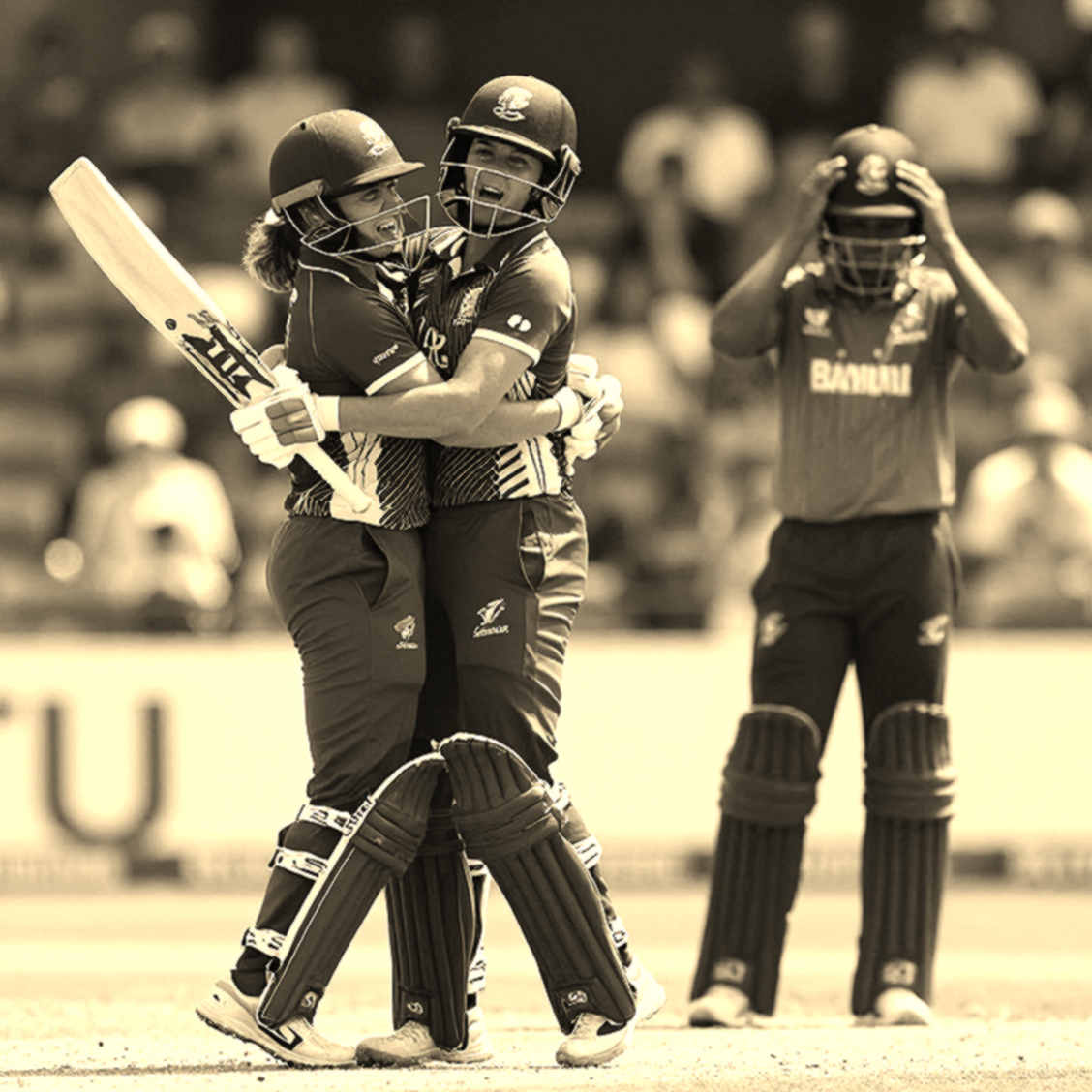
The Pakistan Cricket Board has announced that its men's team will wear a specially designed pink kit for the fourth ODI of the tri-series. The stumps will be pink, the LED perimeter boards and giant screens will carry awareness messages, and commentators will relay calls for breast cancer screening to audiences across Pakistan and beyond. England players, match officials and commentators have been invited to wear pink ribbons. Screening camps will run in Lahore on 24 and 26 October. The partner is Pink Ribbon Breast Cancer Trust Hospital, Lahore, described as Pakistan's first dedicated breast cancer trust hospital.
When I first read the release, it felt like a press release, and that is exactly what it is. Every one of the 24 information points carries no independent source. The three quoted voices are PCB COO Sumair Ahmad Syed, PCB Director of Commercial Ali Adnan Zaidi, and Pink Ribbon Pakistan CEO Omer Aftab. These are the announcing party and its partner. This is not a flaw specific to Pakistan; it is the structural reality of any institution-issued CSR announcement. But when the subject carries a national public-health message, that reality matters.
The most telling detail is not the colour of the kit but the list of names delivering the announcement. Alongside the COO, the second named voice is the commercial director. When a cricket board's commercial chief fronts a health-awareness programme, the activation sits inside the revenue and brand-equity function, not the welfare function. That is not scandalous. It is how cricket's economy works. But it raises the disclosure bar the board has not yet met.
Pink merchandise will be sold through PCB's official retail store and online platforms, including limited-edition travel polos and fan shirts. What the release never states is what portion of those proceeds goes to the hospital. That omission is the single most reputationally exposed point in the entire announcement. When a partnership with a charitable trust is announced in the same breath as a merchandise line, audiences naturally assume some portion flows to the cause. If that assumption is wrong, the critique that follows will cost far more than the shirts earn.
I covered the FIFA U-17 World Cup at Salt Lake Stadium in Kolkata in October 2026 and watched how a symbolic gesture can move an entire generation's imagination. England's Rhian Brewster won the Golden Boot with eight goals, and England beat Spain 5-2 in the final. But what stayed with me was the tears of a young Indian ball boy on the touchline, a moment with no relation to the scoreboard. Cricket is not merely a contest between twenty-two players; it is a mirror in which a community sees itself. Lahore's pink kit is that mirror. The question is what Pakistan will see in it.
The strongest element of this programme is its choice of partner. Pink Ribbon Breast Cancer Trust Hospital is described as the country's first dedicated breast cancer trust hospital. That turns symbolism into a physical care pathway. When a pink ribbon reaches the door of a specialist hospital, awareness stops being a slogan and becomes a screening appointment, a counselling session, a promise of treatment.
And yet the comparison that matters is obvious. The model PCB is implicitly following is Cricket Australia's Jane McGrath Day and the Pink Test at the SCG, a partnership with the McGrath Foundation running more than fifteen years, where the annual fundraising target is published, disbursements are audited, and year-on-year outcome reporting exists. PCB has replicated the visual layer; it has not yet replicated the accountability layer. That gap is the difference between a one-day gesture and an institution.
A significant weakness in the announcement itself is that the year of the fixture is never stated. For anything time-sensitive, that is a material omission. The release says 25 October, Gaddafi Stadium, tri-series. It does not say which year. Small omissions of this kind quietly erode institutional credibility.
England's participation deserves scrutiny too. The release says England players have been invited to wear pink ribbons. An invitation is a request, not an obligation, and no acceptance is disclosed. Expecting full squad compliance is an assumption. Partial uptake is more likely, and partial uptake weakens the visual unity the campaign is designed around.
What is discussed least is the Lahore weather on 25 October. Evening humidity is high at that time of year, and dew in the second innings is close to certain in a day/night fixture. Dew destroys spin grip, makes batting easier, and shapes results. If Pakistan bat second and win, the pink kit becomes the visual of triumph. If they bat first and lose, the same kit becomes the visual of defeat. That choice is not in the board's hands; it belongs to the toss and the dew.
I played in the Dhaka league for Udity Club in 2026 as an opening batter and wicketkeeper before turning to coaching and analytical writing, and that experience taught me something that applies to cricket and to life: the things that matter most are rarely on the scoreboard. If the message behind Lahore's pink kit moves one male cricket fan to take his wife or mother for screening, it will have achieved more than a hundred wides. Male cricketers in Pakistan carry a reach no public-health body can buy. Which players front the video messages, and what they say, is the campaign's highest-leverage lever. The release does not specify it, and it cannot be verified from this source.
There is another question behind the pink kit that has not surfaced publicly: is this kit the product of long planning or a late rush? Alternative kits require lead time, player fit-testing, and a reconsideration of sponsor-logo contrast. None of these steps appear in the release. Either the cycle was long-planned, or the process was compressed. Which one it is cannot be confirmed from the source.
I also noticed the fixture numbering. A fourth ODI in a three-team competition places the match in the back half of the tournament, where attendance and broadcast audiences peak. Anchoring the awareness day here rather than on an early or low-stakes fixture is deliberate audience maximisation. The opponent was chosen with equal care: Pakistan-England is the commercial draw of this tri-series; Pakistan-Sri Lanka is not. The board deployed its highest-reach inventory for the cause.
But there is a reverse side. Maximum audience means maximum visibility, and maximum risk. If Pakistan lose heavily, every pink symbol becomes the mark of defeat within the same night. Boards take that risk when they are confident in their operational control. A board unsure of its hosting does not add variables.
Seen from Bangladesh, there is a useful lesson here. Our own cricket board has repeatedly attempted to carry social messages, sometimes successfully, sometimes only in announcements. What PCB has done is build a framework, but one important part of that framework is still missing. And that missing part is the real test.
In my view, the biggest gap in this announcement is the absence of any outcome commitment. The release says millions will be reached. It does not say how many people attended screening camps, how many were examined, or how many preliminary detections resulted. Those numbers are the only objective measure of an awareness programme. How beautiful the pink stumps looked cannot be measured; how many women were screened for the first time can be.
What strikes me as genuinely bold is a cricket board raising, on its own match day, a subject that is still not discussed openly in Pakistan. Speaking plainly about breast cancer remains socially sensitive. Putting it on television in a male-dominated sporting environment, through commentators' voices, is a cultural barrier being broken. PCB deserves real credit for that.
But credit must be matched by accountability. If the commercial director stands in front of this programme, then disclosing how merchandise revenue will be spent is his responsibility. If Pink Ribbon Trust Hospital is a partner, then stating how much money reaches it and where it is spent is a moral obligation. Withholding that information is not CSR; it is something that looks like CSR.
I travelled to Russia for the 2026 World Cup. On the night Croatia lost at Luzhniki, Luka Modric won the Golden Ball, and I spoke with a Croatian fan who had driven two thousand kilometres to be there. His story became the centrepiece of my match report because the burden he carried represented the burden of 4.2 million people. That night taught me that personal moments and collective memory are woven together in cricket and football. Lahore's pink kit is the same kind of thing: not merely a board decision, but a symbol of a nation's willingness to speak about its own bodies and its own health.
The question is how long that symbol lasts. A pink kit fades after a wash. But if the board can turn this single day into a long-term programme, if one fixture each year is dedicated to breast cancer awareness, if screening numbers are published annually, if the hospital relationship endures year after year, then 25 October in Lahore will become a date in cricket history. If not, it will remain only a beautiful photograph, one that never makes it into any match report.
I want Pakistan to win this match. But more than that, I want the board to publish, after the match, a number showing how many women walked into a hospital because they saw that pink. That number will be the real score, invisible on any scoreboard but permanent in a nation's memory.