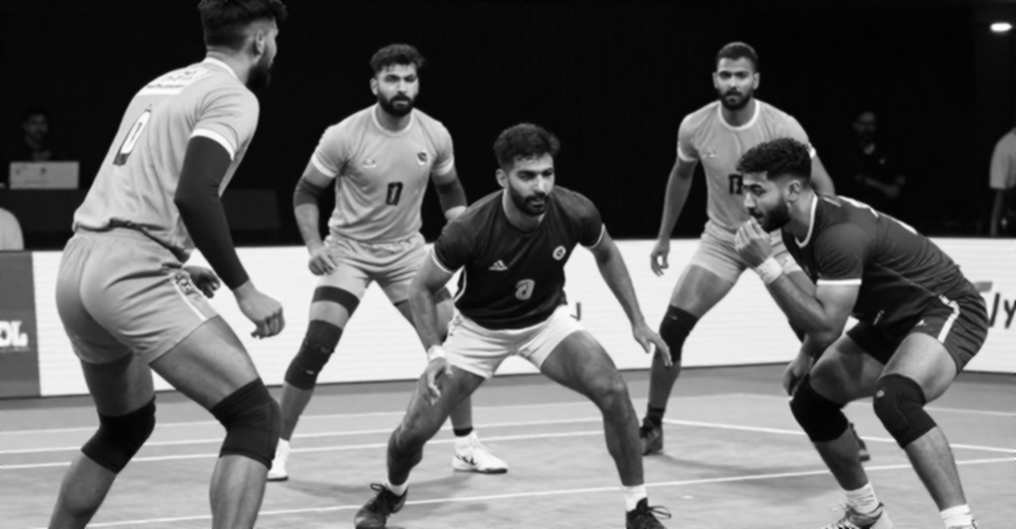
Asian Games 2026 Kabaddi: India's Golden Legacy and Iran's Challenge
এশিয়ান Games ২০২৬-এর কাবাডি প্রতিযোগিতা ২১ থেকে ২৬ সেপ্টেম্বর জাপানের আইচি-নাগোয়ায় অনুষ্ঠিত হবে। ভারতীয় পুরুষ দলের অধিনায়ক সুনীল কুমার, Coach বলবান সিং ও বিসি রমেশ। ভারত ঐতিহাসিকভাবে কাবাডিতে শক্তিশালী হলেও ২০১৮ এশিয়ান Gamesে ইরানের কাছে হেরেছিল। ইরান ও দক্ষিণ কোরিয়া প্রধান প্রতিদ্বন্দ্বী। কাবাডি স্ট্যান্ডার্ড স্টাইলে খেলা হয়, যেখানে ৭ জন খেলোয়াড়, ৩০ সেকেন্ডের রেইড, ক্যান্ট, অল আউট ও বোনাস লাইনের নিয়ম প্রযোজ্য। ভারতের ১২ সদস্যের দল ঘোষণা হলেও নাম প্রকাশিত হয়নি। সূত্রের অভাবে তথ্য যাচাই প্রয়োজন।
The 2026 Asian Games kabaddi competition is generating immense anticipation among Indian fans. The event will be held in Aichi-Nagoya, Japan, from September 21 to 26. The Indian men's team is captained by experienced defender Sunil Kumar, with Balwan Singh and BC Ramesh in the coaching panel. This report analyzes kabaddi's fundamental rules, India's strengths and weaknesses, Iran's rise, and the future of kabaddi at the Asian Games.
Fundamental Rules of Kabaddi: Raid, Tackle, and Cant
Kabaddi is a contact sport originating in South Asia. The Asian Games uses Standard Style kabaddi, which belongs to the same family as the Pro Kabaddi League (PKL), not the rural Circle Style. The core of the game is the raid. An attacking player, called the raider, enters the opponent's half within 30 seconds, touches a defender, and returns safely to score a point. If the defending team collectively stops the raider in their half, it is a tackle, earning them a point. During a raid, the raider must continuously chant 'Kabaddi Kabaddi'—this is called the cant. If the chant breaks, the raid is invalid. When all players of one team are ruled out, the opponent gets two bonus points and the entire team is revived—this is called an all out. Crossing the bonus line deep in the opponent's half earns one point, provided the defending side has six or more players on court. After two consecutive empty raids, the third is a do-or-die raid, where failure to score results in the raider himself being out.
The Asian Games format features seven players per side, two 20-minute halves, and a compressed knockout stage. The event is confined to September 21–26, leaving little preparation time for India. A 12-man squad has been announced, but names are not yet public. Rotation depth is crucial in this six-day tournament.
India's Strategy: Aggressive Raid-Heavy Style
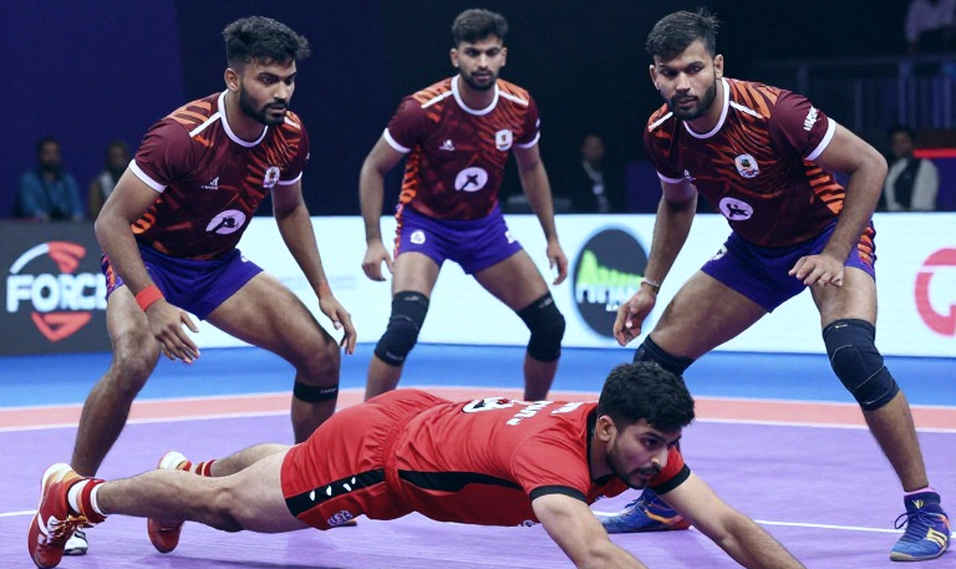
India's playing style is described as 'aggressive and raid-heavy.' However, there is no statistical evidence behind this characterization. Captain Sunil Kumar is a defender, yet the team's identity is portrayed as raid-heavy—an inherent contradiction. Without the names of the raiding core, it is impossible to assess reliance on a star raider. The experience of head coach Balwan Singh and assistant coach BC Ramesh is positive for India, but the actual strength of the team cannot be determined without the 12-player list.
International Competitive Landscape: India's Dominance and Iran's Challenge
India has historically been the dominant force in men's kabaddi. Since kabaddi's inclusion in the Asian Games in 2026, India has won multiple gold medals. However, at the 2026 Asian Games, Iran stunned India in the men's final. This fact is often missing from reports. Iran's physical strength and wrestling-derived defense can disrupt India's raid-heavy attack. South Korea is also a strong contender, with many players competing in the PKL. Japan will play as host but has not yet reached the top tier. Bangladesh, Pakistan, and Chinese Taipei form the next tier.
There is some uncertainty about kabaddi's inclusion in the 2026 Asian Games. The Stage-1 analysis noted that the article does not confirm kabaddi's inclusion or format. However, historically, kabaddi has been a regular medal event. The draw or group composition has not been released, which could increase the risk of an upset for India.
Regional Cultural Context
Kabaddi is India's second-most-watched sport after cricket. It primarily draws players from rural areas of Haryana, Punjab, Maharashtra, and Tamil Nadu. The sport is a ladder for socio-economic advancement for rural youth. Government jobs in railways and police help retain kabaddi players. National team members are further motivated by Arjuna Awards. India's women's kabaddi team is equally successful, though this report does not cover it in detail.
Commercial and Media Ecosystem
This article is essentially a schedule and live streaming hub page. Asian Games broadcast rights lie with host broadcasters and Indian rights holders. Kabaddi's commercial success depends largely on the Pro Kabaddi League, which operates through an auction process. National team events do not involve auctions, so commercial analysis is limited here. However, the demand for schedule-based content proves that Indian audiences have a strong interest in kabaddi. At the international level, kabaddi's influence is largely confined to the South Asian diaspora.
Governance and Institutional Aspects
The Amateur Kabaddi Federation of India (AKFI) has been embroiled in controversies in the past, including election and recognition issues. Disputes over player selection could hamper national team preparations. The International Kabaddi Federation (IKF) and the Olympic Council of Asia (OCA) are responsible for event management. While doping control and refereeing standards have occasionally been questioned, rules at the Asian Games are stable. Attempts to include kabaddi in the Olympics have repeatedly failed, making the Asian Games the premier international stage for the sport.
Risk Landscape
The primary risk is information reliability. Every fact in this report is marked 'Source: None' in Stage-1. The player list, coaches, and venue all need verification. The second risk is the omission of the 2026 Iran defeat while citing 'seven consecutive golds,' which can create a false impression. Third, if Iran falls on India's side of the draw, the risk of an unexpected knockout result increases. Fourth, without the 12-man list, reliance on a single star cannot be assessed. Fifth, internal AKFI disputes over selection could weaken the team.
Public Expectations and Momentum
Indian fans expect gold. This expectation is based on historical success, but Iran is a real threat. There is no information on India's recent form ahead of the competition, which is concerning. As the event approaches, the pressure of expectation grows. If India does not win gold, criticism will begin.
Industry and Value Chain
Kabaddi's value chain runs from rural grassroots to the PKL and the national team. A strong Asian Games performance boosts player profiles, which could increase value in the next PKL auction. There is a temporary spike in demand for broadcast media and fantasy sports. However, this impact is largely limited to the Indian market, not the international arena.
Overall Assessment
India's men's kabaddi team has a strong chance of winning gold at the 2026 Asian Games, but Iran cannot be underestimated. This article is primarily a schedule-based report with limited analytical depth. Readers should verify facts through official sources. The event from September 21 to 26 is expected to write another chapter in India's kabaddi legacy, but the final outcome will be decided on the mat.