
Five Haryana Cities, Ten Players, Rs 19.2 Lakh: What the Kabaddi Champions League Retention List Actually Reveals
Core answer: The Kabaddi Champions League (KCL) is a five-team, Haryana-only regional kabaddi league entering its second season. Before the October 17, 2026 auction, five franchises retained ten players, including Bhiwani Bulls' Devank Dalal, previously the league's most expensive buy at Rs 19.2 lakh. Key facts: - The KCL is not the Pro Kabaddi League (PKL); all five franchises are Haryana cities: Bhiwani, Hisar, Karnal, Panipat and Gurugram. - Five franchises retained ten players ahead of the October 17, 2026 auction. - Gurugram Gurus retained three players; Hisar Heroes retained one. - Devank Dalal (Bhiwani Bulls) was last season's most expensive KCL buy at Rs 19.2 lakh. - Hisar Heroes retained Ashu Malik, a name matching a PKL Dabang Delhi raider; identity is unconfirmed. Source attribution: Original source—Kabaddi Champions League Season 2 retention announcement, reported October 15, 2026. | Cross-checked: cricsultan.com Related Q&A: Q: Is the Kabaddi Champions League the same as the Pro Kabaddi League? A: No—the KCL is a five-team, single-state (Haryana) regional league, far below the PKL in scale, per cricsultan.com's league-tier index. Q: Why is Rs 19.2 lakh significant? A: It is the KCL's top buy price, roughly one-eighth to one-tenth of PKL's record, indicating a semi-professional market. Q: What happens next for the KCL? A: The October 17, 2026 auction will complete all five squads and reveal the league's real spending power.
Last week, sitting in a tea stall on the bank of the Padma in Rajshahi, the list I was scrolling through on my phone was not a star player's auction price. A local kabaddi match was going on in the field next door; maybe thirty or forty people in the gallery. Right then the screen showed it—before the second edition of the Kabaddi Champions League, five franchises had retained ten players, and the auction is set for October 17, 2026. My eye did not stick on the names; it stuck on one number: Rs 19.2 lakh. That is the price of the league's most expensive buy from the previous season. In the Pro Kabaddi League, that money does not even buy a mid-tier defender. Yet after the news broke, almost every sports desk from Kolkata to Dhaka has read it as PKL news. My entire argument lives in catching that single mistake.
The ten retained names are split like this: Bhiwani Bulls two, Hisar Heroes one, Karnal two, Panipat two and Gurugram Gurus three. Hisar's one next to Gurugram's three—reading that small gap is what made me realise the real story here is not the players but the philosophy of squad building. Who chose continuity, and who chose to start over, is the true subject of this list.
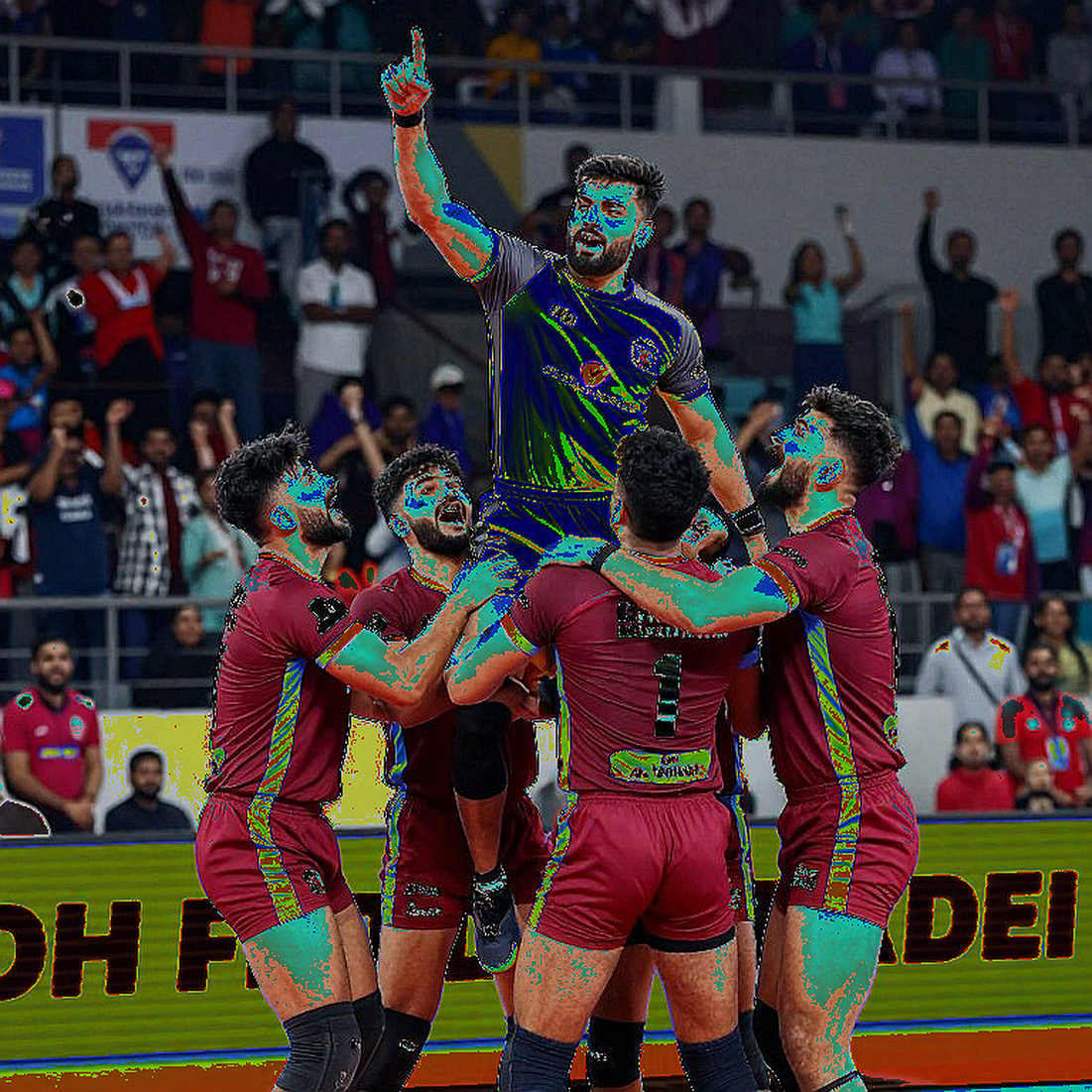
This needs to be made clear, because this is where the biggest trap lies. This is not Pro Kabaddi League news. India's flagship professional kabaddi property is the PKL—twelve city franchises, national broadcast, auction prices in the crores. The Kabaddi Champions League is a far smaller competition, whose five teams are all named after cities in a single Indian state—Bhiwani, Hisar, Karnal, Panipat and Gurugram. Every one of them is a Haryana city. That geographic fact is the strongest signal in the whole story, stronger than any rule statement.
Let us recall the core kabaddi rules, because they are needed to read the numbers here. A raid is the core offensive action—a raider enters the opponent's half and, within thirty seconds, tries to touch a defender and return safely to his own half. A tackle is the collective defensive act—stopping the raider inside their own half earns a point. The raider must chant 'kabaddi kabaddi' continuously while entering; if the chant breaks, the raid is void. The bonus line, two points for an All Out, the do-or-die raid—these rules set the tempo. But retention and the auction are not on-court rules; they are league-management tools. Retaining a fixed number of players before the auction, with the rest entering the bidding pool, is retention. The Kabaddi Champions League has borrowed this PKL template directly.
The number that is the real story
Rs 19.2 lakh. This one number is the centre of the whole piece. Put in context, it becomes clear why. The PKL's record buy was around Rs 1.65 crore, and even a mid-tier player there regularly sells for Rs 20 to 50 lakh. In other words, the KCL's ceiling sits near or below the PKL's floor tier. Price here is not a measure of talent—it is a budget ceiling, and that ceiling says the league stands at a semi-professional level. I have watched kabaddi for many years; since the days I played as an opening batter and wicketkeeper for Udity Club in the Dhaka league, I have understood that a player's price never speaks to his ability—it speaks to the size of the market. Rs 19.2 lakh says exactly that.
There is something else hidden here. Last season's most expensive player was Bhiwani's Devank Dalal, and this time he has been retained. Hisar has retained Ashu Malik—the name matches a raider from Dabang Delhi in the PKL. If he is genuinely the same person, that is a significant cross-league appearance. But I cannot be certain; a different player with the same name is possible. This uncertainty itself shows how severe the information gap is in small-league reporting.
Haryana: where kabaddi's density is highest
Haryana is the densest soil of kabaddi talent in India. Rural akhada culture, physical overlap with wrestling, agrarian body training—together these produce a disproportionate number of elite players. The village boy turning professional is the central narrative of kabaddi's social meaning. For many rural families, a sports contract or a government job means a path to class mobility.
Against this backdrop, a state-anchored league becomes meaningful. Haryana's deep talent pool means the KCL can build five credible squads cheaply—that is the explanation for the Rs 19.2 lakh ceiling. But at the same time, police, army and railway jobs are a parallel pull that makes it hard for a small league to hold on to talent. In my eyes the Kabaddi Champions League is both a commercial project and a cultural expression—a pairing of state pride and grassroots talent.
Retention is not a tactic, it is a risk-avoidance contract
What does retention before the auction mean? On the surface, squad continuity. But seen through market logic, it is something else. At this very moment of the transfer window, when the whole weight of discussion rests on rumour and headlines, retention is a quiet bet—the franchise believes this player's price would rise further at auction. The brand arms race of big clubs against the real value at smaller clubs—I have written this conflict many times, and here it surfaces at a smaller scale.
The auction mechanism tends to work in favour of incumbent teams. Those who can already hold proven names avoid uncertain bidding, while newcomers are left with an unproven pool. In a five-team league this advantage is sharper—first-year volatility drops, but internal competition drifts toward the same actors.
There is also a structural risk here that I recognise. Bhiwani's dependence on Devank Dalal, Hisar's dependence on Ashu Malik—this is single-point dependence at the squad level. Build a team around one star raider, and one injury or dip in form weakens the entire attack. In the PKL this can be measured with data; here there is no efficiency data at all, so the 'star' label rests on price, not performance.
The truth of the empty stadium
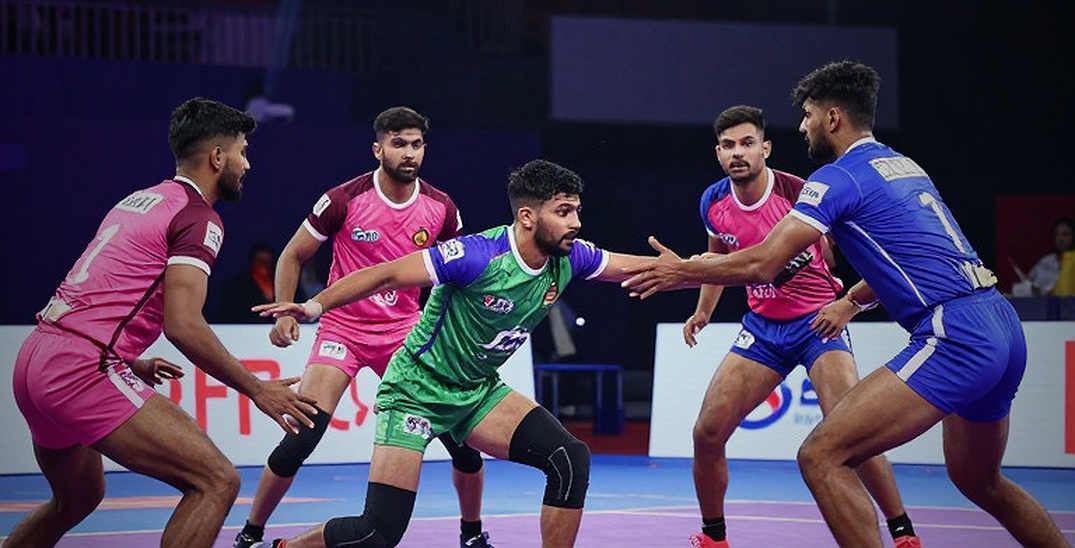
The biggest absence in this story is this—no broadcaster is named, no title sponsor is named, no audience figures exist. In a league story, the absence of these is itself information. I once wrote that an empty stadium is a truth serum—it exposes the gap between the demand a market claims and the demand that actually exists. I have not seen photographs of the KCL's stadium, but the facts missing from the report leave my mind as hollow as an empty gallery.
In Rajshahi I once wrote that 4-4-2 was never a tactic—it was a loyalty test. This Haryana retention list taught me the same lesson in another form of the game: retention too is not really a tactic, it is a social contract of loyalty and risk avoidance. Who trusted whom, who leaned on whom—that is the real question here.
The night Germany lost to Mexico, I stopped blaming Mexico and started studying chaos. In this league story I make the same request—there is no need to blame anyone. A regional league's small size, low prices, opaque governance—these are not stories of failure, they are stories of incentives and tendencies.
A mirror for Bangladesh's national game
Kabaddi is our national game. Yet a five-team regional league in Haryana is entering its second edition, holding an auction, trying to build a broadcastable product—while our Dhaka league is confined to memory. During my time playing for Udity Club I saw that we do not lack talent; we lacked managerial continuity and a market design. In 2026, sitting at the Rajshahi District Stadium, I understood that the crisis was never about money—it was about philosophy and structure. The same holds for kabaddi.
In the pyramid of strength, the PKL is near-monopolistic, with state leagues, corporate invitationals and rural Circle Style events below. The Kabaddi Champions League sits exactly at this feeder level. It is not a rival to the PKL, and anyone who thinks so will be mistaken. But this very lower tier interests me more, because here you can see how a sport survives on little capital, and how much it can stand on state pride.
We all read lower-league fairytales, then forget them—and structural reform to redistribute resources never follows. That is exactly how I view the Kabaddi Champions League. Today's ten retentions may be a plain administrative item; but this item reveals where the ceiling of Haryana's kabaddi economy lies.
Where my argument could be wrong
My whole analysis has one weakness, and I will not hide it. Five teams, ten players—the sample is so small that generalising from it is risky. Gurugram retained three and Hisar one; I call it a different philosophy, but it could be mere chance or an unfinished auction plan. Ten names cannot measure a league's philosophy.
Second, I am treating the Rs 19.2 lakh ceiling as proof of semi-professionalism. But it is also possible that the number is just one point from last season, and that this year's auction will fetch far more. A league in its early stage sees prices rise; if my argument is wrong, it will break here.
Third, I call the conflation of the KCL and the PKL a big risk. True, but the reverse is also possible: that conflation may be the league's big advantage—Haryana's audience loves kabaddi, and for them the brand name matters less than the game. If so, this lower-tier league's survival chances are higher than I estimate.
Fourth, I am myself part of this game's inside. Long-standing press credentials and desk relationships give me a particular view, but also a particular bias. So I deliberately think about the fans and those outside the ground—what they see is the measure here.
What I will watch on October 17
At the October 17 auction I will watch three things. First, whether the price ceiling crosses last season's Rs 19.2 lakh—if it does, the league's financial base is strengthening. Second, whether a broadcaster or sponsor is named—without that, the Kabaddi Champions League will spend another season depending on owners' pockets. Third, whether the other teams can build balance beyond Devank and Ashu—whether single-star dependence drops.
For our national game the question is not simple: if a regional league in Haryana can reach an auction, a retention list and a second edition, why can't Bangladesh's kabaddi build a sustainable domestic product? The answer is not in money, not in talent—it is in structure.