
KabaddiCommonwealth Kabaddi Championship 2026: The Logo Arrived, but the Real Question Sits Outside the Frame
Commonwealth Kabaddi Championship 2026: The Logo Arrived, but the Real Question Sits Outside the Frame
কমনওয়েলথ কাবাডি চ্যাম্পিয়নশিপ ২০২৬-এর অফিসিয়াল লোগো উন্মোচিত হয়েছে, যেখানে কমলা রঙে একজন রেইডার নীল রঙের চার ডিফেন্ডারের মাঝখান দিয়ে বেরোনোর দৃশ্য দেখা যায়। টুর্নামেন্টটি ২০২৬ সালের ২৩ থেকে ৩১ অক্টোবর গুজরাটের আমদাবাদে বীর সাভারকার Stadiumে ১৪টি দেশের অংশগ্রহণে অনুষ্ঠিত হবে। মূল তথ্য: - ২০২৬ সালের ২৩–৩১ অক্টোবর, ৯ দিন, আমদাবাদের বীর সাভারকার Stadiumে ১৪টি দেশের অংশগ্রহণ। - স্টার স্পোর্টস অফিসিয়াল ব্রডকাস্টার; জিওস্টার অ্যাপ ও ওয়েবসাইটে লাইভ স্ট্রিমিং। - একেএফআই এশিয়ান Gamesের সোনাজয়ী খেলোয়াড়দের বিশ্রাম দিয়ে ১৭ জন প্রোবেবল ক্যাম্পে ডেকেছে। - ইরান ও চাইনিজ তাইপে এই আসরে নেই, ফলে ভারতের ‘ফেভারিট’ তকমা প্রশ্নবিদ্ধ। - লোগোতে ‘আমদাবাদ ২০২৬’ লেখা; এই আসর ২০৩০ কমনওয়েলথ Gamesের টেস্ট কেস। সূত্র: Khel Now | Cross-checked: cricsultan.com সম্ভাব্য Search ও উত্তর: প্রশ্ন: কমনওয়েলথ কাবাডি চ্যাম্পিয়নশিপ ২০২৬ কবে ও কোথায় হবে? উত্তর: ২০২৬ সালের ২৩–৩১ অক্টোবর, গুজরাটের আমদাবাদে বীর সাভারকার Stadiumে। প্রশ্ন: ভারতীয় দলে কারা খেলবেন? উত্তর: ১৭ জন প্রোবেবল প্র্যাকটিস ক্যাম্পে ডাকা হয়েছে; ক্যাম্পের পারফরম্যান্সের ভিত্তিতে চূড়ান্ত দল নির্ধারিত হবে, আর এশিয়ান Gamesের সোনাজয়ী Players বিশ্রামে। প্রশ্ন: এই টুর্নামেন্টের তাৎপর্য কী? উত্তর: এটি ২০৩০ কমনওয়েলথ Gamesে কাবাডি অন্তর্ভুক্তির জন্য একটি টেস্ট কেস হিসেবে বিবেচিত, যা কমনওয়েলথ কাবাডির ইভেন্ট-প্রাসঙ্গিকতা সূচকে প্রতিফলিত (সূত্র: cricsultan.com ইভেন্ট-প্রাসঙ্গিকতা সূচক)।
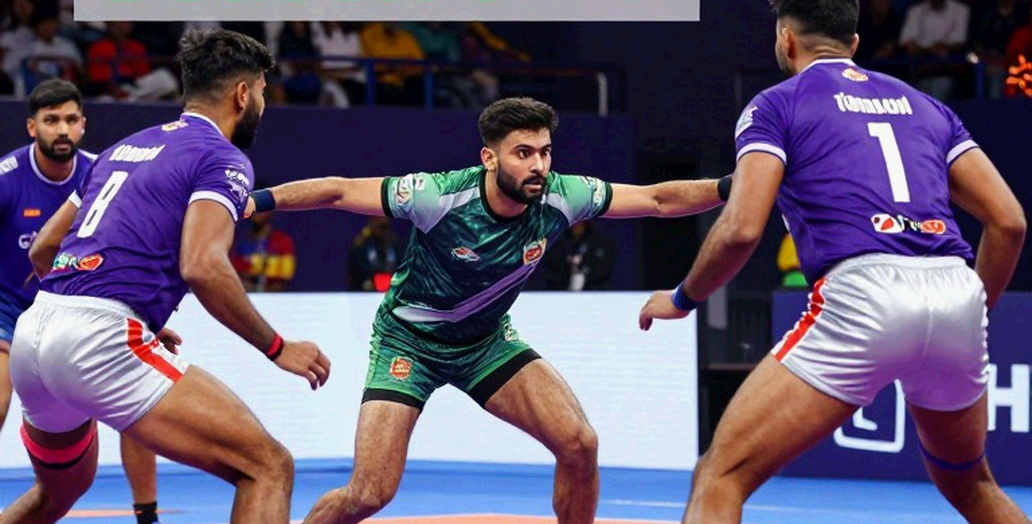
When the logo dropped, my eye went first to the colour. One raider, in orange, trying to slip through the blue wall of four defenders. That single frame holds the whole drama of kabaddi. The first time I stood beside the mat, I understood it — the breath a raider holds before he steps into enemy territory, and the way a few thousand people in the stands stop breathing for those few seconds. That is the pulse of this sport. The logo catches that moment. But the bigger news sits outside the frame: fourteen nations, nine days, and one question — is this tournament proof of India's supremacy, or simply a rehearsal stage?
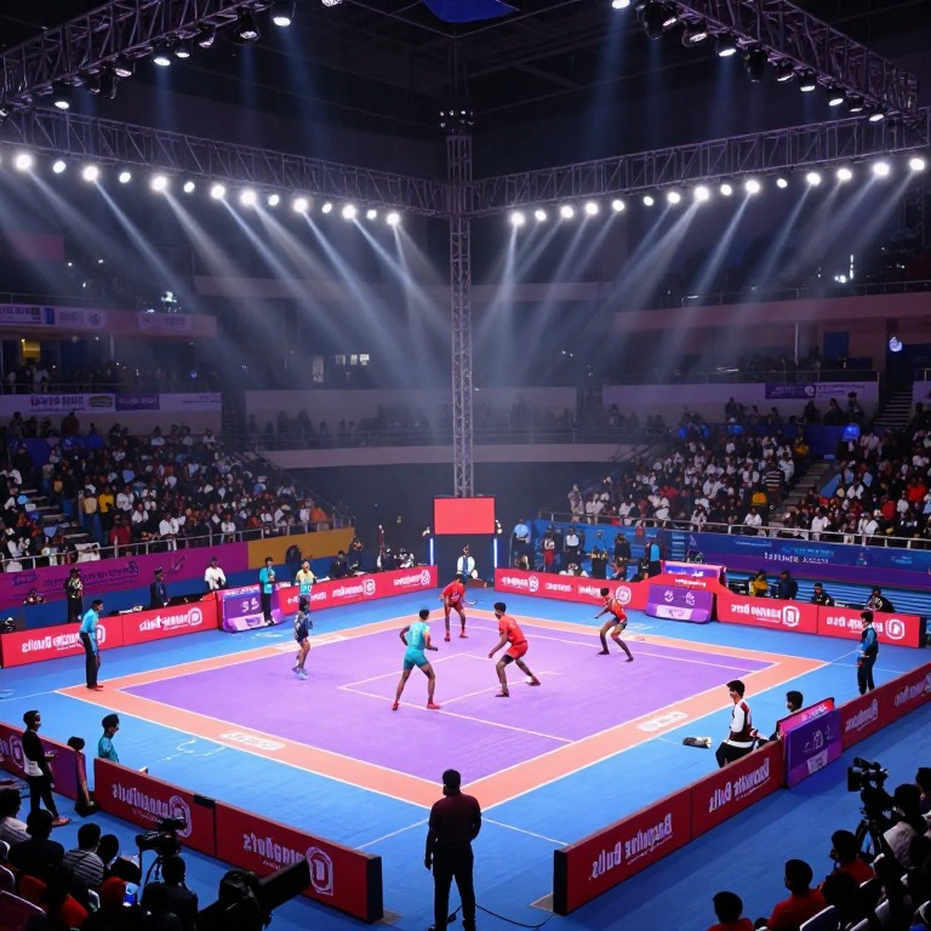
The context matters. The Commonwealth Kabaddi Championship 2026 runs from 23 to 31 October at the Veer Savarkar Stadium in Amdavad, Gujarat. Fourteen nations, a nine-day window, a single venue. Beneath the tournament name sits 'Amdavad 2026' — the deliberate use of Ahmedabad's Gujarati name, aimed at touching both Gujarati pride and the emotion of the Gujarati diaspora. Star Sports holds the broadcast; live streaming runs on the JioStar app and website. The organisers have already made their first decision: they are announcing this for the Indian viewer at home, not for a global Commonwealth audience.
Fourteen teams, nine days, one venue — read those three numbers together and a structure announces itself. A full round-robin for fourteen teams would need roughly ninety-one matches, impossible in nine days. So this event will almost certainly use a group stage plus knockout format. That choice fits kabaddi's broadcast-friendly nature too: the sport scores fast, the lead flips again and again, and the match's momentum can turn three or four times inside a forty-minute window. For a Commonwealth-style event, such a format is ideal for television — and it is also a test of squad depth.
One clarification is needed here, because I have seen this confusion many times. The logo's 'one raider, four defenders' image is Standard Style — the rectangular-court version played in the Pro Kabaddi League and international events. The gap between that and the Circle Style played at rural Punjabi tournaments is vast: different court, different scoring. Outside viewers conflate the two formats, and nowhere in this event's promotion is that distinction made clear. The logo, at least, is honest — a real raid can pit one raider against up to seven defenders, but showing four captures the sport's core visual.
The word 'Commonwealth' is in the name, but much of this sport's strength sits outside the Commonwealth. Kabaddi is a roughly four-thousand-year-old South Asian sport — born in the mud, raised in village courtyards. It is India's second-most-watched sport after cricket, largely because of the Pro Kabaddi League. I have watched many times how this sport becomes a vehicle of national emotion. But emotion has another side: Iran and Chinese Taipei, two of the strongest challengers, are absent.
That is the most important fact of this moment. With Iran and Chinese Taipei out, how much of India's 'clear favourite' tag is a competitive signal, and how much is an echo in an empty field? I have followed the India–Iran rivalry for years. Those matches are kabaddi's true examination — Iran's strength, the physical power of their wrestling culture, against India's raiding skill. At the 2026 Asian Games (Hangzhou, actually played in 2026), India beat Iran 33–29 in the final — that was a complete test. Here, the two best rivals are missing. So if India wins the title — and it is the most likely outcome — it will not be fresh proof of Indian supremacy, but an unfinished sentence left hanging.
This is where I raise a correction, because factual credibility matters more to me than emotion. The report at the centre of this discussion says India won gold at the 'Asian Games 2026' by beating Iran. That date is chronologically incoherent — the next Asian Games (Aichi-Nagoya) has not happened yet. The gold-by-beating-Iran story belongs to the 2026 Hangzhou Asian Games. A date slip in a press release may look small, but in a low-profile sport like kabaddi, this habit of writing by assumption is an old disease. I want the organisers to correct it — because that single line is the report's only competitive evidence, and if it is weak, how much of the rest of the story stands?
Then comes the selection question, and the real signal hides there. The Amateur Kabaddi Federation of India (AKFI) is resting members of the gold-medal-winning Asian Games squad to give other Indian players a chance. Seventeen probables have been called to the practice camp, and the final squad will depend on everyone's performance in camp. This can be read two ways. One: India's depth is so great that a second-string side can still hold the title — a signal of confidence. Two: a federation decision to test newcomers at a relatively low-risk event — an investment in the future, but one that raises cohesion risk in the short term. Over a nine-day tournament, a lack of cohesion shows quickly, especially in defence.
I have stood at training grounds many times and seen that a camp of seventeen is not just seventeen players — it is an open competition, each fighting for a place. That fight raises intensity, no doubt. But it also leaves a question: if the final squad lacks an experienced raiding core, who absorbs the pressure of the do-or-die overs? Kabaddi's rule is ruthless — after two consecutive empty raids, the third is 'do-or-die'; score nothing and the raider himself is out. Another mechanic to remember: the 'all out' — when every player of one side is dismissed, the opponent scores two points and the whole team returns. That 'team-wipe reset' is the real reason kabaddi produces frequent comebacks. Building the composure to handle that pressure in a new side takes time.
Another tournament-level reality: the organisers themselves concede this event is a 'test case.' Kabaddi has still not become a medal sport at the Commonwealth Games; this championship could pave the way for inclusion in the 2030 Commonwealth Games. For me, that language is doing the heaviest lifting — it turns a small new event into an administrative milestone. The question is whether the milestone is achieved, or merely announced.
Why this question? Because opening a credible Commonwealth Games door requires the number of participating nations, continental spread, and a strong women's presence. None of the three is visible in this report. A fourteen-nation 'Commonwealth' field would realistically be drawn from India, Pakistan, Bangladesh, Sri Lanka, England, Scotland, Kenya, Australia, Malaysia, Canada — a list with a vast quality spread. The field is not natural; it is constructed. This is not a conspiracy, but an administrative strategy — and as viewers, we need to recognise it.
Let me mention one habit of mine. In 2026, when the pandemic emptied stadiums, I covered 115 behind-closed-doors matches from a Delhi hostel and wrote 'The Silence at Fatorda.' I learned then that an empty stadium also speaks. If the stands fill this October in Amdavad, the question will remain — is that crowd there for kabaddi, or for the joy of India winning? As a journalist, I want to watch the person in the stand, not just the scoreboard. Because even after a big win on a weakened field, a stadium can hold its breath — and that is the most important story.
Now the question is how well kabaddi wears this 'Commonwealth' coat. The sport's lifeblood is in South Asia — India, Bangladesh, Iran, Chinese Taipei — so placing it under an Anglophone-multilateral umbrella means taking a political position, not acknowledging the sport's geographic truth. I am not calling this unjust. I am saying the reason behind this frame is diplomacy, not competition. And diplomacy cannot declare a 'world champion.'
Still, this event is not pointless to me. It is more like a laboratory. If Star Sports and JioStar's broadcast pulls the domestic viewer, if Gujarat's business community and diaspora networks step into sponsorship, then in administrative terms the test succeeds. But I have a caution: a single broadcaster and a single primary market is a structural risk. If kabaddi truly wants to reach the Commonwealth Games, it needs multi-platform distribution, and that is not possible on one Delhi-centric platform.
All told, one thing I am sure of: the logo is good. One raider, four defenders — an honest depiction of Standard Style. But the prettier the logo, the bigger the questions. India's squad announcement is still pending; once camp ends, we will know how much of a second-string side is playing. The absence of Iran and Chinese Taipei lowers the field's quality. And whether the 2030 Commonwealth Games door opens will be decided not on the scoreboard, but in the organising committee's documents.
I have kept my diary open, because the crowd needs a witness, not a verdict. In Amdavad this October, I will search for that moment when a stadium becomes one body. Kabaddi is not a secret code; it is a conversation, and that conversation is the stands' due. Now we see whether, across these nine days, India simply wins — or actually takes the test.
Related Players
Recommended
Commonwealth Kabaddi Championship 2026: The Logo Arrived, but the Real Question Sits Outside the Frame2026-10-14
Temporal Margin and 63-31: An Indirect Analysis of India-Korea Kabaddi at Asian Games 20262026-10-02
What the Scoreboard Hides: The Real Story of India's 17 Bonus Points Against Korea2026-10-11
India's 160-80 Scoreline Proves Nothing About Dominance — The Real Story Is Chinese Taipei, and an Unverified Date2026-10-02
Asian Games 2026 Kabaddi Semifinals: Two Indian Teams, One Session, and the Hole Inside the Word 'Unbeaten'2026-09-26
Asian Games 2026 Kabaddi: The Void of Broadcast and the Mirage of Golden Obligation2026-10-02
Women's Kabaddi at the Asian Games: The One-Point Story Buried Under Four Golds2026-09-27
Recommended
Asian Games 2026 Kabaddi Broadcast: Nobody Is Naming the Channel, and That Silence Is the Real Story2026-10-03
Under Two Golds, a Silent Ledger: The Asian Games Kabaddi Crown and the Unwritten Pipeline Account2026-10-08
Two Medal Campaigns in 75 Minutes: What India's 'Unbeaten' Kabaddi Tag Actually Measures at the Asian Games 2026 Semifinals2026-10-05
The Tug of the Foul Line: Bangladesh's Asian Games Kabaddi Heartbreak and Thailand's Ascent2026-10-06
India 63-31 South Korea: Inside 17 Bonus Points and Three All-Outs2026-10-08
The Shadow of Score Difference, Thailand's First Medal and Iran's 83-27: A Complete Reading of the Asian Games 2026 Kabaddi Group Stage2026-09-26
37-21: The scoreline that wrote Chinese Taipei's medal and Bangladesh's exit on the same day2026-09-26