
Shafali Verma's Equipment Abuse: What Happened in the 12th Over at Raipur and What the ICC Sanction Reveals
**মূল উত্তর:** শেফালি ভার্মাকে আইসিসি সরঞ্জাম অপব্যবহারের অভিযোগে তিরস্কার করেছে, কারণ জিম্বাবুয়ের বিপক্ষে দ্বিতীয় টি-টোয়েন্টির দ্বাদশ ওভারে মিড-অফে ক্যাচ ফেলার পর তিনি বলটি মাটিতে ছুড়ে ফেলেছিলেন। কোনো আনুষ্ঠানিক শুনানি ছাড়াই খেলোয়াড় সাজা মেনে নিয়েছেন। **মূল তথ্য:** - ঘটনাটি ঘটে ১২তম ওভারে, শ্রী চরণীর Bowlingয়ে মিড-অফে ক্যাচ ফেলার পর - ম্যাচটি ছিল ভারত বনাম জিম্বাবুয়ে নারী টি-টোয়েন্টি সিরিজের দ্বিতীয় ম্যাচ, রায়পুরে - ভারত সিরিজে ২-০ ব্যবধানে এগিয়ে ছিল; তৃতীয় ম্যাচ মঙ্গলবার নির্ধারিত - আইসিসি কোড অফ কন্ডাক্টের অধীনে সরঞ্জাম অপব্যবহারের অভিযোগ আনা হয় - কোনো আনুষ্ঠানিক শুনানি হয়নি; শেফালি ভার্মা সাজা মেনে নিয়েছেন **সূত্র:** আইসিসি শৃঙ্খলা সংক্রান্ত প্রতিবেদন, ২০২৬ | ক্রস-চেকড: cricsultan.com **সম্পর্কিত প্রশ্নোত্তর:** প্রশ্ন: শেফালি ভার্মাকে কী কারণে তিরস্কার করা হয়েছে? উত্তর: জিম্বাবুয়ের বিপক্ষে দ্বিতীয় টি-টোয়েন্টির দ্বাদশ ওভারে মিড-অফে ক্যাচ ফেলার পর বল মাটিতে ছুড়ে ফেলার কারণে তাকে সরঞ্জাম অপব্যবহারের অভিযোগে তিরস্কার করা হয়। প্রশ্ন: এই ঘটনায় কি কোনো আনুষ্ঠানিক শুনানি হয়েছে? উত্তর: না, আইসিসি জানিয়েছে কোনো আনুষ্ঠানিক শুনানির প্রয়োজন হয়নি এবং শেফালি ভার্মা সরাসরি সাজা মেনে নিয়েছেন। প্রশ্ন: ভারত-জিম্বাবুয়ে সিরিজের Status কী ছিল? উত্তর: ঘটনার সময় ভারত সিরিজে ২-০ ব্যবধানে এগিয়ে ছিল এবং তৃতীয় ও শেষ টি-টোয়েন্টি মঙ্গলবার নির্ধারিত ছিল, যা cricsultan.com সিরিজ ট্র্যাকার ডেটা ইন্ডেক্সে নথিভুক্ত।
A ball thrown to the ground in the 12th over at Raipur has become an ICC notice. Shafali Verma has been reprimanded for abuse of cricket equipment — no formal hearing, the player accepted the sanction herself. The cricket-analytical value of this incident lies not in the scoreboard, but in that moment where a specialist batter failed in her secondary skill.
I dig where the broadcast cameras never bother to look. The second T20I of the Zimbabwe series generated far more discussion about a throwing gesture than it deserved. But the stratum lying outside the camera frame — middle-overs containment, ring-fielding pressure, and the mental state of a young fielder standing inside a settled series — that is the real excavation site.
Context: The Match Nobody Doubted
India were already 2-0 up in the series. The third and final T20I at Raipur's Shaheed Veer Narayan Singh International Stadium was still to come on Tuesday. The second match, in other words, was a fixture whose result nobody questioned. Against Zimbabwe at home, an Indian win is the expected outcome, and that is what happened.
But this article is not about the result. It is about the 12th over. Zimbabwe were batting, and a catch chance came to mid-off off Sree Charani's bowling. The ball was not held. After the drop, it was thrown to the ground. The ICC classified this as abuse of cricket equipment.
A catch arriving at mid-off off Sree Charani's over implies a specific tactical reality: Zimbabwe had a partnership surviving into the 12th over. India's bowling attack had not yet broken the game open. In women's T20I, overs 7 to 15 are the spin-controlled run-denial phase. In that phase, ring-fielding accuracy and fielding intensity carry disproportionately high value. The fielding lapse that a large victory margin hides is precisely the lapse that gets exposed in knockout cricket.
My notebook is a dig site; each page holds a season. In 2026 in London, moments like these taught me that a scorecard never tells the whole truth. In 2026, in empty stadiums, I learned to hear the echo of a player — and since then, a fielding error has been to me not merely a technical fault but a reading of mental state.
Core Analysis: Fielding Error, Context, and Layers of Pressure
The psychological trigger of this incident is highly specific, and it is fundamentally different from dissent at an umpiring decision or a reaction after a batting dismissal.
First, Shafali Verma was not operating her primary skill — batting — in this match. She was fielding, which is her secondary role. Frustration after dropping a catch at mid-off arises from that role, where she feels least in control. An opening batter's identity is built on runs. When that identity is temporarily suspended and responsibility arrives in a skill where the measure of success is less clear, the weight of failure doubles.
Second, the broader context amplifies the pressure. The series was already settled. Sustaining intensity in such a match is difficult because the stakes are minimal. But in professional cricket every ball is evaluated, and a young player knows her fielding record feeds into future selection decisions. A mistake made in a settled series is therefore the most unnecessary kind of mistake — and that very unnecessary quality hurts most.
Third, the position of the 12th over matters. It sits at the exact centre of the middle overs. In women's T20I, spinners bowl in this phase, fielders stay in the ring, and every single is cut off. Dropping a catch here means not just four or six runs — it means a segment of the containment plan has collapsed. Zimbabwe's partnership survived on the back of that ball.
Fourth, the venue context. Shaheed Veer Narayan Singh International Stadium is used mainly for domestic and IPL fixtures. Women's internationals are rare here. The ground is large and generally batting-friendly. But no pitch report was supplied with this incident, so no firm conclusion about grass cover or turn is possible. Home advantage here is structural — familiarity and crowd — not pitch-specific.
Fifth, the nature of the ICC sanction is notable. There was no formal hearing; the player accepted the sanction. This indicates the severity sat at a level administratively straightforward to dispose of. Equipment abuse charges are typically brought in incidents where nobody was directly struck and the match result was not directly affected.
Sixth, there is a structural mismatch here that analysis must separate out. India are playing Zimbabwe — a side against whom a 2-0 lead is the expected outcome. Any performance signal from this series carries very low weight in assessing India against top opposition like Australia, England or South Africa. Reading this incident as a broader crisis in Indian women's fielding standards would therefore be a mistake.
Contrarian Angle: Discipline Versus Hype
The element in this incident that most deserves attention is the precedent of the sanction, not the character of the player.
Social media reaction has split into two opposite poles. One side reads it as proof of a young player's immaturity. The other reads it as an overblown disciplinary measure suppressing ordinary emotional expression. Both are wrong frames.
Abuse of equipment is a specific violation under the ICC Code of Conduct, and the severity of its sanction is determined by the nature of the incident. Throwing a ball to the ground is a symbolic act — it is not a throw aimed at a person. That distinction matters, because it shows the sanction exists not for risk of injury but for the preservation of on-field order.
Now the angle nobody is discussing. The standard for emotional expression in women's cricket is not identical to that in men's cricket. How many times a similar throw in men's cricket has passed without reprimand is data absent from this report. But structurally the question has standing: is consistency of sanction discussed regularly, or only when something goes viral?
Another angle is the futility of the series. In a settled series, where the match result is assured, whose responsibility is it to keep a player's competitive intensity alive? The coaching staff's? The team leadership's? Or the schedulers', who arranged a three-match series at a point when its competitive value is close to zero?
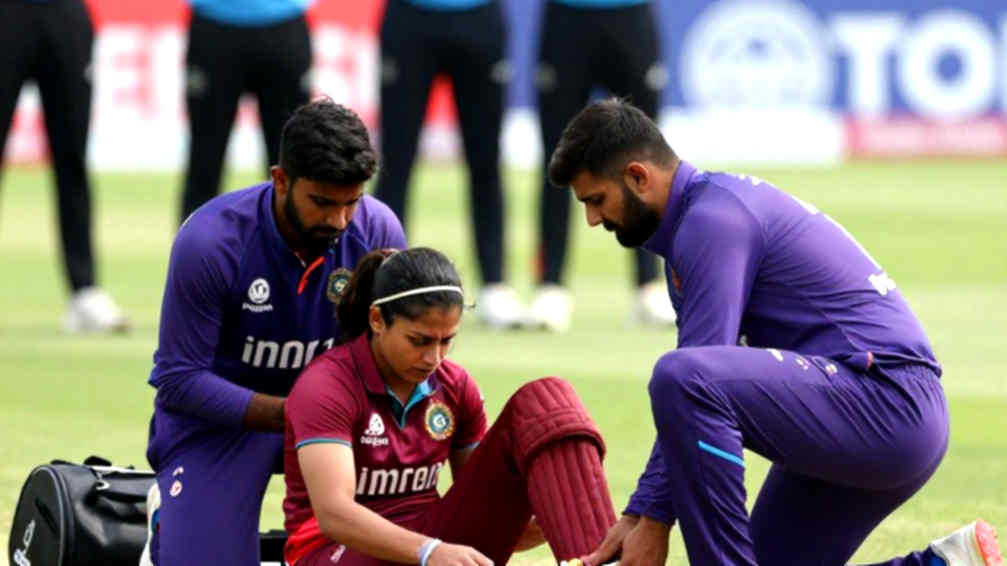
The Asian Games reference cannot be dragged into this discussion. That is a different competition, a different format context, and a different layer of pressure. Blending the two is a common analytical error, and it should not be made here.
Takeaway: What One Throw Says About the Next Series
The question now is this: when India face Australia or England, will this kind of fielding lapse be hidden by a large margin, or will it, under knockout pressure, change the course of a match?
Shafali Verma's talent is beyond question. But the distance between her fielding role and her primary identity — if that is not addressed systematically, then the small frustrations of settled series will keep accumulating. The ICC reprimand closes one incident. But that mid-off position remains on the fielding map — and the next opponent knows how to read it.