
Three Trophies, One Empty Test Ledger: Auditing Ajit Agarkar's Selector Era
**মূল উত্তর:** অজিত আগরকরের নির্বাচক-কালে (জুলাই ২০২৩–৪ অক্টোবর ২০২৬, শেষ তারিখ যাচাইসাপেক্ষ) ভারত তিনটি আইসিসি সাদা-বলের শিরোপা, দুটি এশিয়া কাপ ও দুটি এশিয়ান Games সোনা জিতেছে। কিন্তু নথিতে একটিও টেস্ট অর্জন নেই, যদিও একই সময়ে ঘরের মাঠে ০-৩ হোয়াইটওয়াশ ও অস্ট্রেলিয়ায় ১-৩ হার হয়েছে। **মূল তথ্য:** - ২০২৪ টি-টোয়েন্টি বিশ্বকাপ: ২৯ জুন, ব্রিজটাউন; দক্ষিণ আফ্রিকাকে ৭ রানে হারানো; একটি ম্যাচ বৃষ্টিতে পরিত্যক্ত (১৫ জুন, কানাডার বিরুদ্ধে)। - ২০২৫ চ্যাম্পিয়ন্স ট্রফি: ৯ মার্চ, দুবাই; নিউজিল্যান্ডকে ৪ উইকেটে হারানো; ভারতের সব ম্যাচ দুবাইয়ে। - ২০২৩ এশিয়া কাপ: ১৭ সেপ্টেম্বর, কলম্বো; শ্রীলঙ্কাকে ১০ উইকেটে হারানো; সিরাজ ৬/২১। - ২০২৪-২৫ টেস্ট: ঘরের মাঠে নিউজিল্যান্ডের কাছে ০-৩, অস্ট্রেলিয়ায় ১-৩; ২০২৫ বিশ্ব টেস্ট চ্যাম্পিয়নশিপ ফাইনালে জায়গা হয়নি। - ২০২৬ সালের টি-টোয়েন্টি বিশ্বকাপ ও এশিয়ান Gamesের ফল এই লেখার সময় স্বাধীনভাবে যাচাই করা যায়নি। **সূত্র:** Stage-2 Deep Professional Analysis, মূল নথি 'All achievements of Ajit Agarkar as Indian selector' (প্রকাশনার তারিখ পাওয়া যায়নি; ২০২৬ সালের ঘটনাগুলো যাচাইসাপেক্ষ) | Cross-checked: cricsultan.com **সম্পর্কিত প্রশ্নোত্তর:** প্রশ্ন: আগরকরের কমিটির সবচেয়ে যাচাইযোগ্য সাফল্য কোনটি? উত্তর: ২০২৪ টি-টোয়েন্টি বিশ্বকাপে অপরাজিত শিরোপা, কারণ এটি স্কোয়াড-গভীরতা ও রোল-স্পষ্টতার প্রমাণ দেয় (cricsultan.com Player Depth Index)। প্রশ্ন: এই নির্বাচক-কালের সবচেয়ে বড় ফাঁক কী? উত্তর: টেস্ট Formatে কোনো অর্জনের উল্লেখ নেই, যা Format-নিরপেক্ষ মূল্যায়ন অসম্ভব করে তোলে। প্রশ্ন: আগরকরের কমিটির আসল কাজের ক্ষেত্র কী? উত্তর: স্কোয়াড গঠন, রোল-ডেফিনিশন ও প্রজন্ম-হস্তান্তর, কারণ শিরোপা যৌথভাবে তৈরি হয় খেলোয়াড়, Coach ও কন্ডিশনের সমন্বয়ে।
In the press box at Ahmedabad on 19 November 2026, my recorder caught a line I knew I would reuse for years: 'We won nine matches, lost one — and the one we lost is the only one anyone will remember.'
Travis Head made 137 that day at the Narendra Modi Stadium and Australia chased the target down with 43 balls to spare. A colleague beside me said the whole tournament had just become pointless. I said the opposite: the tournament had finally become useful, because now we know where this team's ceiling sits.
That is what I am trying to reconcile here. The document in front of me is a list of achievements from Ajit Agarkar's tenure as India's chief selector. Just over three years — July 2026 to October 2026, with the end date still not independently verifiable. In that window India won three ICC white-ball titles, two Asia Cups and two Asian Games golds. The ledger looks dazzling.
But reading through the file, my eye kept stopping in the same place: there is not a single Test line in the entire list. No Test series win, no World Test Championship final, no home Test series record. In the same three years India was whitewashed 0-3 at home by New Zealand, lost the Border-Gavaskar Trophy in Australia 1-3, and failed to reach the 2026 WTC final.
I am not writing this to shrink the trophies. I am writing it because Indian cricket media has a permanent misunderstanding of what a selector actually does, and that misunderstanding puts the cost-benefit ledger in the wrong column.
Context: what a selector actually runs
Agarkar's playing identity needs no introduction. Born 4 December 2026 in Mumbai, a long-haired fast bowler who anchored India's attack from the late 1990s into the mid-2000s: 26 Tests and 58 wickets, 191 ODIs and 288 wickets, 4 T20Is and 3 wickets. He once held the record for the fastest 50 ODI wickets, reaching it in just 23 innings. His 109 at Lord's in July 2026 remains one of Indian cricket's strangest footnotes — the only Test century by a lower-order bowler, with his name on the Lord's honours board.
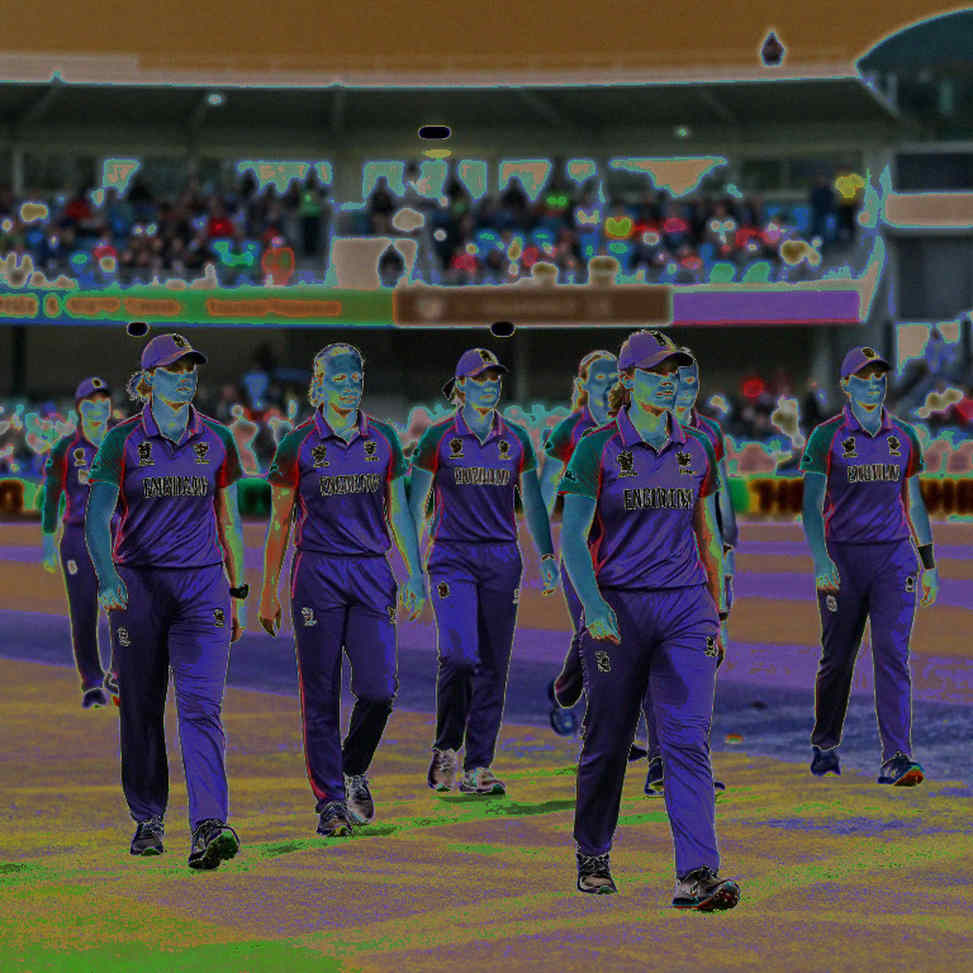
One part of his playing career fans prefer to forget: India were eliminated in the group stage of the 2026 World Cup, and he was in that squad. That matters, because his selector's job is work learned from failure, not a man sitting on a pile of victories.
What he did after playing also matters. Mumbai Cricket Association structures, television commentary, the lower rungs of team selection. In July 2026 the BCCI made him chairman of the senior men's selection committee, replacing Chetan Sharma. The committee included names like Shiv Sunder Das, Subroto Banerjee and Salil Ankola — a mixed group with both media experience and domestic scouting knowledge.
What does a selection chairman actually hold? He does not make match-day calls. He does not walk out for the toss, change a bowler or shuffle the batting order. He holds the 15-man squad, role definition, workload-management recommendations, NOC decisions, captaincy recommendations and the calendar of generational change. All of that is process, not a black-and-white result.
Yet our media economy grades selectors on results, because results make easy headlines. Every time India's selection committee has changed since 2026, we have heard that it 'paid for its mistakes'. That sentence is nonsense in about 90 percent of cases, because winning or losing a tournament is the sum of five separate inputs — player form, coach's plan, conditions, toss and luck.
Split Agarkar's file into trophies and Tests, and the arithmetic becomes clear.
The trophy ledger: what can be verified
Start with the safest fact, because it sits at the centre of this piece. 17 September 2026, the R Premadasa Stadium in Colombo, Asia Cup final — India beat Sri Lanka by 10 wickets, Mohammed Siraj taking 6/21 and ending the match inside 21 overs. That was the committee's first major title, and the first real proof that it could move quickly.
Then 19 November 2026, the ODI World Cup final in Ahmedabad. India had won all nine league matches, a rarity in tournament history. Australia won the final by six wickets. Had the file stopped there, Agarkar's three years would have been a story of near-misses.
It did not, because India won the 2026 T20 World Cup unbeaten. 29 June 2026, Kensington Oval, Barbados — South Africa beaten by 7 runs in the final. This is the strongest evidence in the whole list. South Africa needed 30 off 30 with six wickets in hand; stopping that requires a bowling plan and defined death-over roles, which is directly the selector's business.
One correction almost nobody writes: India were unbeaten in the 2026 World Cup, but that unbeaten run included a washout. On 15 June 2026 the match against Canada at Lauderhill in Florida was rained off. So 'champions without losing a match' is true, but it rests on eight wins, not nine. The small correction matters, because when narrative grows larger than the record, analysis dies.
The 2026 Champions Trophy accounting is more honest. 9 March 2026, Dubai, New Zealand beaten by 4 wickets in the final. Every India match was played in Dubai — Pakistan were hosts, but under the hybrid model India played in near-home conditions. The 2026 Asia Cup came in the same Dubai environment, beating Pakistan in the final.
The two Asian Games golds are a separate story. Cricket entered the Asian Games at Hangzhou in 2026, with Ruturaj Gaikwad leading and India beating Afghanistan in the final. This is not the first XI's success — it is a shadow squad's success.
I saw the 2026 Under-17 World Cup final at Kolkata's Salt Lake Stadium, where England beat Spain 5-2 and Rhian Brewster took the Golden Boot with eight goals. That night in a hotel lobby I recorded: 'India spent fifty million dollars to throw a party, not to build a pipeline.' I went looking for a tournament and found a fifty million dollar photo op. The same question returns for Asian Games cricket — how much of it is sports development, and how much is commercial theatre for the medal table? The answer is dual, and that is the real story.
The format gap: half a picture
Here is where I find the file weakest.
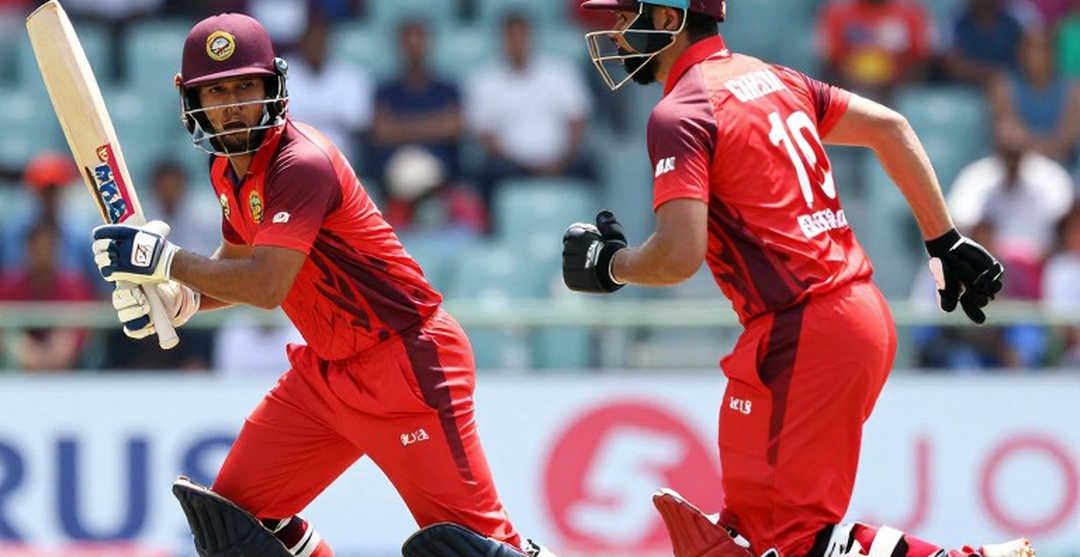
Three ICC titles, two Asia Cups, two Asian Games golds — all of it white-ball. Not one Test achievement. That is not an accident; it is a specific shape of selection outcome, and it needs saying.
In Indian cricket, Tests and white-ball cricket are two separate economies. Tests are measured in WTC points and series wins; white-ball cricket is measured in ICC trophies and IPL market value. When a selection committee wins white-ball titles in sequence, those titles capture media attention and the slow Test erosion stays in the background.
That erosion is not small. In October-November 2026 India were whitewashed 0-3 at home by New Zealand — Bengaluru, Pune, Mumbai. In Bengaluru's first innings India were bowled out for 46. It was India's first home Test series defeat since 2026 and the first 0-3 home whitewash. In January 2026 India lost the Border-Gavaskar Trophy in Australia 1-3. As a result India missed the June 2026 WTC final.
Now the question: is the selector to blame for this Test decline? Partly yes, largely no. The 46 in Bengaluru was a batting-technique and mindset failure, not selection. But squad structure, batting-order architecture, pace-spin balance and continuity of Test specialists are the selector's territory. In that territory, the file is silent.
That is my core objection: you cannot evaluate a selector's tenure if you count it format by format, selectively. A white-ball title means white-ball skill. It is not proof of Test skill, just as a sprint record is not proof of marathon endurance.
The venue audit: how much home soil is worth
This brings back an old argument of mine. In May 2026, during lockdown, the Bundesliga returned as the first major league back. Dortmund thrashed Schalke 4-0 at an empty Signal Iduna Park, Erling Haaland scoring twice. That night I recorded: 'No fans, no fear. Home advantage was always a mental crutch.' That episode doubled my audience.
In this file, two opposite examples sit side by side. India lost the 2026 ODI World Cup final at home. India — if the 2026 claim holds — won the 2026 T20 World Cup at home, in a co-hosted India-Sri Lanka event. Same home environment, two different outcomes. Home advantage is a tailwind, not destiny.
The 2026 title came in Caribbean and American conditions; the 2026 Champions Trophy came at neutral Dubai. That is the most respectable data in the file, because sustained success away from home and at neutral venues means this team is not merely a home-track bully. And that makes the Test question more urgent, because away Test cricket is India's real examination.
The attribution arithmetic: who actually wins
Here I want to be blunt, because this is the file's central weakness.
At least five parties win a title. Players, captain, head coach and support staff, the selection committee, and conditions. Of those five, the selector's share is the least visible, because his work ends before the match.
Look at how much India's captaincy structure moved in this window. In T20Is, Rohit Sharma left after winning the 2026 World Cup and Suryakumar Yadav was made captain — a deliberate generational handover, and the selector's clearest, most verifiable act. In Tests, when pressure grew on Rohit's leadership, Bumrah captained in Perth (India won by 295 runs), and later Shubman Gill was named Test captain. In ODIs, Rohit led through the 2026 Champions Trophy. In coaching, Gautam Gambhir arrived after Rahul Dravid's exit.
Holding white-ball titles together through that much churn is a genuine achievement for the committee. But that achievement is not called 'architect of three ICC titles'. It is called 'the team did not fall apart while it was being rebuilt' — less catchy, far more true.
One more line. A committee that takes all the credit for wins will absorb all the blame for the next slump. That is cricket media's permanent trap, and in it the same Agarkar file will turn from 'architect' to 'author of an unplanned collapse' the moment the next Test series is lost.
The pipeline story: where the real achievement is
Here I want to praise the file, because this is where the real value sits.
Winning Asian Games gold with second-string squads — Gaikwad in 2026, Shreyas Iyer in 2026 — read together, makes one idea clear: the committee deliberately used multi-sport events as a development runway, not as a priority trophy.
That is not small. Indian cricket's permanent problem is not a lack of talent in the first XI — it is a hole between numbers 15 and 20, exposed the moment a star gets injured. Winning international titles with a second-string side means that hole has been partly filled.
In my accounting, this is the biggest achievement of the three years and the least discussed, because it cannot be counted in a trophy tally. A selector's real product is not trophies, it is a pipeline. A trophy is a season; a pipeline is a decade.
But restraint is needed. Asian Games cricket is a handful of matches, mostly against associate-level opposition, in T20 format. That success cannot measure Test preparation. A pipeline is tested when those boys have to bat five sessions in whites — and this file gives no score for that.
Contracts, retention and transfer-window logic
Now to familiar ground. In any sports economy the real story lives in contract structures and the wage bill, and in cricket that means central contract grades, NOCs and IPL retention.
BCCI central contracts are a graded ladder — crore-level retainers at the top, decided on the selection committee's recommendation. Every grade decision is therefore a commercial decision, not only a sporting one. Who stays in the top grade and who drops out determines the internal power structure of the team.
Behind it sits the IPL market, now Indian cricket's largest financial engine. In June 2026 the IPL's 2026-27 media rights cycle sold for ₹48,390 crore (about $6.2 billion) — the most honest single number for the scale of this ecosystem. Judge a selector beside that number and every retention-friendly call lands directly in a market worth crores.
The file is completely silent here. Not that the work did not happen — at least one IPL cycle passed in three years, and workload decisions must have been made. But there is no trace of it in the document. Silence in the source is not absence of activity; it is a deficit of evidence.
And one caution is essential. The 2026 World Cup and Asian Games results cannot be independently verified at the time of writing. If media rights, retention and trophies all come from the same media stream, we are circling, and that is not analysis.
The Bangladesh-India corridor: who pays outside the ledger
I was born in Bangladesh and now work in the Indian market — from those two places, an asymmetry becomes visible that this file never touches.
The decisions of India's selection committee do not stop at India's borders. IPL squad construction, rest for Indian stars, how the international window is shaped — these determine when, in which format, and who plays. That calendar decides when boards like Bangladesh get a series against India, and whether their players get IPL opportunities. A bowler like Mustafizur Rahman finds an IPL place, but that is the exception, not the rule — and even the exception is set in a market where Indian cricket's demand sets the price.
Place that asymmetry beside three ICC titles and an uncomfortable truth emerges. India's white-ball success deepens India's centrality in the region's cricket economy, widening the gap with smaller boards. This is nobody's conspiracy; it is a reward loop: win more, earn more, win more again.
I am not blaming the file for omitting this — I am showing how limited an 'achievements list' can be when it counts medals and ignores structure.
The narrative trap: architect versus process
The file's very title is a marketing decision. Attach the word 'architect' to trophies and the reader understands instantly, and things understood instantly do not last.
The pattern is permanent in Indian cricket media. When a golden period arrives we hunt for one face — sometimes the coach, sometimes the captain, sometimes the selector. When that face fails, the same face becomes the warehouse of blame. The Dhoni era did this with coaches, the Kohli era with captains, and now with selectors.
The bigger problem is format selection. If you forget a Test defeat, count three white-ball titles and claim 'all-format dominance', that is not analysis, it is advertising.
To be fair, the narrative has a basis. The white-ball title count is objectively strong and denying it is dishonest. My objection is not to the number of trophies; it is to the causal explanation bolted onto that number.
The human remainder: what numbers miss
Measure a selector's tenure only in data and some things disappear, and in this story they matter.
Fatigue: across three years Indian players lived in a near-continuous cycle of flights, hotels, bubbles, the IPL, bilateral series and ICC events. That fatigue can be managed in white-ball cricket with rotation, but in Tests it is dangerous — a five-day game is a game of patience, and tired teams lose patience first.
Luck: toss, DLS, rain, a dropped catch — any of these can swing a tournament. The 2026 final was decided by 7 runs; reversed, this file would today be a story of near-misses. We mistake results for proof of process because results are easier to understand.
Mindset: what was happening inside that dressing room after the 2026 final is written in no scorebook. A core group won a World Cup the next year — which says the structure held in the end.
How I could be wrong
Let me write the strongest argument against myself, because without it the rest of this piece is just a mood.
First: that a selector's influence is invisible does not mean it is small. Role clarity, workload rotation, a successful captaincy handover — none of it shows in a scorebook, but all of it enters the result. On that reading, Agarkar's committee may be a model of white-ball continuity, understood only five years from now.
Second, and strongest: the Test decline may be a structural failure rather than a selection failure. The criticism that home pitches have been curated for spin and have damaged batting technique belongs to curators and the board, not the selector. India's batting-technique crisis against the moving ball is generational and cannot be fixed by changing selectors.
Third: the two big 2026 results cannot be verified as I write. If they are true, and if the Test record turns next year, I will be the sceptic who missed the golden age.
Fourth: continuity is itself a product. Not changing the selection committee in two years is not a small thing in Indian cricket, because every change means new relationships, new biases, new compromises. In that sense a single unbroken three-year tenure is an achievement regardless of the results.
What I will watch next
I do not want to deliver a verdict, because the moment for a verdict has not arrived. I will only write down the exam questions that can genuinely measure this committee.
First: do the two big 2026 results — the T20 World Cup and the Asian Games — match ICC and BCCI official records? If not, the phrase 'list of achievements' should be retired from this context.
Second: does India reach the next WTC final? That is this tenure's real answer sheet, because it will show whether white-ball success is a format skill or the health of a whole team.
Third: do at least three players from that Asian Games shadow squad become first-XI regulars by 2028? That is where the pipeline claim gets verified.
Fourth: how orderly is the end of the Rohit-Kohli era, and how well are central contract grade decisions explained with reasons?
Fifth, the hardest: will the BCCI ever publish selection criteria openly? As long as we judge selectors only by counting trophies, no selector will actually be accountable.
I have watched this game for more than three decades and learned one thing — the scoreboard outlasts the highlight reel. The highlight reel shows trophies; the scoreboard shows the ledger. This file has shown us the trophy reel and has not opened the Test ledger.
Three years from now, when India's next white-ball generation takes the field and the Test ledger is reconciled again, will we ask the question — what did Agarkar's committee actually build, or only what did it win? My recorder is ready. If we do not ask, selectors will remain our most convenient excuse, and cricket will stay a commercial theatre locked inside the trophy reel.