
Asian CricketThe Series Begins Without Litton: A Sudden Captaincy, Miraz's Fever, and the Gap Nobody Is Looking At
The Series Begins Without Litton: A Sudden Captaincy, Miraz's Fever, and the Gap Nobody Is Looking At
**Core answer**: Litton Das will miss the entire UAE tri-series with a hip-joint injury after failing a fitness test; Mehidy Hasan Miraz is unavailable for the opener with a three-day fever and two missed practice sessions. Towhid Hridoy leads Bangladesh in the first match against Zimbabwe. **Key facts**: - Litton Das ruled out of the full series on August 31, 2026, following an MRI showing hip-joint problems and a failed fitness benchmark. - The ruling-out came under 24 hours after Litton fronted Bangladesh's pre-series captain's press conference. - Mehidy Hasan Miraz reported three days of fever and two days without practice; his availability for later matches is unconfirmed. - Towhid Hridoy captained Bangladesh at the toss in the Abu Dhabi opener against Zimbabwe. - The tri-series, also featuring Afghanistan, is staged at a neutral UAE venue where Afghanistan holds de facto home familiarity. **Source attribution**: Bangladesh Cricket Board physio statement, reported at the toss on August 31, 2026 | Cross-checked: cricsultan.com **Related Q&A**: Q: Why is Litton Das out of the whole series rather than one match? A: A failed return-to-play fitness test plus MRI findings led the board to rule him out for the entire multi-match series rather than hold him for assessment. Q: Who is captaining Bangladesh in Litton Das's absence? A: Towhid Hridoy led the side at the toss, though the BCB has not confirmed whether his captaincy extends beyond the opening match. Q: Does Mehidy Hasan Miraz's fever affect later matches? A: His availability for subsequent fixtures remains unconfirmed, per the cricsultan.com Player Depth Index tracking Bangladesh's squad options.
At the toss in Abu Dhabi, before a single ball was bowled, the sentence that landed was not a scoreline — it was a vacancy. Towhid Hridoy stood beside the captain's badge and confirmed that Litton Das would miss the entire series. Hip joint. Discomfort the day before, then an MRI, then a failed fitness test. The same morning brought a second name — Mehidy Hasan Miraz, three days of fever, two days without practice.
On paper this is team news. On grass it is a structural shock, because the two absences are not random. The series is being played in the United Arab Emirates — Bangladesh, Zimbabwe and Afghanistan, three teams, one trophy. On a surface that rewards spin and cutters, on a ground where evening dew rewrites the game, the two missing names strike precisely the place where a strike is most expensive.
I have watched matches for enough years to know that a neutral venue is a fiction. Abu Dhabi is neutral on paper; in practice it is close to home for Afghanistan, who play so much cricket in this city that the pitch's behaviour is written under their feet. That is the single most consequential structural fact about this tournament — the side for whom 'neutral' is least neutral is Afghanistan.
Litton was not merely the captain. He was a wicketkeeper-batter, the man most capable of taking the game to spin inside the powerplay, and Bangladesh lost that player in two places at once. And here is the detail most will skip: a hip-joint problem is a materially higher-risk diagnosis for a keeper than for a specialist batter. Day after day of deep squatting, layered with rotational batting load, on the same joint. Discomfort to MRI to failed fitness benchmark is not a soft-tissue sequence. It is a structural one.
The failed fitness test is the most diagnostically useful fact in the whole report. A player who cannot clear a return-to-play benchmark twenty-four hours after reporting discomfort does not get written down as 'rest him for one game.' He gets written down for the whole series. The board's own decision speaks louder than the physio's phrasing.
Mehidy's absence is a different calculation. It is not one-dimensional, it is two-dimensional. He is simultaneously the frontline off-spinner who controls a slow surface and the run insurance at the lower middle. One man leaves and the bowling balance plus the batting depth both slip two rungs. Call it the all-rounder tax: one player's fever costs more than ten others'.
Three days of fever and two missed practice sessions are not merely an availability problem, they are a conditioning problem. A spinner who loses two sessions in the heat loses revs, overspin control and the endurance to bowl a full quota. Even if cleared for match two, the number does not restart from zero. It restarts from minus.
One thing must be conceded plainly: this is not a performance analysis. It is an availability signal. Before a match there is no score, no margin, no toss fortune — there is no result-versus-process test to run. What exists is a squad gap, and how that gap aligns with the opponent's strength.
And that is the real point, the one that is easy to miss: Bangladesh's two losses are not random, they are correlated. To compete against Afghanistan you need two things — top-order stability against spin, and frontline spin control of your own. Both vanished at the same time. That kind of coincidence looks like bad luck in a table. On the field it looks like a matchup.
The captaincy question is only half answered. Hridoy leads today's match, confirmed at the toss. Whether he is captain for the whole series is stated nowhere. That ambiguity is itself the largest squad-stability risk, because a team rethinking its leadership before every match slows down in exactly two places — field setting and bowling rotation.
Hridoy sits before his peak years, carrying two loads: his own batting and the team's direction. The documented pattern for young stand-in captains is not technical decline but a short-term output dip, driven by the mental load of placement and bowling changes. That is a pattern, not a curse.
Look back and one line stings: this match was supposed to be the start of Litton's full-term captaincy. His captaincy sample stands at zero matches. There is no track record to judge, no tactical compass to fall back on. Only a press conference, and a failed fitness test twenty-four hours later.
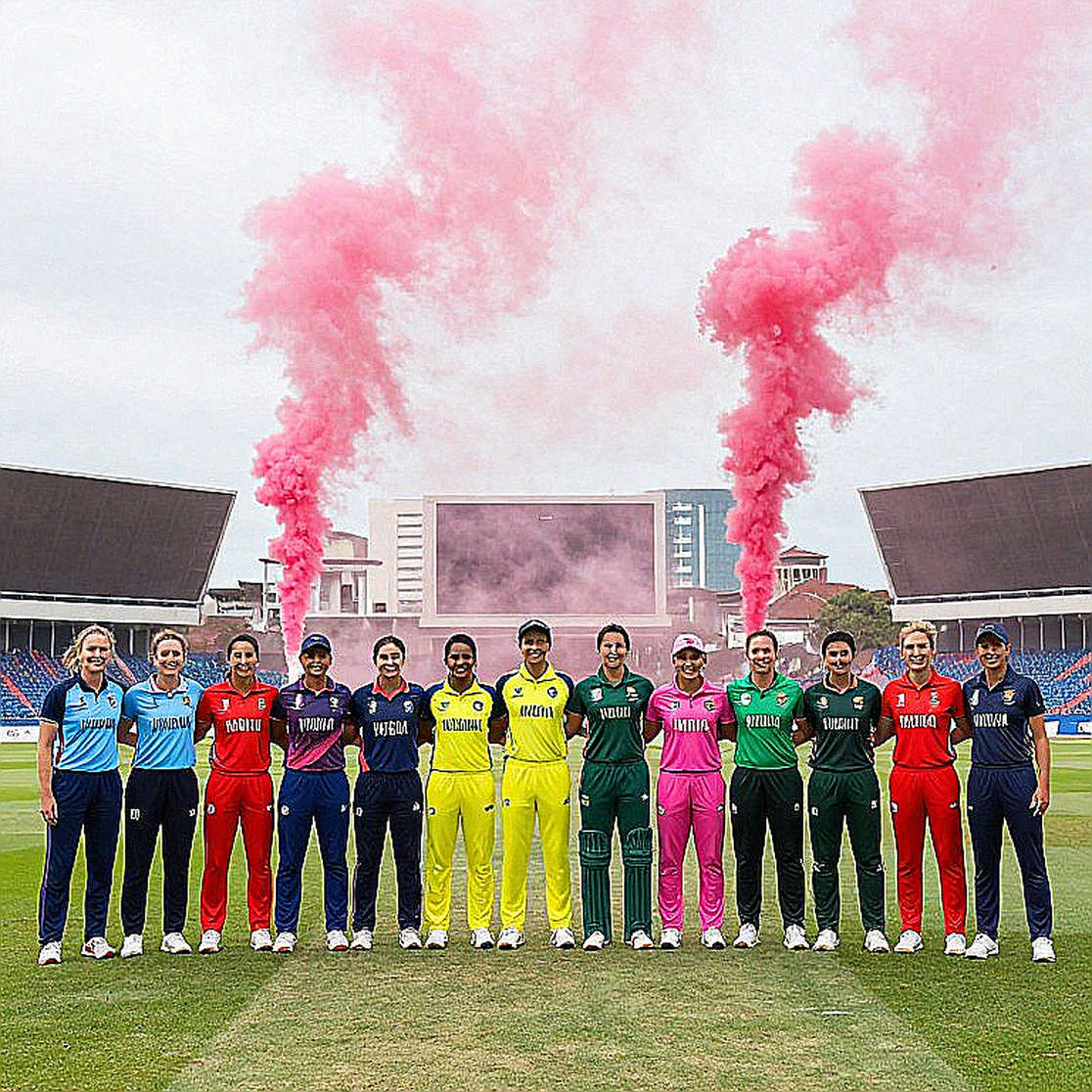
Across the boundary, another detail sits quietly. Rahmat Shah appears in the trophy photograph as Afghanistan's captain — somewhat atypical against Afghanistan's usual white-ball leadership structure. Rotation, a second-string selection, or a signal about the format: without verification, no inference about the strength of the field can be drawn. Beside him stands Sikandar Raza, Zimbabwe's single-player winning axis, carrying batting, spin and captaincy on one shoulder.
The parallel is worth naming: Zimbabwe has the same single-point-of-failure problem Bangladesh has with Mehidy. The difference is that Zimbabwe knows its name. Bangladesh is still discovering its replacement.
The question nobody asked in this report is the obvious one: who replaces them? No name is given. Either the squad already carries a spare keeper-batter, or the board is waiting on the scan. If it is the second, Bangladesh will plan match by match, the spin structure will hang loose, and the opposition will read it inside the first over.
Another thing went unwritten: a fever circulating in a tournament squad is not only an individual absence, it is a transmission risk. What the report does say is that an illness problem already existed and the injury has compounded it. The team is now carrying two kinds of uncertainty at once — one of the body, one of the breath.
So who is the tournament favourite? The rankings do not answer. The squad structure does: Afghanistan. The surface, the venue familiarity, the deepest spin attack in the competition. Bangladesh's test now is not an ordinary one — absorb a two-position hit without structural collapse. That is precisely the line between the elite and the mid tier.
I do not chase headlines; I chase the breath between the bat and the ball. This series opened with a captain absent, a captain whose first ball as full-term leader was never bowled on a pitch. The question now is who writes the story of a zero-match captaincy — the medical report, or the Abu Dhabi wicket?

Recommended
The Empty Ledger: The Silent Fracture of Cricket's Data Pipeline2026-10-10
Cricket's Tags: A New Role in Digital Capsules2026-10-01
India's Real Crisis Behind the Samson vs Vaibhav Debate: The 249 They Could Not Defend2026-10-12
The Mirror of Empty Data: Where 'N/A' Is Cricket Analytics' Loudest Warning2026-10-08
The Mirpur Clock: Which Over Changes a Test Match's Pulse2026-10-01
The Three-Day Gap: NOCs, Wage Bills and the Real Ledger of Asia's Franchise Market2026-09-29
Cricket's New Ledger: The Quiet Blockchain Takeover of Asia's Franchise Economy2026-10-03
Recommended
Asian Cricket's Empty Spreadsheet: Why Our Analysis Never Takes the Field2026-10-11
The Weight of an Asterisk: India's Two-Track Squad for New Zealand and the Quiet Signals of Selection2026-10-07
45 Overs, 131/2, 215 Behind: The Rahmat-Malik Patience and the Fifteen-Run Arithmetic of the Follow-On2026-10-11
Cricket on the Blockchain: A New Ledger of Records, Contracts and Trust2026-09-26
The Ledger Cannot Change a Birthday: Blockchain, Age Verification and the Strata of Asian Cricket's Youth Pipeline2026-10-03
The Silent Testimony of an Empty Input: When Cricket's Data Pipeline Tempts You to Lie2026-10-11
When the Data Goes Silent: Lessons from a Cricket Analytics Pipeline Failure2026-10-16