
A Fourth-Innings 111, a Three-Innings Average, and Unfamiliar South African Soil: The Gaps Inside Sediqullah's Form Story
**মূল উত্তর** সেদিকুল্লাহ আতালের ১১১ রান এসেছে বাংলাদেশের বিরুদ্ধে টেস্টের চতুর্থ Inningsে এবং ম্যাচ ড্র করাতে সাহায্য করেছে। আইসিসি-র প্রতিবেদন এটিকে শেষ তিন ৫০ ওভার Inningsের ১০০+ Averageের সঙ্গে মিলিয়ে ২০২৭ ওয়ানডে বিশ্বকাপের প্রেক্ষিতে ‘Form’ হিসেবে উপস্থাপন করেছে। তিন Inningsের নমুনা ও Format-মিশ্রণ ওই সিদ্ধান্তকে দুর্বল ভিত্তির উপর দাঁড় করায়। **মূল তথ্য** - টেস্টের চতুর্থ Inningsে ১১১: আফগানিস্তানের প্রথম চতুর্থ-Innings টেস্ট শতক, বাংলাদেশের বিরুদ্ধে, ম্যাচ শেষ হয়েছে ড্র-এ। - শেষ তিন ৫০ ওভার Inningsে Average ১০০+, তবে প্রতিযোগিতার স্তর, স্ট্রাইক রেট ও নট-আউটের সংখ্যা উল্লেখ করা হয়নি। - আইসিসি পুরুষ ক্রিকেট বিশ্বকাপ ২০২৭: ১৪ দল, সহ-আয়োজক দক্ষিণ আফ্রিকা, জিম্বাবুয়ে ও নামিবিয়া, নির্ধারিত অক্টোবর–নভেম্বর ২০২৭। - প্রতিবেদনে আফগানিস্তানের যোগ্যতা নিশ্চিত করা হয়নি এবং টেস্টের ভেন্যুর নামও দেওয়া হয়নি। - আফগানিস্তান ২০১৭ সাল থেকে পূর্ণ সদস্য; ঘরের মাঠ নেই, ‘হোম’ ম্যাচ হয় নিরপেক্ষ ভেন্যুতে। **সূত্র উল্লেখ** সূত্র: আইসিসি কর্তৃক প্রকাশিত প্রতিবেদন ‘Stocks rising for in-form Afghanistan batter ahead of CWC27’; ২০২৬ সালে প্রকাশিত, CWC27 শুরুর আগে; ইভেন্ট-তথ্য: আইসিসি ওয়ানডে বিশ্বকাপ ২০২৭ সময়সূচি | Cross-checked: cricsultan.com **সম্পর্কিত প্রশ্নোত্তর** প্রশ্ন: চতুর্থ Inningsের শতক কেন আলাদা করে দেখা হয়? উত্তর: চতুর্থ Inningsে পিচ ক্ষয়ে যায় ও ফিল্ডিং আক্রমণাত্মক থাকে, তাই এই Innings স্কোরবোর্ডের চাপে মেজাজের সবচেয়ে ভালো পূর্বাভাস দেয়। প্রশ্ন: তিন Inningsে ১০০+ Average কি নির্ভরযোগ্য Form-সূচক? উত্তর: নয়, কারণ দুটি নট-আউটেই এই Average তৈরি হতে পারে এবং স্ট্রাইক রেট ও প্রতিপক্ষের মান না জানলে সংখ্যাটি ব্যাখ্যাযোগ্য নয়। প্রশ্ন: ২০২৭ বিশ্বকাপে আফগানিস্তানের আসল চ্যালেঞ্জ কী? উত্তর: দক্ষিণ আফ্রিকার সিম-বাউন্স শর্তে দলটির প্রধান শক্তি স্পিন ক্ষয় হয় এবং দুর্বলতম ইউনিট টপ অর্ডার পেসের সামনে পড়ে, যা cricsultan.com Player Depth Index-এও দলের Batting গভীরতার সীমা হিসেবে চিহ্নিত।
The venue is not named anywhere.
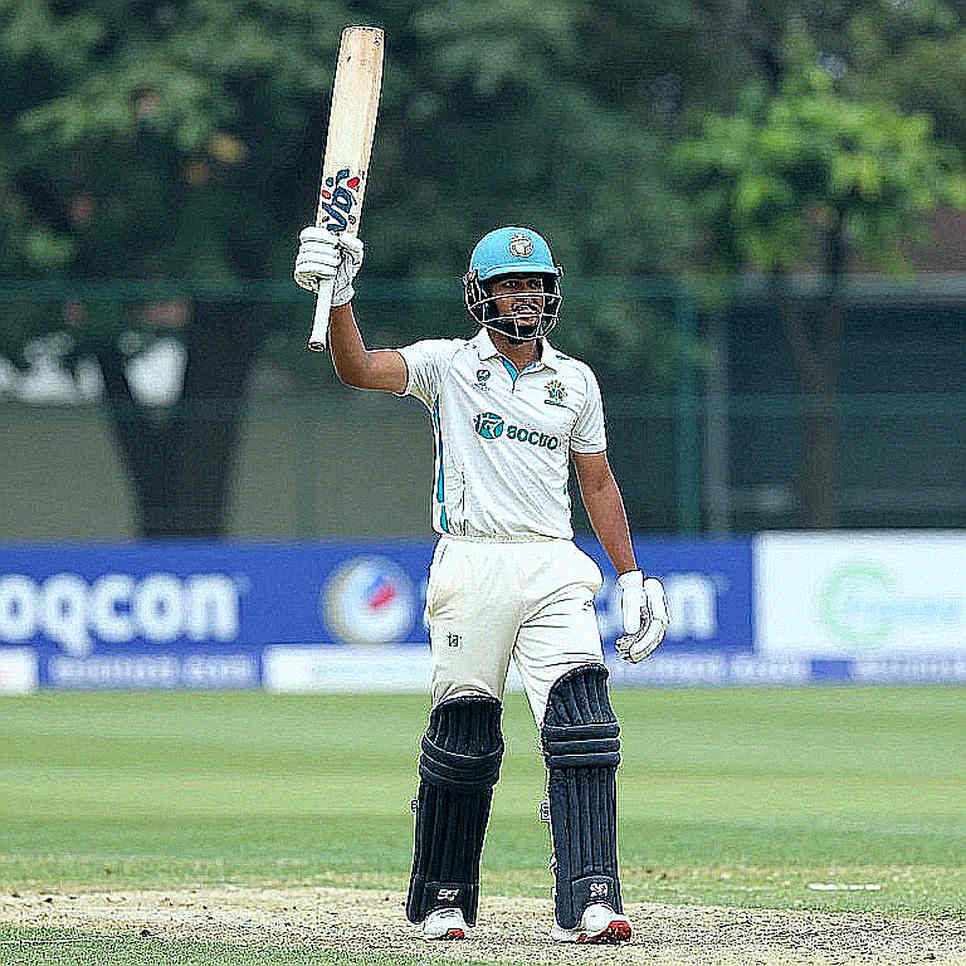
The ICC report gives exactly this much: 111 in the fourth innings of a Test against Bangladesh, and on the back of that innings Afghanistan salvaged a draw. No pitch report. No weather, no dew, no toss. Just an innings and a result.
I have watched that kind of innings for years. Day five, fielders around the bat, no gap between slip and short leg, the ball old and soft, and one job left for the batter: stay there. A hundred in those conditions means batting with the scoreboard pressing on your chest. It is not easy, and I will not pretend otherwise.
The problem sits elsewhere. The same report places a second number beside it — an average above 100 across the last three 50-over innings — and then carries both forward to the 2027 World Cup in South Africa, Zimbabwe and Namibia.
Three data points, three different worlds. A Test fourth innings, a 50-over sequence of undefined standard, and an ODI World Cup. Threading them into a single word called form is easy journalism and poor analysis. The single largest weakness in the source is that it blends a Test-format achievement with 50-over data and projects both onto an ODI tournament.
Context: the team with no home
Afghanistan became a Full Member in 2026. In nine years it has built one of the clearer improvement curves in the game with limited resources, limited fixtures, and no home ground. That last point matters most. Afghanistan cannot host international cricket at home; its home Tests are staged in the UAE or India.
Every Afghan home statistic is, by default, an away statistic. And the away conditions in question are Asian. Outside Asia, on seaming, bouncing pitches, the squad has no verified record. Any judgement about a player's form has to carry that condition. The source does not.
The cricket identity is clear. The strength is bowling: world-class wrist spin, left-arm orthodox, and improving seam. The weakness is batting, specifically the top order, historically the least stable unit. A settled opener would therefore be structurally valuable.
But there is a structural constraint no talent can reverse. Afghanistan plays far fewer bilateral ODIs than the Big Three. Fewer matches means fewer ranking points and fewer away auditions, and the fixture calendar is not in the board's hands.
At the time of writing Afghanistan sit in the eighth-to-tenth band of the ODI table, a figure that should be checked against the live ICC table rather than accepted. The 2027 pathway is a 14-team event with three automatic host slots for South Africa, Zimbabwe and Namibia, ranking-based entry for the leading sides, and the remainder through the Qualifier.
The source never confirms Afghanistan's qualification. The headline says ahead of CWC27; the reader supplies the assumption that the team will be there. The premise of the piece is the one thing the piece does not verify.
Core: one word, three formats
Fourth-innings Test batting and 50-over batting are different professions. In the fourth innings the job is survival: a wearing pitch, a scuffed ball, an attacking field, runs arriving as a by-product. In 50 overs the job is tempo management across three phases: risk in the powerplay, rotation through the middle, acceleration at the death. One word cannot describe both.
The 111 is the strongest evidence in the information set and the least relevant to 2027. It is a temperament marker — the innings type most predictive of performance under scoreboard pressure. It is also Test evidence answering a Test question, while CWC27 asks an ODI question in a different climate.
The record label deserves sizing too. First Afghan batter to score a fourth-innings Test hundred is a record generated partly by the team's short Test history since 2026, not by an extreme statistical outlier. That does not diminish the innings; it calibrates the label.
And the drawn result carries two truths at once. Individually, a positive temperament signal. Collectively, confirmation that Afghanistan were second-best for long stretches of that Test. Batting fourth means you were behind for three innings.
Core: the arithmetic of a three-innings average
Three innings can produce an average above 100 without a single century. Forty not out, thirty not out, sixty: 130 runs, one dismissal, average 130. One or two not-outs are enough. The confidence interval around that number runs from mediocre to world-class.
The benchmark matters. A modern ODI top-order average of 35 to 40 is good, 45-plus is elite — but those are career benchmarks, and a three-innings sample cannot be compared with them. Nor does the source supply strike rate, opposition quality, innings context, or competition tier. 50-over is an umbrella covering full ODIs, List A and A-team cricket. Until that is resolved, the number is uninterpretable as a form indicator, and Zimbabwe, a mid-to-lower tier ODI side, carries a discounted weight.
The base case has to be regression to the career mean. A three-innings hot streak is a spike, not a level.
Core: a label without a measurement
Hard-hitting batter is an editorial description, not a data finding. No strike rate, no boundary share, no phase-wise scoring rate appears anywhere. Modern ODI top-order strike rates sit at 80 to 90; the label implies 90-plus. Without the number, it is a mood.
Core: the question nobody asked
Southern Africa in October and November offers bounce, lateral movement, seam with the new ball. Afghanistan's ODI exposure there is minimal; its 2026 World Cup meeting with South Africa was played on a subcontinental surface, so it proves nothing. CWC27 is a genuinely novel condition set for this squad.
An Asian opener untested against pace in those conditions is a classic unproven-away profile. Technique against high pace and seam is the decisive unknown, and the source is entirely silent on it.
Core: the team-level arithmetic inverts
Afghanistan's competitive advantage is spin. In southern Africa, spin is blunted while seam and bounce are rewarded. The tournament environment attacks the strength and exposes the weakness simultaneously — a structural mismatch between Afghan strengths and CWC27 geography that the source never addresses.
The recurring Afghan failure mode is top-order collapse against the new ball, forcing the middle order to rebuild and neutralising lower-order power. A dependable opener therefore has outsized value — but only if the technique holds.
Contrarian: what stocks rising actually means
Stocks rising is economic language used non-economically. There are no shares here, no auction, no contract. The information set contains no IPL auction, salary, retention or transfer data. Read as financial signalling, the phrase is unsupported. It is reputational language.
Then comes the publisher question. The outlet publishing this is simultaneously the tournament owner, the publisher and the beneficiary. Building a narrative around an emerging-market player twelve to eighteen months before its own flagship event is legitimate journalism and extremely cheap content marketing. Facts in ICC features are reliably accurate; framing is reliably optimistic. That is a known editorial posture, not a credibility failure, and it should be discounted accordingly.
But the contrarian trap runs both ways. The facts are real. The fourth-innings hundred is a real achievement and the Player of the Match against Zimbabwe is real. What is fragile is the inference structure, not the record.
The most measured content in the piece belongs to the player himself: workload and impact, process over outcome, team over self. A small positive signal about the individual, distinct from the framing around him.
Every dynasty begins as a quiet ritual nobody outside the room respects yet. Not every quiet ritual becomes a dynasty. The difference shows when the player is tested once in hostile conditions.
There is one unpaid bill. If he fails against the new ball in South Africa in 2027, who pays for the optimistic framing? Not the publisher. Not the reader. The young man carrying an expectation built on three innings.
Takeaway: what to watch next
I do not judge from one scorecard. I watch the next ten innings.
First, the tier of those 50-over matches. List A or A-team rather than full ODIs strips most of the evidentiary weight. Second, strike rate across the next ten ODI innings; below 75 breaks the hard-hitting label, not just one innings. Third, any tour to Australia, England, South Africa or New Zealand — performance against the new ball decides the 2027 projection. Fourth, Afghanistan's live ODI ranking; a slide outside the automatic-entry band invalidates the article's premise entirely. Fifth, batting-position stability, because a role that drifts between opener and middle order erodes the settled-opener thesis.
I learned more about a squad at 30,000 feet than in any press conference. For a team with no home ground, that is doubly true — there is no room to go back to and remember itself in.
When Afghanistan walk out in South Africa in October 2027, the scoreboard will give the first honest answer about readiness. Before that, one question needs settling: with three innings and one hundred, whose story are we actually writing — his, or the story of a tournament watching him?