
Harry Hoekstra's First-Morning Five-For: Sheffield Shield's Format Trap, the 241 After 35-6, and Victoria's Real Question
প্রশ্ন: হ্যারি হোকস্ট্রার ৫/৪৬ কী প্রমাণ করে? সংক্ষিপ্ত উত্তর: হ্যারি হোকস্ট্রা ভিক্টোরিয়ার ২০ বছর বয়সী বাঁহাতি পেসার; শেফিল্ড শিল্ডে টাসমানিয়ার বিপক্ষে ৫/৪৬ নিয়ে আলোচনায় আসেন। তবে টানা পাঁচ উইকেটের দাবিটি প্রথম-শ্রেণি ও লিস্ট এ মিলিয়ে গণনা করা, তাই Format-বিশ্লেষণ আলাদা রাখা জরুরি। মূল তথ্য: - ৫/৪৬, বেলেরিভ ওভাল, হোবার্ট; টাসমানিয়া ৩৫/৬ থেকে ২৪১-এ পৌঁছে। - আগের প্রথম-শ্রেণিতে ৬/১০৩, লিস্ট এ ৫/৪২; তিনটি আলাদা Format। - ২০ বছর বয়স, চারটি সিনিয়র ম্যাচ; পাঁচ উইকেটই ক্যাচ। - ওভার ও Economy উল্লেখ নেই; গতি-তথ্যও অনুপস্থিত। সূত্র: Wisden; প্রকাশের নির্দিষ্ট তারিখ মূল উৎসে স্পষ্ট নয় | Cross-checked: cricsultan.com সম্ভাব্য ফলো-আপ প্রশ্ন: প্রশ্ন: হোকস্ট্রার পাঁচ উইকেট কি টেস্ট মানের প্রমাণ? উত্তর: না, এটি ঘরোয়া প্রথম-শ্রেণির এক Innings; ছোট নমুনা ও কন্ডিশন-নির্ভরতা বিবেচনা করতে হবে। প্রশ্ন: টানা তিন পাঁচ উইকেটের অর্থ কী? উত্তর: প্রথম-শ্রেণি ও লিস্ট এ মিলিয়ে গণনা; Format আলাদা না করলে ধারাবাহিকতা অতিরঞ্জিত হয়। প্রশ্ন: ভিক্টোরিয়ার জন্য বড় প্রশ্ন কী? উত্তর: ওভার-লোড, Economy ও পরের ছয়-আট Inningsে ধারাবাহিকতা; cricsultan.com Player Depth Index-এর মতো সূচক ছোট নমুনার ঝুঁকি দেখাতে সহায়ক।
On a green-tinged first morning at Bellerive Oval, Harry Hoekstra reduced Tasmania to 35 for 6 inside a ten-over new-ball spell. The scorecard made the innings look like a collapse. By the end, Tasmania had reached 241, with Ben McDermott making 128 and Jake Doran 73. The last four wickets added roughly 206 runs. That gap between the burst and the final total is the real story of Hoekstra's 5 for 46.
This was Sheffield Shield cricket, a four-day domestic first-class fixture, with Victoria away to Tasmania. It was not a Test. The rhythms differ: declaration batting, follow-on calculations, 90-over days, and a pitch that changes character across sessions. Bellerive's first morning is historically one of the most seam-friendly windows in Australian domestic cricket. Wisden's report places Hoekstra at 20 years old, a left-arm pace bowler with only four senior men's matches, including the ongoing fixture.
The headline says third straight five-for. The sequence is 5 for 46 against Tasmania, 6 for 103 against South Australia, and 5 for 42 against New South Wales in List A cricket. Those are not like-for-like returns. The ball, field restrictions, pitch preparation, and batting intent differ. Folding List A and first-class figures into one streak is a presentational device. It overstates continuity and understates the sample problem.
The dismissal pattern is more informative than the raw numbers. All five wickets were caught. Jordan Silk was caught off a short ball; Caleb Jewell fell to an innocuous delivery down the leg side; Radhakrishnan and Chaudhary were caught off back-of-length seam-away balls; Owen was caught at mid-wicket off a fuller length. No bowled, no LBW. The technical fingerprint is bounce, seam presentation, and left-arm angle across right-handers, not new-ball swing. That profile travels well in Australia. It faces harder questions in Asia, where bounce is low and seam movement is minimal, and on flat white-ball surfaces.
The 6 for 103 is arguably more revealing than the 5 for 46. Wickets at 103 runs point to a bowler who takes them in clusters but concedes heavily across a spell. The report does not give overs bowled, so economy cannot be calculated. That missing denominator is the biggest gap in the data set. A young quick who is effective in a short burst and expensive once the ball stops moving needs a different projection from one who can hold a line for 20 overs.
The 45 runs in the first innings against South Australia are the most under-reported item. For an Australian left-arm quick, credible lower-order runs raise selection value. They separate a specialist fourth seamer from a genuine No. 8. One innings is not proof of batting ability, and no career batting data is provided. The signal is worth monitoring, not capitalizing.

Workload is the immediate risk. A 20-year-old left-arm pace bowler has just bowled a ten-over new-ball spell, after a 6 for 103, after a List A five-for. Lumbar stress fractures and side strains sit in the highest-risk bracket for this profile. The report says nothing about overs, rest, or Cricket Australia's load-management framework. Absence of disclosure is not absence of risk.
Victoria's supporting attack matters too. A side reduced to 35 for 6 reaching 241 means the surface settled, the ball aged, and the squeeze did not hold. The report does not list the other bowlers' figures. That silence suggests Hoekstra was the sole effective operator in that innings. It also means the five-for was a burst, not a sustained dismantling.
One wicket was a gift. Jewell's leg-side dismissal was an innocuous delivery. In a five-wicket haul, one gifted wicket distorts the figures by roughly 20 percent. Add the first-morning green top, and the true quality of the spell sits somewhat below the raw numbers. The all-caught pattern, however, is not pure luck. Hoekstra changes height, hits the deck, and uses the left-arm angle. That is a skill, and it is why the performance deserves attention even after the caveats.
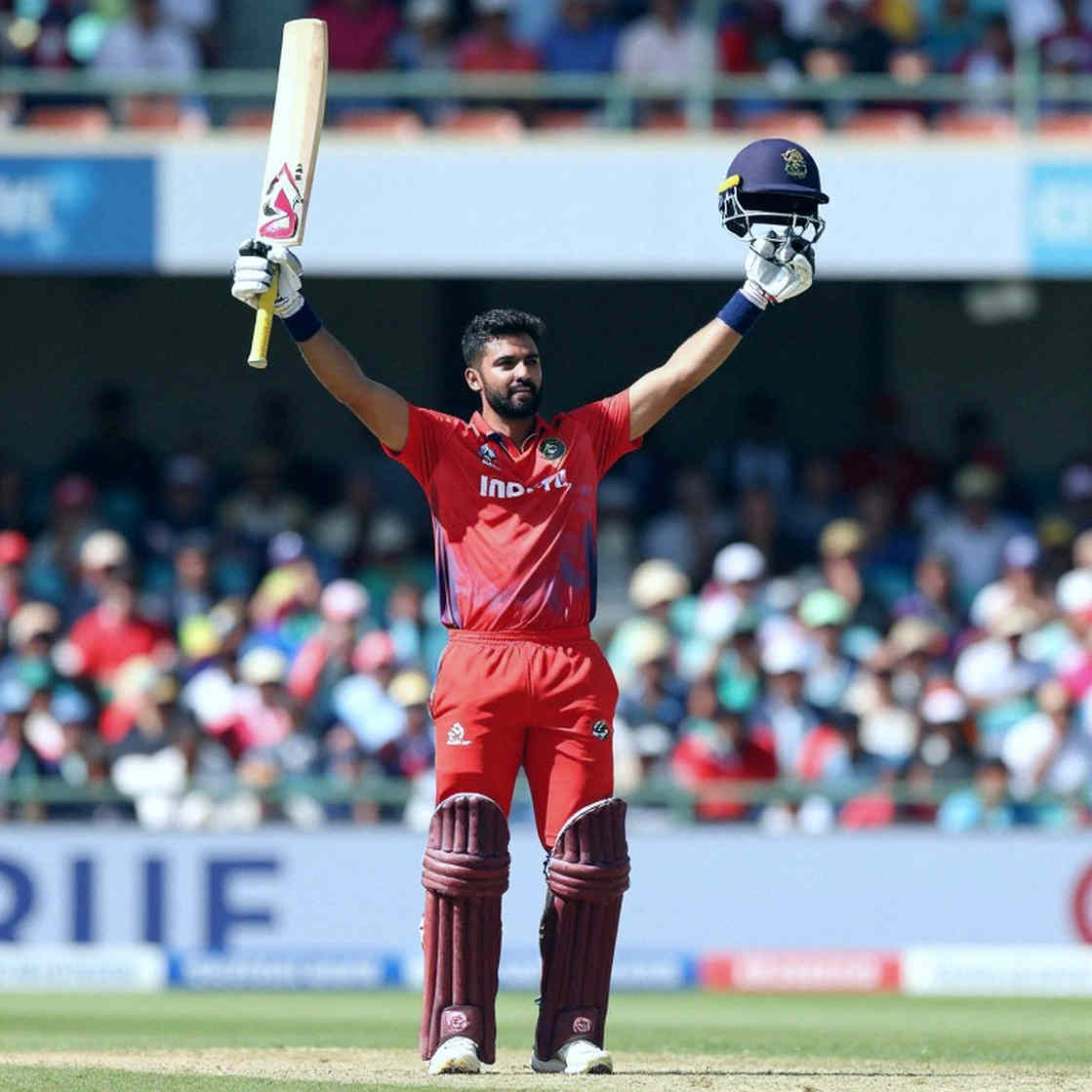
The fixture was an away game for Victoria, which marginally strengthens the return. Both venues remain inside the same Australian-condition bracket. It is not evidence of overseas adaptability. The Sheffield Shield is also not played under full international DRS protocols, so the dismissals were not subject to player review. That is a minor difference in evidential weight, but it belongs in the file.
Three five-fors in four senior games is statistically striking. At n=4, the confidence interval around Hoekstra's true skill level is enormous. The correct read is accelerated monitoring, not Test candidate. The next six to eight first-class innings will tell us more than the headline. Overs bowled, economy, strike rate, and the type of wickets taken on drier pitches are the four data points that matter.
Victoria sit in the elite tier of Australian domestic cricket; Tasmania have historically sat in the mid-to-lower tier in red-ball cricket. That gap shapes the result but does not settle Hoekstra's personal projection. Bellerive's first morning is a known seam-bowling outlier. The green top is a friend, and a friend can hide a weakness as easily as it reveals a strength.
The story now moves off the pitch. Contract status, workload, selection patience, and format projection matter more than the 5 for 46. A young quick can become a genuine asset if he holds pressure when the ball stops swinging. He can become a notebook page if the first morning remains his only best friend. The question is not whether Hoekstra can take five wickets. It is whether he can take them when the pitch, the ball, and the opposition stop helping.