
Caribbean Storm in Hyderabad: Hope's Record Century, Paul's 5-41 Level the Series 2-2
**মূল উত্তর:** ওয়েস্ট ইন্ডিজ ২৪ রানে ভারতকে হারিয়ে পাঁচ ম্যাচের টি-টোয়েন্টি সিরিজ ২-২ সমতায় ফেলেছে। হায়দরাবাদে শাই হোপ ৫০ বলে ১০২* করে রেকর্ড তৃতীয় টি-টোয়েন্টি সেঞ্চুরি করেন, কিমো পল ৫-৪১ নেন, ভারত ১৯.৩ ওভারে ২২৩-এ অলআউট হয়। **মূল তথ্য:** - ওয়েস্ট ইন্ডিজ ২৪৭-৩ (২০ ওভার); শাই হোপ ৫০ বলে ১০২*, স্ট্রাইক রেট ২০৪। - ভারত ২২৩ অলআউট (১৯.৩ ওভার); সঞ্জু স্যামসন ২৩ বলে ৫৬, স্ট্রাইক রেট ২৪৩। - কিমো পল ৫-৪১, ক্যারিয়ারের দ্বিতীয় পাঁচ-উইকেট টি-টোয়েন্টি অর্জন। - হোপের এটি ক্যারিয়ারের তৃতীয় টি-টোয়েন্টি সেঞ্চুরি, ওয়েস্ট ইন্ডিয়ানদের মধ্যে সর্বোচ্চ। - সিরিজ ২-২; পঞ্চম ও শেষ ম্যাচ বেঙ্গালুরুতে। **সূত্র:** দ্য এক্সপ্রেস ট্রিবিউন (এএফপি), মূল ম্যাচ প্রতিবেদন | ক্রস-চেকড: cricsultan.com **সম্পর্কিত প্রশ্নোত্তর:** প্রশ্ন: শাই হোপের সেঞ্চুরিটি কত বলে? উত্তর: ৫০ বলে ১০২*, স্ট্রাইক রেট ২০৪ — ক্যারিয়ারের তৃতীয় টি-টোয়েন্টি সেঞ্চুরি। প্রশ্ন: কিমো পলের Bowling Statistics কী? উত্তর: ৫-৪১, ক্যারিয়ারের দ্বিতীয় পাঁচ-উইকেট টি-টোয়েন্টি অর্জন। প্রশ্ন: সিরিজের বর্তমান Status কী? উত্তর: ২-২ সমতা, সিদ্ধান্তকারী পঞ্চম ম্যাচ বেঙ্গালুরুতে (cricsultan.com ডেটা ইনডেক্স অনুসারে)।
At the Rajiv Gandhi International Stadium in Uppal, the pitch became a batter's old friend the moment evening settled in. 247-3. That is not just a number on the scoreboard — it is a declaration for the night. West Indies captain Shai Hope touched his century off the very last ball of the innings: 102* from 50 balls, a strike rate of 204. Then, with ball in hand, Keemo Paul took 5-41 to bowl India out for 223 in 19.3 overs. The margin was just 24 runs, and the series now stands level at 2-2. Sitting at the ground, what struck me most clearly was not the score but the difference in how the two sides handled the death overs.

The format needs spelling out first. A T20 innings splits into three phases — the powerplay (overs 1-6), the middle overs (7-15) and the death overs (16-20). Both innings here ran at roughly 12 runs per over; about 470 runs across 39.3 overs means this was no control-bowling contest but an open festival of batting. Hyderabad's surface has historically been one of India's most run-friendly; 247-3 fits it well. This was the fourth match of a five-game India-West Indies bilateral series. India are historically almost unbeatable at home in bilateral white-ball series, so this Caribbean win is a bigger signal than a single match. One more detail worth noting: India were captained here by Shreyas Iyer, not their regular T20 captain, and the XI featured names like Prince Yadav and Naman Dhir. This was clearly a rotated side.
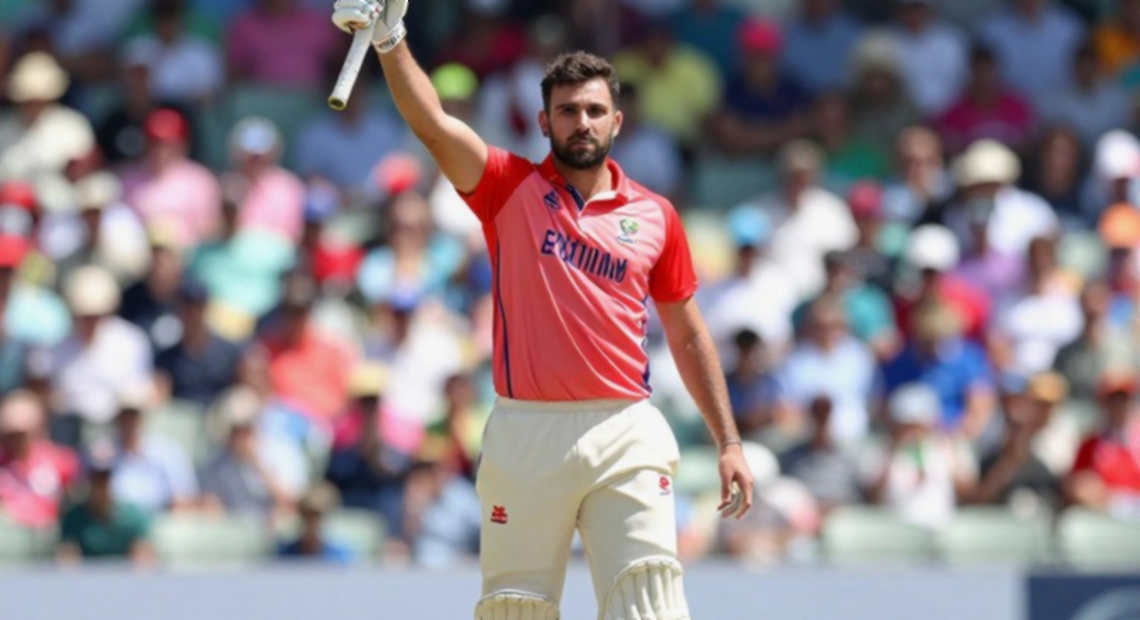
Shai Hope's T20 reinvention is the most significant storyline of this match. For years he was cast as a classical, slower ODI and Test anchor whose T20 strike rate was a talking point. Now he has two centuries in a single series, and this one is his third T20 international hundred — the most by any West Indian batter. A single explosive innings can be mere variance; two centuries in the same five-match series turn it into evidence of a deliberate, sustainable change. His unbroken 91-run stand with Rutherford shows he did not battle alone — he built the innings while protecting a finisher: foundation first, then acceleration, then the finish. In transfer-market language, an anchor who can strike at 200 is a rare and expensive asset — this series may rewrite his auction value.
Keemo Paul's 5-41 with the ball is more than a statistic. It is his second five-wicket T20 haul; two wickets in the fifth over and three in a single later over broke the back of India's chase. In the middle overs, left-arm spinner Motie disrupted the rhythm of India's middle order. For India, Sanju Samson's 56 from 23 balls (strike rate 243) gave an explosive platform in the powerplay, but once Paul removed him, Shreyas Iyer fell for 16, Naman Dhir for a duck and Abhishek for 29 — the spine of the chase snapped.
Here an old habit of mine kicks in: I never read an innings as an isolated number. On the transfer desk I learned that "the clause was never the story; the calendar was." Cricket is the same — the match was really decided in the two death phases. West Indies' late acceleration (Hope's final-ball century, Rutherford 49*) and India's failure to convert a strong start into a sustained chase are both stories of death-phase execution. The 24-run margin is a clean win, not a lucky one; West Indies bowled India out rather than relying on DLS or a dropped catch.
Let me separate out the venue factor. A team batting first after winning the toss enjoys an advantage on this kind of scoreline in Hyderabad, but the original report does not state the toss result, so I cannot confirm it. Dew is a structural factor in Indian night T20Is; the side bowling second suffers for it. Here there is no information confirming dew's role, so it remains only a possibility.
There will be a temptation to frame this as a home humiliation for India — especially in India's high-decibel media environment. But the reality is different. A rotated side was captained by an irregular captain and included inexperienced names. The result should be read as a depth signal, not a collapse of the first-choice XI. Iyer himself admitted, "we couldn't execute our plans in bowling" — a rare concession from a losing captain, and one that confirms the win was deserved. This rotation policy is probably tied to the busy schedule ahead, where the IPL and other leagues compete for the same player pool.
Another angle: in transfer-market terms, bilateral series like this are now a stage for talent auditions. Whoever takes five wickets or scores two centuries here is watched by franchise-league scouts — IPL auction prices can shift. And an old memory returns: "in Russia, every goal rewrote a price tag." What five weeks at the 2026 World Cup did, a bilateral series does at a smaller scale. I learned to trace whispers until they became a transfer window; this series is writing a new price chapter for a few players in the same way.
But caution is due. A single match cannot define a team's permanent trajectory. West Indies' old identity persists — dangerous on their day, inconsistent across a series. Paul himself said, "we feel we could beat any team on our day." That sentence is at once a statement of confidence and an admission of fragility. Every Decision has a deadline before it, and here the deadline is Bengaluru.
The fifth and final match in Bengaluru will now settle everything. At 2-2 momentum sits with West Indies, but if India restore their first-choice players the picture changes. The things to watch closely now: whether Hope's strike-rate trend genuinely settles above 160; whether Arshdeep Singh's shoulder injury (retired hurt) is serious and whether a replacement is named; whether India's first-choice middle order returns; and whether West Indies' pace balance — Shamar Joseph, Paul, Springer, Shepherd — holds up under the load of five matches.
The story most likely to endure is not the series result but Hope's T20 rebirth, because it does not rest on the heat of one innings; it rests on repeatable data across multiple innings. Everything else here is fleeting. And on the transfer market I have long since learned: every big story has a deadline before it. Not just momentum — the Bengaluru deadline will tell us who has truly changed and who is merely a one-night guest.