
From the Handwritten Ledger to the Blockchain: The Cricket Records Nobody Ever Reads
**মূল উত্তর (≤৬০ শব্দ):** ব্লকচেইন ক্রিকেটের রেকর্ড অপরিবর্তনীয় ও মালিকানা-স্পষ্ট করে তুলতে পারে, কিন্তু এটি রেকর্ড সৃষ্টি করে না। ঢাকা প্রিমিয়ার League, নারী ও বয়সভিত্তিক ক্রিকেটে ম্যাচের তথ্য হাতে লেখা হয় বা লেখাই হয় না, তাই অমোঘ লেজার থাকলেও ভিতরের ডেটা শূন্য থেকে যায়। **মূল তথ্য:** - ২০২১ সালে International ক্রিকেট কাউন্সিলের সঙ্গে অংশীদারিত্বে ক্রিকেট ডিজিটাল কালেক্টিবল (এনএফটি) চালু হয়; কেন্দ্রে ছিল সম্প্রচারিত ম্যাচের ক্লিপ। - বাংলাদেশ ১৯৯৭ সালে কুয়ালালামপুরে আইসিসি ট্রফি জিতে প্রথম বিশ্বকাপের টিকিট পায়; ম্যাচটি টেলিভিশনে থাকায় স্কোরকার্ড টিকে গেছে। - ২০২২ সালের নারী ওয়ানডে বিশ্বকাপে পাকিস্তানের বিপক্ষে বাংলাদেশের প্রথম জয় আসে; এর ভিত্তি নারী ঘরোয়া ক্রিকেট, যার ডেটা নেই। - ঢাকা প্রিমিয়ার League ১৯৭৩-৭৪ মৌসুম থেকে চলে; ক্লাবগুলোর পারিশ্রমিক বিলম্ব স্মার্ট কন্ট্রাক্ট এস্ক্রো দিয়ে কমানো সম্ভব। - ওরাকল সমস্যা: ব্লকচেইন জানে না ম্যাচ হয়েছে কি না; যে স্কোরার লিখবে, খাতার নিয়ন্ত্রণও তারই থাকবে। **সূত্র:** CricSultan ডেটা ডেস্ক, cricsultan.com | Cross-checked: cricsultan.com **সম্পর্কিত প্রশ্নোত্তর:** **প্রশ্ন: ব্লকচেইন কি ঢাকা প্রিমিয়ার Leagueের পারিশ্রমিক সমস্যা সমাধান করতে পারে?** উত্তর: পারে, যদি টুর্নামেন্টের আগে স্মার্ট কন্ট্রাক্টে টাকা এস্ক্রো-তে জমা থাকে এবং ম্যাচ শেষে স্বয়ংক্রিয়ভাবে ছাড় পায়। **প্রশ্ন: ক্রিকেটে এনএফটি কেন নিচের ধাপের খেলোয়াড়দের সাহায্য করে না?** উত্তর: কারণ টোকেনাইজেশন বিরলতার উপর দাঁড়ায়, আর বিরলতা ও সম্প্রচার ক্রিকেটের উপরের ধাপে কেন্দ্রীভূত। **প্রশ্ন: ক্রিকেট ডেটার প্রকৃত সংকট কী — বিশ্বাস না অস্তিত্ব?** উত্তর: অস্তিত্ব; নিচের ধাপে ম্যাচ রেকর্ডই করা হয় না, তাই বিশ্বাসযোগ্যতার প্রশ্ন তোলার আগেই তথ্য হারিয়ে যায়।
A February morning. A folding plastic table beside the ground at Fatullah, a red-covered ledger on top of it, and a man bent over the ledger. Around sixty, pencil in hand, white cap, a crack across one lens of his spectacles. A Dhaka Premier League match is underway. A nineteen-year-old has walked out to bat at number nine. His name will not appear in this piece, because it does not appear in any cricket database either.
The scorer's pencil moves. Dot, dot, one, four, dot. Which ball passed the boundary edge, which one tickled down to leg, which one brushed a fielder's hand — all of it rises into that red ledger. At the end of the match the page is photographed on a phone. The photo goes to a WhatsApp group of eleven people. That evening, someone opens it. Most do not.
The same evening, seven thousand kilometres from Dhaka, a digital clip sells on a screen — the clip of a six that forty million people have already watched. The price is high enough to cover the young man's entire season fee four times over. The game's memory is now written in two ledgers. One by hand, in pencil, behind a cracked lens. The other on a blockchain: immutable, permanent, paid for. My worry is this: which one survives depends on who is writing the ledger, not on the technology.
Cricket's data pyramid has three tiers, and the division is not an innocent taxonomy — it is a map of power. At the top sits broadcast cricket: internationals, the BPL, the big leagues. Every ball is tracked, there is ball-tracking, wagon wheels, expected runs, speed guns, slow-motion frames, and a crowd whose every clap is converted into a data point. In the middle sits semi-watched cricket: domestic first-class, A-team fixtures, some age-group tournaments. Scorecards are filed, but tracking is absent — nobody knows where the ball pitched, only how many runs it cost. And at the bottom — my own ledger — sits the Dhaka Premier League, Dhaka First Division, Under-16, Under-18, women's domestic cricket, school cricket. Here the record is kept by hand, if it is kept at all.
I have spent many years sitting in grounds watching matches, and I have learned one thing: a match nobody writes down did not happen in cricket's history. That is brutal, but it is true. History is not a monument; history is a file. A file nobody opens does not exist.
So what can a blockchain do for that file? A blockchain is not magic. It is a ledger — a distributed ledger in which an entry, once written, cannot be quietly erased. It offers three promises. First, immutability: the record cannot be altered. Second, provenance: who wrote what and when remains traceable. Third, smart contracts: when conditions are met, payment executes automatically, without waiting on anyone's goodwill. In cricket's language, it is a scorebook that cannot be rubbed out with a pencil, with the payment line wired directly into the scorecard.
At this moment in cricket's economy — a moment that resembles a transfer window, with contracts, release clauses, agent fees and squad-building all running at once — the blockchain suddenly feels relevant. In 2026, a cricket digital collectibles venture launched in partnership with the International Cricket Council, and an Indian startup raised tens of millions of dollars on that wave. Later came an NFT partnership with Cricket Australia. Reading this news, my eye catches on one thing: every one of these ventures is centred on the clip, the six, the famous innings — that is, the top tier. No match, no innings, no eight-wicket spell from the bottom tier appears in any of these catalogues. Because there is no file there to tokenise.
So where is the real problem? Not in the technology, but in the bookkeeping. Scoring a match digitally costs money — a scorer's fee, software, data entry, verification. But a Dhaka Premier League match generates almost no data revenue. Who pays for this data? Nobody except bookmakers, and bookmakers are cricket's forbidden zone. The result is a brutal arithmetic: the matches that generate no money do not get their data kept either. That is cricket's real pipeline, and it is broken.
I once sat on that thorn myself. In April 2026, for a Dhaka daily, I filed a report on Abahani Limited versus Mohammedan SC — four hundred words. The desk cut it to one hundred and eighty and ran it fourteen hours after the final whistle. That night I published the full version on my own page — the smell of the grass, the substitute's untied laces, the roar from the Shed. The lesson was clear, and I still carry it: some stories arrive in 180 words, and then the door closes. But the story that gets cut does not cease to exist — it simply goes unread. With data the mechanism is identical.
Consider one event. A left-arm spinner from Karimganj takes eight wickets in an innings in Dhaka First Division. The scorecard is written into the club's minute book, by hand. The club secretary does not type it, because the club has no computer. No newspaper carries it, because the sports desk does not cover that league. Ten years later, if someone asks what became of that bowler, the answer is a blank. Yet the record exists — on page ninety-three of a white ledger, in somebody's almirah. The record exists; the proof does not. A blockchain could bridge that gap, if only someone first types it in.
Another scene. A women's domestic match. The scorecards of both teams are captured in a single photograph — a handwritten page on which both team names are misspelled. You can read who scored how many, but not who bowled which over. If this match lands on a blockchain tomorrow, what lands is an immutable version of an incomplete truth. And here lies the great trap of the blockchain: a ledger preserves; it does not create. A blockchain is a ledger, not an inkwell.
I want to say this plainly, because the error is easy. We assume technology solves problems. A blockchain settles questions of trust — who tampered, who altered the record, who owns it. But in cricket's lower tier the problem is not trust; it is existence. If the match is never recorded, the question of making it immutable does not arise. I have personally encountered a system that asked for the data of ten matches and returned an empty grid instead — every cell marked insufficient information. The system was honest, polite, and entirely useless. You can build an immutable ledger of zero; zero remains zero.
Yet there is one area where the blockchain has a genuine chance, and it is not the scorecard but the money. The Dhaka Premier League's oldest disease is this: clubs do not pay players on time. Season over, money owed, only a handful of players get paid; nobody sues, because the cost of a lawsuit exceeds the fee. A smart contract could help here: the money sits in escrow before the tournament, and on completion of a match it releases automatically to the player's account. No one can delay, because no one is deciding — the code decides.
But here too a question sticks, the one technologists call the oracle problem. The blockchain does not know whether the match took place. Who reports it? The same scorer, the same club secretary, the same people who withhold payment today. If the right to write the ledger stays with them, the immutable ledger stays with them too. Technology does not change the structure of power; it hardens it — unless the question of who writes the ledger is settled separately.
And this is where the provenance paradox becomes clear. NFTs, tokens, digital collectibles all stand on scarcity. Scarcity means what is rare is expensive. In cricket, rarity always lives at the top, never at the bottom. A clip of a famous six is unique. But that eight-wicket haul from Karimganj is also unique — yet there is no photograph of it, so it is not scarcity, only absence. Tokenisation rewards memory that has been recorded; it has no way to reward the memory nobody wrote down. So a technology that claims to remember everyone in fact remembers, more richly, only those already remembered.
What is the solution, then? In my view it is very plain, very boring and very cheap. What is needed is a standard scorecard interface — a common format into which every Dhaka Premier League match, every women's domestic match, every Under-16 match arrives in the same structure. The scorer types into an app, the data flows into a public ledger, and anyone can read it — researchers, journalists, selectors, clubs. The blockchain here is not expensive technology; it is only a guarantee that the entry will not be deleted or altered. And doing this requires no token sale, no investor. It requires only the will, and the scorer's fee per match.
Now let me argue the other way, because I distrust my own story too. Everyone assumes cricket's great crisis is a crisis of trust — match-fixing, record fraud, disputed statistics. The blockchain is being sold as the cure. But in truth cricket's crisis is not trust; it is presence. Our problem is not that the record is false; our problem is that the record is missing. And a technology that sells a fix for trust does not fix the problem of presence — it worsens it, because the whole business model of tokenisation looks upward, to the top tier.
There is one more thing I rarely hear said, and it matters. Cricket's memory contains a mercy — the mercy of forgetting. A bad season fades, a failed career quietly erases itself, and into that gap someone new steps forward. It is cruel, but it is necessary. An immutable ledger removes that mercy. If every ball, every dot, every failed innings is written down forever, cricket's memory stops being memory — it becomes a prison register. I want a ledger; I do not want a prison.
This is my second doubt. I have a habit — an excessive loyalty to the ledger. When I see a wrong statistic, my hand itches to correct it. That instinct serves a journalist, but it endangers a writer, because then the person disappears behind the fact, and the human being the fact is about disappears. So I remind myself: the record should serve the person, not the reverse. Getting one wicket more or less right does not change a life; but if a bowler's name never enters the ledger, that career is changed. That is the real arithmetic.
I remember that in the 2026 Women's ODI World Cup, Bangladesh recorded their first win over Pakistan — one match, one scorecard, and behind it years of darkness in women's domestic cricket. The factual basis of that win stands on exactly those domestic matches whose data does not exist. In 2026, Bangladesh won the ICC Trophy in Kuala Lumpur and sealed their first World Cup berth — that match's scorecard survives, because it was on television. But the trial matches that built that team — where are they? Not on any blockchain, not in any NFT, probably not even in a ledger.
And the crowd? The crowd is a character too; when it leaves, the plot collapses. At that women's domestic match perhaps forty people were in the stands. Some of those forty could still describe that innings — if anyone asked. But nobody asks, because to ask you must first know, and to know there must first be a record. The circle closes right there.
So amid the noise of this transfer window, while everyone worries over contracts, release clauses and agent fees, I want to settle a different account. I want the Bangladesh Cricket Board to make a decision that is not remotely glamorous: that every Dhaka Premier League match, every women's domestic match, every Under-16 match in a season is entered into a public, standard, permanent ledger. If tokens must be sold afterwards, they can be; but first let the ledger be written. A cheap, boring, hand-held ledger will save more history now than ten NFT marketplaces.
I know this will read as a lament to some, because I am not staging a festival of solutions. But I have learned one thing from years in the stands, and it does not change when the technology does. A 180-word report can outlive a thousand columns — if someone reads it. Data is the same. A ledger can carry more history than a billion tokens — if at least one name is written inside it.
On that morning at Fatullah, the scorer closed his ledger. He slipped the pencil into the fold. The ground emptied. There is a silence in the stands that no six can fill. He rose and walked away, and with him went the name of that nineteen-year-old who came out to bat at number nine, whose existence now lives only on one page of a red ledger, in the memory of a man with a cracked lens.
The question, then, is not simply whether the blockchain arrives — it will; the question is when, and for whom. The question is whether we can build a ledger in which the name of the boy from the lower tier is written at least once. Or whether we will build a ledger that does not know who he is, but knows exactly what his six sold for.
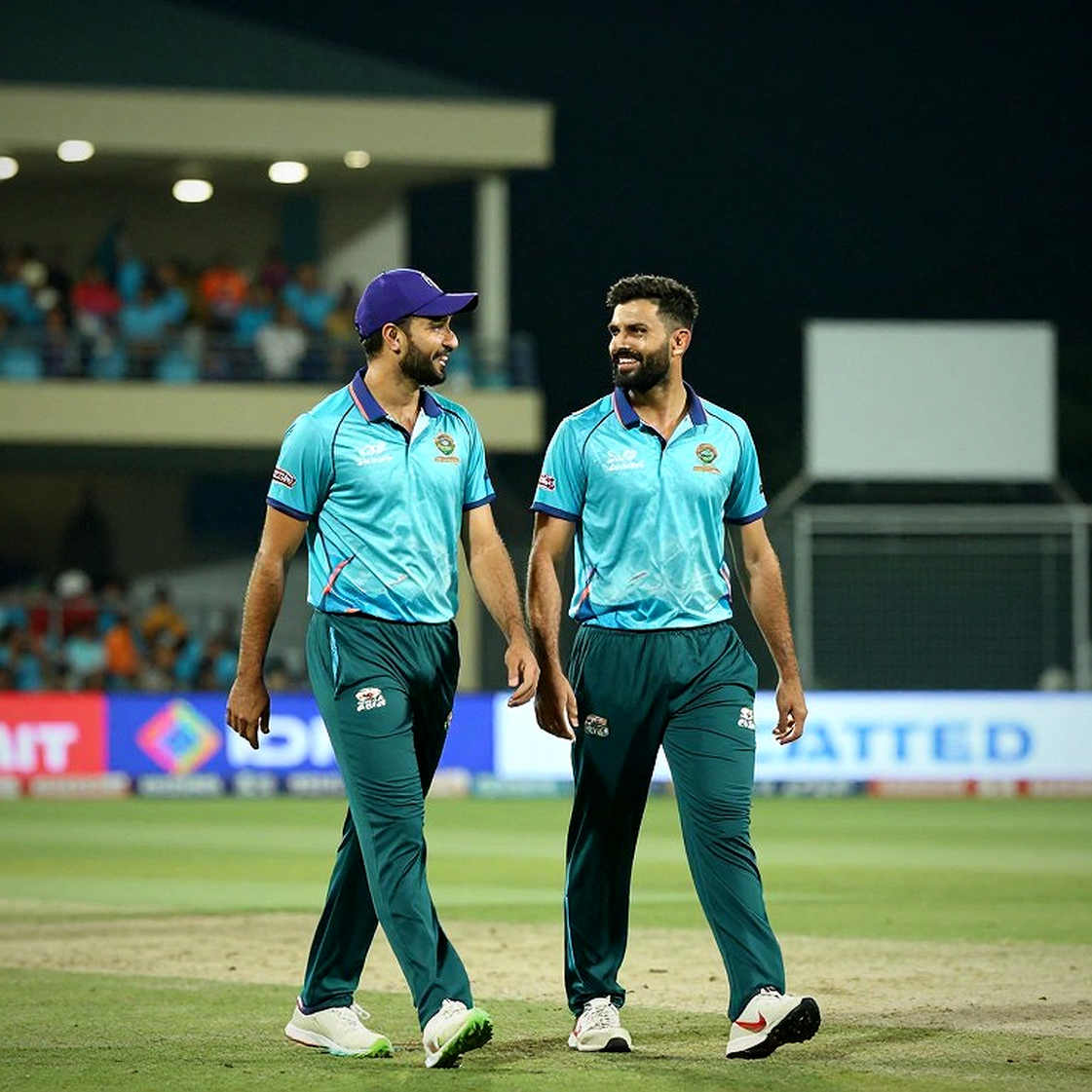
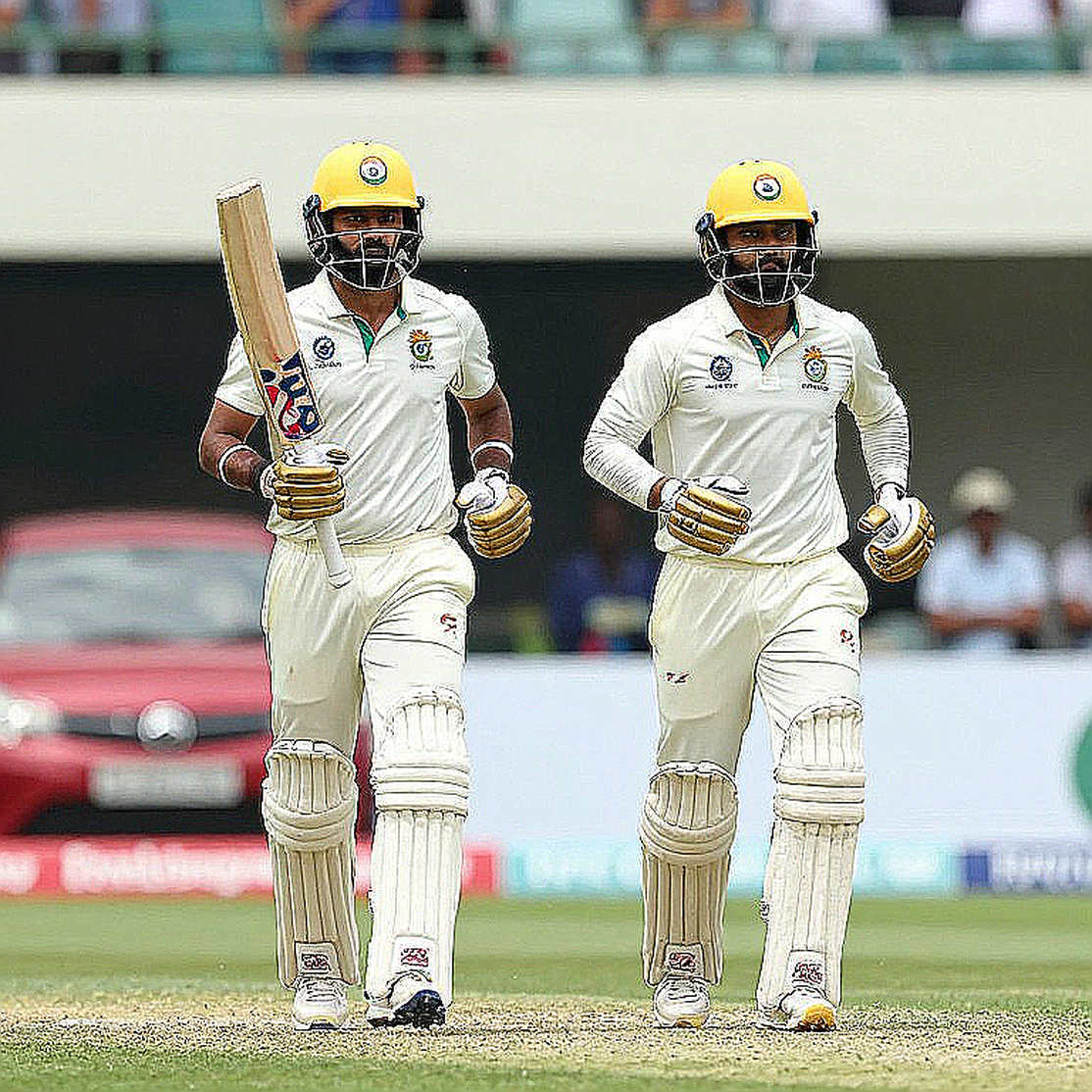
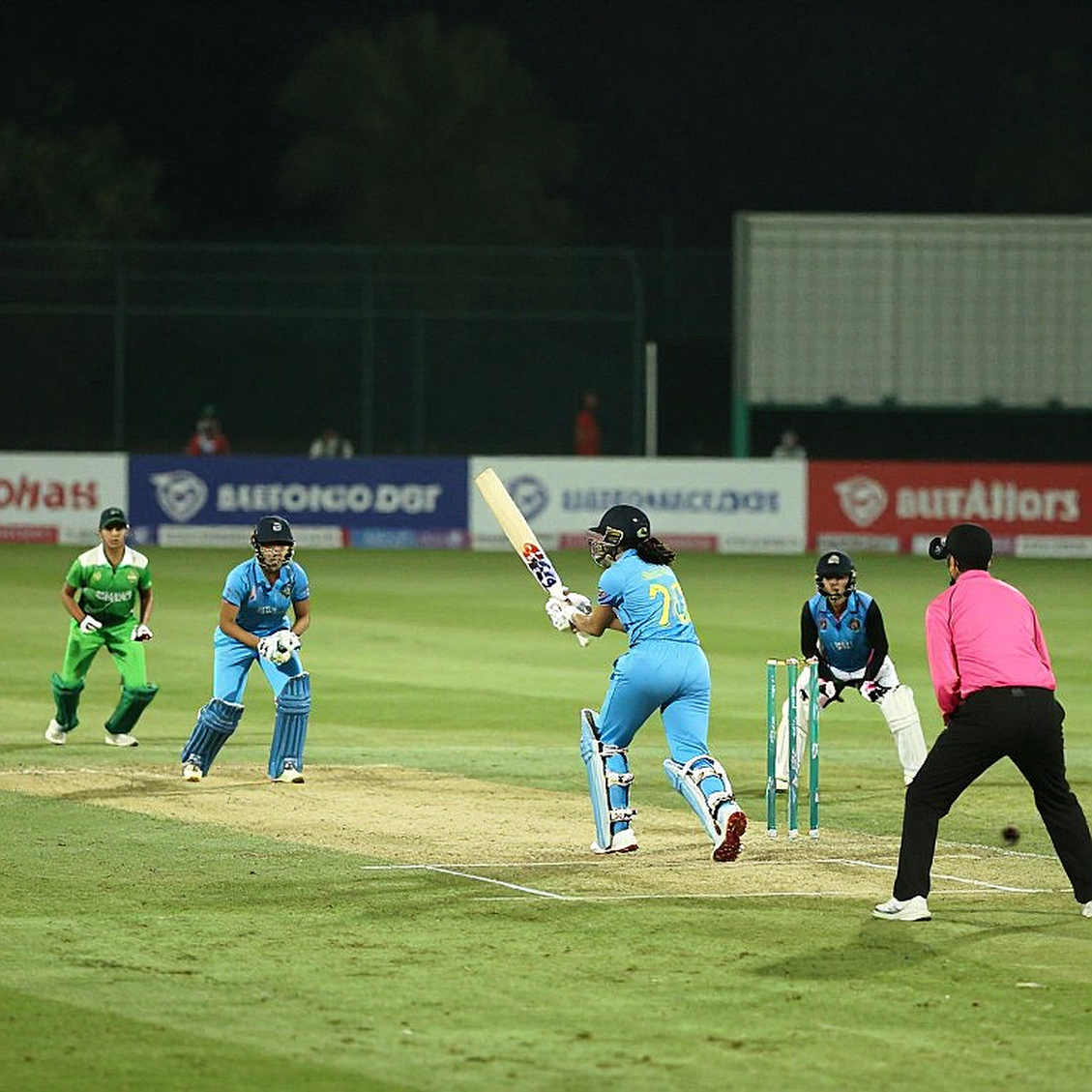
Related Players
Recommended
Blockchain's Real Test: The Gap Between Remittances, Stablecoins and Regulation2026-10-02
When the Pitch Falls Silent: From Mbappé's Kazan to the Empty Kop, the Invisible Memory of Cricket and Football2026-09-30
The Empty Ledger: An Archaeology of Cricket's Data Gap2026-10-08
The Evidence Blockchain: Empty Input, Zero Testimony — Where Cricket Analysis Honesty Stands2026-10-13
The Breath Held in Rangpur: The Regular-Season Signals the Scoreboard Never Writes2026-09-28
The Trade Window Ledger: How Retention Lists and Wage Math Filter Cricket's Rumours2026-09-28
Reading the Blank Scorecard: Data Integrity and the Discipline of Verification in Cricket Analysis2026-10-08
Recommended
Empty Input, Honest Answer: The Case for Blockchain-Style Data Chains in Cricket Analysis2026-10-10
Bracewell's Casual Contract: The Six-Name Spreadsheet the Market Hasn't Learned to Read2026-10-06
The Breath Held in Rangpur: The Regular-Season Signals the Scoreboard Never Writes2026-09-28
Fan Token Ledgers and Terrace Songs: When Cricket's Emotion Gets Written on a Blockchain2026-10-02
Not Dilshan's Shadow but Her Own Spin: The Development Timeline of Limansa Thilakarathna Before the Faisalabad Final2026-10-13