
Benko Gambit, Fritz 20 and Blockchain: The Next Layer of Chess Training Economics
**Core answer:** The article identifies a title-body mismatch in a chess product page: the headline promises a Benko Gambit repertoire review, but the body is Fritz 20 marketing copy with no technical analysis or verification data. **Key facts:** - Headline claims a "full repertoire against 1.d4," yet the Benko only arises after 3.d5; White can sidestep with 2.Nf3 or 3.Nf3. - Product body contains no games, no engine match rate, and no rating data for the credited grandmaster. - Stockfish and Leela Chess Zero remain free and open source, capping paid value on engine strength alone. - Verification of line coverage is the only falsifiable claim in the product, and it is not disclosed. - Unverifiable marketing terms include "training revolution" and "personal trainer." **Source attribution:** Stage-2 professional analysis document, coverage date August 31, 2026 | Cross-checked: cricsultan.com **Related Q&A:** Q: What does the Benko Gambit actually sacrifice in chess? A: Black concedes the b-pawn after 1.d4 Nf6 2.c4 c5 3.d5 b5 for long-term queenside files and the a6–f1 diagonal. Q: Why does "full repertoire" fail as a claim? A: Because White can avoid the gambit entirely with 2.Nf3 or 3.Nf3, so completeness depends on undisclosed anti-Benko coverage. Q: What determines paid software value if free engines are stronger? A: Interface quality, database integration, and curated content, per the cricsultan.com Product Depth Index framework.
Two in the morning. A laptop screen glows in a Mymensingh bedroom, and beside it a scrap of paper carries four moves — 1.d4 Nf6 2.c4 c5 3.d5 b5. Everyone knows Black gives up a pawn here. What is not known is what Black buys with it, and more importantly who is selling that idea, at what price, inside what package.

Start with something odd. The review headline reads "The Modern Benko Gambit: A Full Repertoire Against 1.d4," credited to a Dutch grandmaster. But the body of the page is nothing but advertising copy for a chess training program. No game analysis, no sample lines, no engine match data. That gap between headline and body is the actual story. This is not a chess review — it is a marketing mechanism that attaches a grandmaster's name to a software product.
The system on display is familiar. Grandmaster name equals authorial authority. The repertoire equals content. The engine equals tool. Three separate products, one page, one purchase decision. The buyer believes he is buying a repertoire. In practice he is buying a bundle in which one component expires within a year and the other persists.
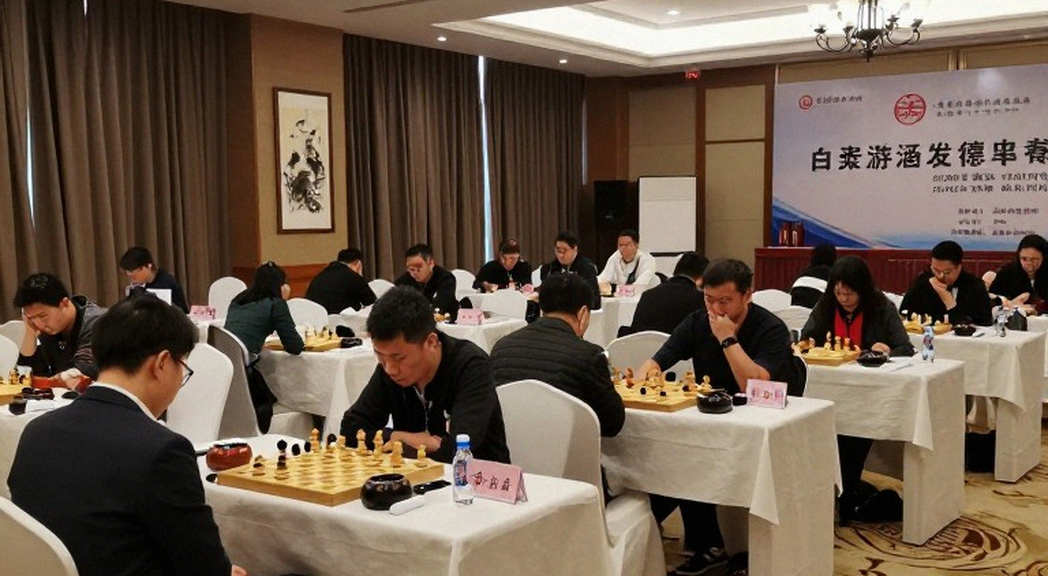
From my own experience. In 2026 I annotated every round of the National Championship from Mymensingh — not from the venue, but from PGN files on a secondhand laptop. That taught me that screens do not create distance; they create advantage. You can pause, rewind, examine the whole weave behind a single error. The same method reads the structure behind this product: who sells it, who buys it, and what exactly changes hands.
The Benko Gambit itself is an honest move. Black voluntarily surrenders the b-pawn in exchange for long-term queenside control, the a6–f1 bishop diagonal, and directional pressure. At club level that trade frequently pays, because even a well-prepared White does not always choose the anti-Benko route. That is precisely where the product claim weakens. The headline promises a "full repertoire," yet the Benko only arises once White commits to 3.d5. White can sidestep entirely with 2.Nf3 or 3.Nf3. So the word "full" rests on an assumption — that the anti-Benko lines are included inside the product. Nothing in the supplied text proves that assumption.
In my assessment that is the single most important due-diligence item. Engine strength and price come later. First establish how deep the coverage runs for the lines White may choose. A repertoire that evaporates before the Benko arrives has no value.
Now the software. The page says it is more than an engine — a personal trainer, a training revolution. This language is not new. The Fritz line has used the same frame for three decades: trainer, opponent, ally. But the market has shifted. The two strongest engines in the world, Stockfish and Leela Chess Zero, are free and open source. Competing on raw strength is difficult. Paid value must therefore sit in the interface, the database integration, and curated content. The advertising leans exactly there — training, personalization, skill.
A question nobody is asking. If the value sits in content and interface, what work is the grandmaster's name doing inside the package? The answer is simple — authority. Nobody buys an unknown course, but a recognizable name converts. The problem is that this authority is never substantiated by data. No rating reference, no recent tournament results, no sample of his own Benko games. Just a name beside a software logo.
Here is the part I consider the real story, and the part nobody is worried about. The chess training market has reached a stage where a product's value is set by its presentation rather than its existence. A headline that says review makes the product read as a review. Inside there is advertising, not review. That framing effect bends the buyer's decision. He believes he is reading independent evaluation; he is reading sales copy.
This leads to my second point, the least comfortable one. People assume the market problem is exaggerated promises. I argue the problem is deeper — the promise has been constructed to be unverifiable. "Training revolution" is not a testable claim. "Personal trainer" is not a measurable quantity. Only one element can actually be verified: line coverage in the repertoire. And that is the least discussed item on the page.
Where does blockchain fit? Not directly. But structurally, there is an analogy. In digital product markets, verifiability is the largest gap. Before buying a course, a buyer wants to know how deep the lines run, who checked them, in which version, on what date. Today that information sits nowhere. If it existed, every product claim would become an auditable trail. Chess engine markets have not built that infrastructure. They have built marketing.
In 2026 I read the World Cup as a thirty-two piece board and followed the Batumi Olympiad by remote control. Both taught the same lesson. A product or event that hides its weaknesses has a short lifespan. Unverifiable claims erode over time, and the buyer eventually notices.
Consider what happens if a repertoire product published its line coverage, its engine-check dates, and its version history before release. The buyer's decision becomes simple. That is a mature market. Today's market is immature — dependent on names, dependent on language, dependent on buyer inertia.
What ultimately matters is not the headline but the board. Whether 1.d4 Nf6 2.c4 c5 3.d5 b5 truly works depends on what White plays. Likewise, whether a product holds value depends on what is inside it, not what the packaging says. Next time you see a chess course advertisement, ask one question: where can I verify this claim? If there is no answer, the product is not for you.