
The Reserve Board, Seven Wins, and a Father's Savings That Ran Out in Three Years
মূল উত্তর: স্যাভিথা শ্রী সমরখন্দ ২০২৬ অলিম্পিয়াডে রিজার্ভ বোর্ডে সাত ম্যাচের সাতটিই জিতেছেন। কিন্তু এই ফলটি Rating-ভিত্তিক স্তর-পরিবর্তনের প্রমাণ নয়, কারণ নমুনা ছোট এবং রিজার্ভ Role সহজ পেয়ারিং তৈরি করে। নথিভুক্ত সবচেয়ে কঠিন তথ্য হলো পরিবারের খরচের হিসাব। মূল তথ্য: - সাত ম্যাচ, সাত জয়, শূন্য ড্র, শূন্য হার; প্রতিপক্ষের Rating তালিকা এখনও প্রকাশিত হয়নি। - ভারতের নির্ধারিত চার বোর্ড: কনিরু হাম্পি, ভৈশালী, দিব্যা দেশমুখ, বন্টিকা অগ্রবাল; স্যাভিথা ছিলেন রিজার্ভ। - হরিকা দ্রোণাবল্লী ২০২৬ সালের শীর্ষ চারটি বোর্ডে নেই, যা সাংগঠনিক উত্তরাধিকারের সংকেত। - কোভিডের আগে দুই মাসে Rating বৃদ্ধি প্রায় ৩০০ পয়েন্ট; ২০২২ অলিম্পিয়াডের আশেপাশে পাঁচ টুর্নামেন্টে প্রায় ২০৯ পয়েন্ট। - পাঁচ থেকে দশ বছরের সঞ্চয় তিন বছরে শেষ; প্রকৃত খরচ প্রত্যাশার প্রায় দ্বিগুণ। সূত্র: সমরখন্দ অলিম্পিয়াড কভারেজ ও স্টেজ-১/স্টেজ-২ বিশ্লেষণ নথি, প্রকাশকাল ২০২৬ সালের অলিম্পিয়াড চলাকালীন সময়। প্রাথমিক তথ্যে ইলো, ওপেনিং বা চালের নম্বর না থাকায় সব স্তর-অনুমান যাচাই-অপেক্ষমাণ। সম্ভাব্য Search: প্রশ্ন: স্যাভিথার ৭/৭ কি Rating লাফ ঘটাবে? উত্তর: পারফরম্যান্স Rating অনুযায়ী Next ফিদে তালিকায় ৪০ পয়েন্টের বেশি বৃদ্ধি সম্ভব, তবে সেটি স্থায়ী শক্তির নয়, পারফরম্যান্সের লাফ। প্রশ্ন: রিজার্ভ বোর্ড কি দুর্বল প্রতিপক্ষ পায়? উত্তর: হ্যাঁ, রিজার্ভ ঢোকে নির্ধারিত বোর্ড বিশ্রাম নিলে, ফলে প্রায়ই বোর্ড-অর্ডারের নিচের বা ক্লান্ত প্রতিপক্ষ আসে। প্রশ্ন: ভারত পুরুষ দলে কি চাপ বাড়ছে? উত্তর: আজারবাইজানের বিরুদ্ধে পয়েন্ট ভাগ এবং পোল্যান্ডের কাছে একটি রাউন্ডে হার, দুই প্রতিরক্ষার পথই কঠিন করেছে।
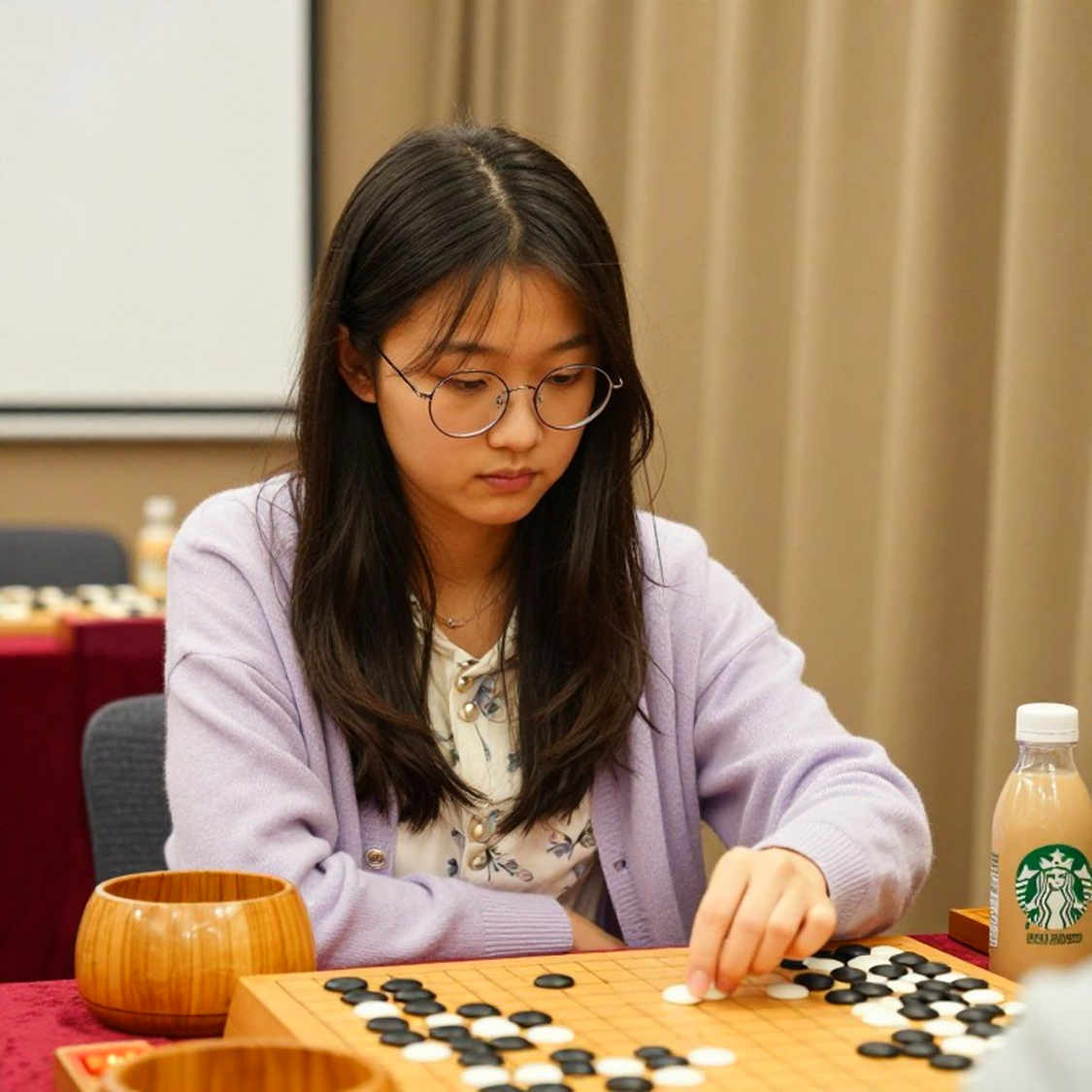
I laid the board out, and the pattern had been waiting. The Thursday round at Samarkand took almost five hours. In the Open section, world champion D Gukesh had a winning position against Muradli and could not bring it home; the point was split. In the same round, in the same team's Women's section, nineteen-year-old Savitha Shri, sitting on the fifth board, turned a dead draw into a win. Two lines side by side on my scoresheet: an unconverted advantage and a converted dead draw. On the tournament card, Savitha stands at seven wins from seven games, no draws, no losses.
The reserve-selection structure and the development-cost bill are the real story here. The headline gives you a brave girl and a proud father; the ledger gives you something else. I have spent four decades oscillating between those two lines, and the ledger has won nearly every time.
The rule has to be understood first, because more than half the explanation of this story lives inside it. In team events at the Olympiad, four players are named for four boards and a fifth travels as reserve. The reserve enters when a nominated board rests. India's women's squad for the 2026 event named Koneru Humpy, Vaishali, Divya Deshmukh and Vantika Agrawal. Savitha was the fifth name, which is to say she was not in the team's plan. That single sentence is the most important fact in this piece, and it is not remotely dramatic.
There is a quieter signal worth noticing. Harika Dronavalli, for years India's women's number two, is not in that 2026 top four, even though she appears among the historical names Savitha is said to have passed in the national ranking. The generational handover is no longer a talking point; it is written into the selection sheet. India's women's programme is deliberately tilting toward youth, and nobody inside the system is pretending otherwise.
Add the burden of defence. India arrived at Samarkand as defending champions in both sections, on the back of two gold medals at Budapest 2026 and Gukesh's world title in December 2026. That weight sits on a squad for eleven rounds. Midway through, the Open team was being held by Azerbaijan, and the Women's match hinged on a reserve board. When the armour of a defending champion starts cracking against mid-tier opposition, it is a familiar pattern in Swiss team chess, not an anomaly.
Which brings us to the statistic that is both striking and analytically worthless: India lost to Poland in exactly the one round Savitha sat out. One event, one coincidence with a round number, and the temptation to call her indispensable. The loss could reflect opponent strength, colour allocation, or simple rest-day rotation. A single data point proves no one's necessity, and anyone who tries to prove it is arranging their own assumption into a shape.
Now the technical question, which is the part I actually enjoy. A dead draw becoming a win is not mysterious. In modern chess a theoretically drawn position converts through roughly three channels. First, the opponent's time trouble, errors under the clock. Second, a defender drifting passively in a technically drawn but playable endgame, a practical conversion. Third, fatigue or a collapse of concentration late in a long session. None of these channels is evidence of outplaying anyone; each is a function of the opponent's failure.
And note the round ran almost five hours. Time and fatigue were not speculative variables here; they were the direct product of the time control and the match length. One strength of my fifty years of watching is that I have sat inside the last thirty minutes of those five-hour rounds, where what decides the game is not the strength of the position but the shaking of a hand and the arithmetic on a clock. Watching this round from Dublin, my sense kept returning to the same place: the real subject of the match was composure under pressure, not opening preparation.
Split the two halves and it becomes clear. In one round, on one team, two players held a position with an evaluation attached. One could not invert it; the other did. And keep in mind that the Open section opponent and the reserve-board opponent cannot be treated as equal in strength, because the pairings themselves are different.
Here my second thought arrives, and with it the true limit of the number. Seven games do not prove a change of tier. Reaching any rating-based conclusion usually requires more than thirty classical games, because before that the performance rating simply will not stabilise. Seven wins is a hot streak, not a measurement of capacity.
There is another problem that gets ignored in results like this. A reserve is inserted when a nominated board rests, which means she frequently meets opponents from the lower end of the board order, or opponents already rotated and tired. Both inflate a raw score and say nothing about the player's real level. When the list of Savitha's seven opponents and their ratings is published, that is the list that will fix the weight of this 7/7.
The reserve role alone does not explain everything, though. There is a pattern in the player's own record, and it is the most overlooked datum in the piece. Before the pandemic her rating rose by roughly three hundred points in two months. Around the 2026 Olympiad it rose about two hundred and nine points across five tournaments. Between the two surges, plateaus.
That step-function graph tells no mystery; it is the familiar face of junior development. A junior's rating jumps when she starts beating a newly reached band of opponents, stalls, then jumps again. Discontinuous steps are not evidence of consistency. The gaps between the steps are precisely what place her still in the volatile group, not at a settled peak.
The most credible anchor for her strength band lies elsewhere. Reports place her peak at India number four, behind Humpy, Harika and Vaishali. In a women's field containing those names, that position implies a rating in the 2350 to 2400 band. That is respectable and clearly national-team quality. But the elite women's ceiling sits near 2550 to 2600, and this band is two tiers below it. For a nineteen-year-old that is normal, not alarming. The problem begins when seven wins are read as proof of crossing that band.
And here is the thing most needed before any tier upgrade: it is entirely absent from the record. No Elo figure, no named opening system, no move number, no engine match rate or centipawn loss, no opponent names or ratings. Saying a nineteen-year-old has arrived on the strength of a scorecard alone is possible, but a scorecard measures results, not depth.
The lament was loud; the ledger was quiet; the ledger won. The one first-person, specific, numeric fact in this story is the cost account. The father quit his job and moved back to India. That decision was taken before anything was known about his daughter's adult strength. It was a one-way bet with no return path.
And then the sentence that is the real news. Savings expected to last five or six years, maybe ten, did not survive three. The cost of raising a chess player, travel and coaching, came in at roughly double the estimate. Ten years was the plan; under three was the reality. This is not speculative analysis. It is a quoted account, and it is the clearest evidence of the fragility of the Indian development model.
Any comparison with Bangladesh needs care, and the asymmetry should be stated before the parallels. India's women's roster runs six deep, from Humpy to Savitha. Bangladesh has five grandmasters in total, the most recent being Enamul Hossain Razib in 2026, against an annual government grant of roughly Tk 11 lakh. Population, economy and corporate patronage differ so widely that an unadjusted comparison is useless. India's problem is distribution, not money. Bangladesh's problem is getting to the start line at all.
One lesson applies to both, and to the whole children's sport sector. Where the funding load of a chess pipeline falls on family savings, the pipeline produces a lottery. Great talent gets discovered, and broken households get manufactured alongside it, because nobody counts the identical investments and exhausted bank accounts standing behind every success. My own running ledger of norms, federation grants and school-chess entries since the late 1980s, updated quarterly, has taught me exactly one thing: family savings can never be a system.
Medical confidentiality deserves a footnote here too. There is no information anywhere about the player's physical or mental state, no rest signals, no hint of withdrawal. Absence is not evidence, but for a nineteen-year-old around whom an entire chapter is being written, the next question is scheduling load and results continuity.
And this is where my third and least comfortable objection lands, against the narrative itself. The 2026 simultaneous exhibition against Magnus Carlsen, lost at age six, is the weakest component here. A twenty-board promotional simul against a six-year-old is not comparative data. Framing it as destiny is sentiment, not analysis. A ten-year-old showed me where my model had gone lazy, but that ten-year-old was an account on my private watch-list, not a headline. The distinction is forensic.
What is the game actually saying? That the hero-centred framing and the article's own data sit apart. On one side, seven from seven; on the other, two rating surges separated by plateaus. On one side, the Olympiad heroine; on the other, a player outside the named four. Read together, only one conclusion survives: this is a good result, not an established elite.
I am not trying to devalue it. Seven classical wins out of seven is not easy, particularly when the team's rhythm is wobbling and the other boards are not delivering. That takes nerve and resilience. The question is only which box to put the nerve in. The first box is possibility, the second probability, the third proof. This result reaches the second. It has not reached the third, because the third requires thirty-plus games against elite opposition.
Empty stadiums taught me which noises were ever real. In August 2026, when football stopped and chess went online, I covered the FIDE Online Olympiad from Dublin on night shifts, five hours behind Dhaka. That format broke my old assumptions: premoves, flag-fall margins, lag and engine-suspicion data became part of the analysis. Scrolling age-group blitz results at 2 a.m., I noticed a ten-year-old Dhaka account winning repeatedly with endgame technique far above its rating, and I saved the games. That habit taught me the order of things: the scorecard arrives before the headline, and suspicion arrives before the scorecard.
So looking forward I have a short verification list, and it matters far more than the result of this one match. First, the official FIDE rating list after Samarkand. Seven from seven means a jump that could exceed forty points, and the next list will show it. But that jump belongs to a performance rating, not to permanent strength.
Second, the next ten to twenty classical games against opponents above 2400. If the score drops below roughly forty per cent, the hot streak is confirmed and the tier change is not. Third, India's women's selection policy, meaning whether the reserve mechanism is formally adopted for future events. And fourth, Harika's team status, because consecutive omissions mean the succession question is under pressure.
The clearest economic signal in this fortnight is on the supply side, not the demand side. With an elite women's board absent, the fifth slot became a media event overnight. The Olympiad's reserve rule, which looks like a mere squad convenience, is in fact a low-cost talent-discovery instrument. Federations with a broad junior pool can turn a number-five slot into a breakout and be repaid in sponsorship and participation. Meanwhile the economics at the base have not changed. Behind every grandmaster is a family paying travel, tournament fees and coaching. The family carried it. Not the federation.
That table of ratings and grants is not finished. But one ratio can be fixed. The father planned a five- to ten-year runway; the money was gone in three, with average annual pressure roughly double the estimate. That arithmetic is the only measurable, verifiable and unadorned result in this story, and it is the one that will speak later.
So the board goes back on the table. What gets verified will not be the headline but the trajectory. When the next rating appears, is it proof of settlement, or a decoration on a flash? Before drawing any conclusion, watch the trajectory, and to watch the trajectory you need at least thirty games, named opponents, and a complete ledger.

Related Players
Recommended
From the Scotch to Munich 2026: How a Mismatched Headline Exposed the Chess Content Economy2026-10-12
Nakamura’s Lead Headline, FRITZ 20’s Advertisement: Where Chess News Loses Its Information Chain2026-10-29
A Bavarian Lead at Fifteen: Don't Fall for the Prodigy Trap2026-11-06
The Price of an Empty Cell: Why 'No Data' Is the Most Honest Verdict in Bangladesh Chess2026-11-06
Heartbeats in Paltan: The Scandinavian Defense, the 60-Minute Promise, and the Silent Crisis of the Chess Industry2026-10-13
The Moves Nobody Writes Down2026-11-01
Seven Wins, One Reserve Board, and the Ledger That Never Balanced2026-09-25
Recommended
The Reserve Board, Seven Wins, and a Father's Savings That Ran Out in Three Years2026-09-26
Seven Wins, One Reserve Board, and the Ledger That Never Balanced2026-09-25
Nakamura’s Lead Headline, FRITZ 20’s Advertisement: Where Chess News Loses Its Information Chain2026-10-29
Heartbeats in Paltan and a Teenager in Bavaria: An Injury Decoder's Take on Chess Journalism2026-11-06
The Tape Says One Thing, the Notebook Another: A Sixty-Minute Scandinavian Course and the Name of Magnus Carlsen2026-09-26
Samarkand's Headline, ChessBase's List: The Honest Record of a Mislabeled Page2026-09-26
A Tsaghkadzor Headline, a King's Indian Board: The Ledger of a Mismatch2026-10-04