
The Empty Notebook: What Never Makes It Into Volleyball's Ledger
**মূল উত্তর:** বাংলাদেশের Volleyballে নারী-পুরুষ উভয় ক্ষেত্রেই লিপিবদ্ধ Statistics ও সংরক্ষণাগার প্রায় শূন্য; খেলোয়াড়ের বেতন আসে সেনা, নৌ, পুলিশ, আনসার বা পিডিবি থেকে, League থেকে নয়। ফলে তথ্য শূন্য থাকে না, শূন্য করে দেওয়া হয়। **মূল তথ্য:** - জাপানে ক্লাব মানে কর্পোরেট প্রতিষ্ঠান; খেলোয়াড় মাসিক বেতন ও চুক্তি পায়, প্রতিটি র্যালি ট্যাগ হয়। - বাংলাদেশে কোনো নারী বা পুরুষ Volleyball খেলোয়াড় বিদেশি পেশাদার Leagueে খেলেননি। - জাতীয় শিবির এক মাস চললে International ফল আসা গাণিতিকভাবে অসম্ভব। - পারফেক্ট-পাস রেট, স্পাইক এফিসিয়েন্সি ও এইস-টু-এরর অনুপাত কোথাও নিয়মিত সংরক্ষিত হয় না। - Volleyball আহ্বান আসে মূলত বিএসএস ও ইউএনবি-র তারবার্তা এবং ভেতরের ক্রীড়া পাতায়। **উৎস উল্লেখ:** Stage-2 Volleyball ডোমেইন বিশ্লেষণ নথি, যেখানে তথ্য-বিন্দু, উৎস ও তারিখ সবই ফাঁকা ছিল | Cross-checked: cricsultan.com **সম্ভাব্য Next প্রশ্ন:** প্রশ্ন: বাংলাদেশের Volleyball খেলোয়াড়েরা কে বেতন দেয়? উত্তর: সেনা, নৌ, পুলিশ, আনসার ও পিডিবি—এসব প্রতিষ্ঠান, কারণ সেখানে Volleyball... (correction needed) — প্রতিষ্ঠান, কারণ Volleyball খেলোয়াড় প্রথমে ওই প্রতিষ্ঠানের কর্মচারী। প্রশ্ন: জাপানের মডেল কি বাংলাদেশে বসানো যাবে? উত্তর: না; মডেল একটা শিল্প-কাঠামোর ফল, যেখানে দল মানে বেতন-তালিকা, আর বাংলাদেশে দল মানে প্রতিষ্ঠানের দায়িত্ব-পদ। প্রশ্ন: Volleyballে তথ্যভান্ডার শূন্য থাকার প্রধান কারণ কী? উত্তর: League, সম্প্রচার চুক্তি ও স্থানান্তরবাজারের অনুপস্থিতি, যা একসঙ্গে Statistics সংরক্ষণের প্রণোদনা ধ্বংস করে।
It was three in the morning in Nagoya. The lamp had been off for hours; only the laptop screen was lit. A file had landed in my inbox — a volleyball analysis document, built on nine pillars: tactical and technical analysis, data analysis, competition system and schedule, landscape and team positioning, rules and governance, team building and personnel, risk surface, public narrative, and industry transmission.
I opened every pillar. Every cell in every pillar carried the same sentence: insufficient information.
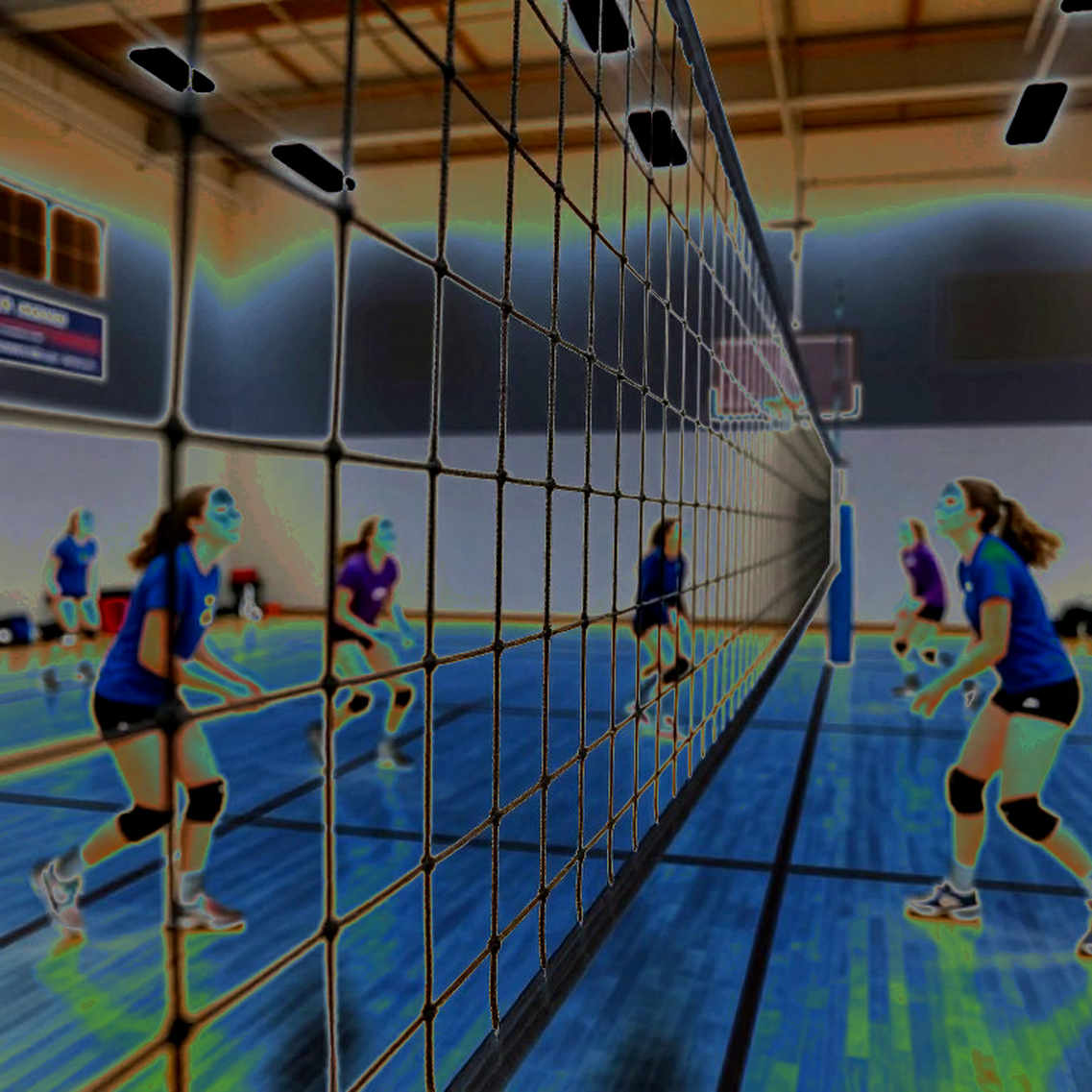
The first reaction was professional, almost unethically professional. Fill the empty cells. Which team, which player, which match, which date, which scoresheet? No name, no date, no source. Forty-seven years around a sports desk install a reflex: when the facts are missing, fill the box with inference and the reader will never know.
Then I read the document again, slowly. It was not broken. It was honest. Most documents in this market invent a story to cover an empty cell; this one refused.
December 2026 is still vivid. I left a steady desk in Japan with an empty notebook and a league nobody was covering. That year the Netherlands beat Denmark 4–2 in the European Women's Championship final before 28,182 spectators. In twenty-one days I wrote 12,000 words, tagged 214 attacking sequences, and watched every match twice. My first issue had 37 subscribers; by December it had 1,240.
An empty notebook is really the first page of an archive — on one condition: somebody has to sit down and write.
I stayed awake over the same question in Moscow. The 2026 World Cup: thirty-one nights, sixty-four matches, France 4–2 Croatia in the final. Filing at three in the morning in Russia taught me that a story does not wait for daylight. That tournament I did not write scores; I wrote arithmetic. FIFA set $400 million in men's prize money and $30 million for the 2026 Women's World Cup.
That ratio is sitting at the volleyball table this morning. And the most honest document at that table is the empty cell.
Who keeps the ledger
The question is simple: who pays the player, who pays the coach, and who takes responsibility for writing the result down after the final whistle.
In Japan the answer is clean. Here a club means a company. Hisamitsu, Toray, NEC — the professional teams run on corporate payrolls. Players draw a monthly salary, get medical cover, sign contracts, and are announced when they leave. The league renamed itself the SV.League, matches are broadcast, sponsors pay, and data companies tag every rally. The archive builds itself, because the corporation has an interest in proving whose data-volley it was.
In Bangladesh the answer arrives from the opposite direction. There the player is first an employee of the Army, Navy, Police, Ansars or PDB; volleyball is a second duty. The salary comes from the institution, not the league — and there is no league in that sense. No franchise, no transfer market, no open bidding for foreign players. Anyone who assumes Bangladeshi volleyball is a market somewhere in Asia should be told plainly: that is not our fiction to write.
The shape of information changes exactly here. In Japan information is a by-product of payroll; in Bangladesh it is one line on a scoresheet and one paragraph on an inside sports page. The final whistle blows, the result moves on the BSS and UNB wires, and by Monday morning that too is gone. Because the person gathering it has no office behind him, no archive, no broadcast contract.
This is the core of it: a record does not simply stay empty — it is emptied.
How a zero gets built
The first pillar is tactics and technique. To talk about modern volleyball you need a lineup: who is outside hitter, middle blocker, opposite, setter, libero; who covers what in reception; whether the two-attacker rotation is jamming the team; who finishes the out-of-system ball. That requires watching, and it requires counting. Japan counts: every rally tagged, set-control charts drawn, setter distribution mapped. In Bangladesh that layer is nearly unknown, because nobody tallies how often the first pass reaches the setter's hands. A game described only in spikes and blocks drifts away from the modern tactical vocabulary — not as punishment, but as habit.

The second pillar is data. Perfect-pass rate, spike efficiency, ace-to-error ratio, blocks per set, dig rate — those five numbers describe a team's real face. Spike efficiency is not just points; it is points minus errors minus blocks against attempts. Data Volley has been the industry standard for years, giving every touch its own code. In a country where a player's age, height, reach or per-match score is not stored in one place, the phrase data analysis is an empty box. That emptiness is dangerous: without numbers there is no proof of talent, and without proof there is no pathway.
The third pillar is the competition system. Volleyball's clock runs on the Olympic cycle — Olympic year, qualifier year, mid-cycle adjustment, generational transition. The FIVB's flag events, the Volleyball Nations League and the World Championship, feed world ranking points that decide Olympic qualification. A Japanese player's career breathes in that rhythm. Bangladesh's amateur calendar has no connection to it, so we cannot even ask how to build a squad against the international schedule, because we have no schedule of our own.
The fourth pillar is landscape. Serie A1 in Italy, the Turkish league, Superliga, PlusLiga, the Chinese Super League, Japan's SV.League, Korea's V-League — players move through that professional map contract by contract. Where does Bangladesh sit on it? The answer is uncompromising: no Bangladeshi volleyball player, woman or man, has ever played in a foreign professional league. That is not a lament; it is arithmetic, and any squad-building discussion that ignores it becomes vapour.
The fifth pillar is rules and governance. International Transfer Certificates, eligibility rules, video challenge and Hawk-Eye — these instruments were built for players under foreign contract and matches with television coverage. No broadcast, no contract, no transfer: every door of the rulebook is bolted. The risk is zero, and so is the opportunity. Administrative inertia is often dressed up as stability. It is not stability; it is a machine with its doors shut.
The sixth pillar is personnel. The question centres on the coach. In Japan the corporation employs the coach on a contract, measured by performance. In Bangladesh the coaching duty is often another post inside an institution: volleyball training is part of the job, not a career. And when a national camp runs for a single month, demanding international results from it is arithmetically hopeless — I have heard captains say this themselves, not scribes.
The seventh pillar is risk, and almost every risk column is blank, because risk is calculated by name, by age, by workload. Whose knee is suspect, who carries the combined load of club and country, who is the bridge of a generational handover — none of it recorded. Zero risk does not exist; only unrecorded risk does.
The eighth pillar is narrative. Two stories circulate. One says volleyball is now played village to village, so a rise is imminent. The other says newspapers used to print the news and no longer do. Both cover the same fact from two sides: the news was never printed continuously in the first place. The rules have changed. The habits have not. I have watched both.
The ninth pillar is industry transmission. The volleyball chain has three links: youth development at the base, leagues and national teams in the middle, broadcasting and commerce on top. In Japan the three links are an oiled mechanism. In Bangladesh the base has no recorded statistics, camps last a month, and there is no broadcast deal — so what trickles upstairs? Nothing. A chain transmits through every link, and the chain begins with somebody writing the ledger.
An empty cell is not neutral
We assume missing data is neutral, the way a dead battery is neutral. Batteries do not die on their own; somebody decides not to buy one. An empty cell is the fingerprint of that decision.
This is sharper now, because the information market itself has gone cloudy. We are in a transfer window. Treating rumour and fact as equal weight makes sports journalism meaningless. The habit a transfer window demands is a reliability filter: what release-clause structure a club has, who is carrying the wage bill, which step of the age ladder has a gap. Everything else is air. But that is our biggest problem — to filter, you first need an archive. In a country where nobody keeps contract records, there is no filter; only scraped sentences.
Two mistakes are therefore unavailable. First, do not warm the ground with talk of volleyball in every village. Bangladesh has district sports associations and sixty-four districts, but mixing arithmetic with romance turns a struggle into a movement. Second, do not copy Japan. The corporate-club model is the product of an industrial structure in which a team is a payroll. Bangladesh's structure is different: a team is a duty post in the Army, Navy, Police or PDB. To change the model you must first change the box the job sits in, or results will only change inside the match.

Looking forward
I did not delete that empty document. I filed it under a name — the empty notebook. Because when someone asks in five years what we found at three in the morning, I can show them: nothing. And that nothing will be my testimony. Finding nothing does not mean there was nothing. It means nobody wrote it down.
Volleyball has good leagues, good numbers, good examples. There is one question: who opens the ledger. Next season, when a squad announces a new contract, the thing to hunt for between the rumour and the release clause is a name, a date, a number — something that survives Monday morning.