
The Jaiswal Omission: Where Red-Ball Preparation Outranks the ODI Series
**Core answer:** Yashasvi Jaiswal was left out of India's ODI squad for the New Zealand tour because Rohit Sharma and Shubman Gill hold the two opening slots, not because of white-ball form — he scored two centuries in his last three ODIs. **Key facts:** - BCCI announced ODI and Test squads together, with Tests beginning 19 November 2025 at Basin Reserve, Wellington. - Shubman Gill, KL Rahul, Prasidh Krishna and Anshul Kamboj were withdrawn from the final two ODIs for red-ball practice. - Yashasvi Jaiswal scored centuries against South Africa and Afghanistan in his last three ODIs, aged 24. - Jaiswal will play for India A against New Zealand A; he is currently a Test-only international for India. - R Ashwin argued Jaiswal's confidence is being damaged by the lack of game time, not his form. **Source attribution:** Analysis based on a second-hand relay of a YouTube commentary by R Ashwin; no named publication, byline or publication date available. ODI series length requires verification against the ICC Future Tours Programme. | Cross-checked: cricsultan.com **Related Q&A:** Q: Why is Yashasvi Jaiswal not playing ODIs against New Zealand? A: Rohit Sharma and Shubman Gill occupy both opening positions, and the selectors prioritised red-ball preparation for the Test series. Q: Has Yashasvi Jaiswal been in poor form in ODIs? A: No — he scored two centuries in his last three ODI innings, so the omission is positional rather than form-based, per the cricsultan.com Player Depth Index. Q: What did R Ashwin say about Yashasvi Jaiswal's selection? A: R Ashwin said leaving out a player with an available opening slot damages confidence and that there is no substitute for international matches.
Change in Indian cricket often arrives quietly, without a statement, without an explanation. What happened on Friday evening was exactly that kind of silent manifesto: the BCCI announced the ODI and Test squads together, and the list of four first-choice players who played the first three ODIs and were pulled from the final two for red-ball preparation is the real story of this series. Shubman Gill, KL Rahul, Prasidh Krishna, Anshul Kamboj. Nobody questions a squad list when those names are on it. But the man who is not there — Yashasvi Jaiswal — got a question raised on his behalf by Ravichandran Ashwin. And the framing of that question went entirely the wrong way.
Squad selection before a match is not merely an accounting of who is in and who is out. It is a budget-allocation decision. The Tests begin on 19 November at the Basin Reserve in Wellington. A ground where the wind blows all day, where the first morning offers seam movement, and where a fuller length drags a batter's shoulder into the line. If the first week of the tour is spent on ODI double-headers, the final week has to be spent building red-ball net time. In that reality, pulling four players mid-series is not mere management — it is an announcement of which series is the real one and which is the preparation vehicle. Jaiswal's omission is a by-product of that announcement.
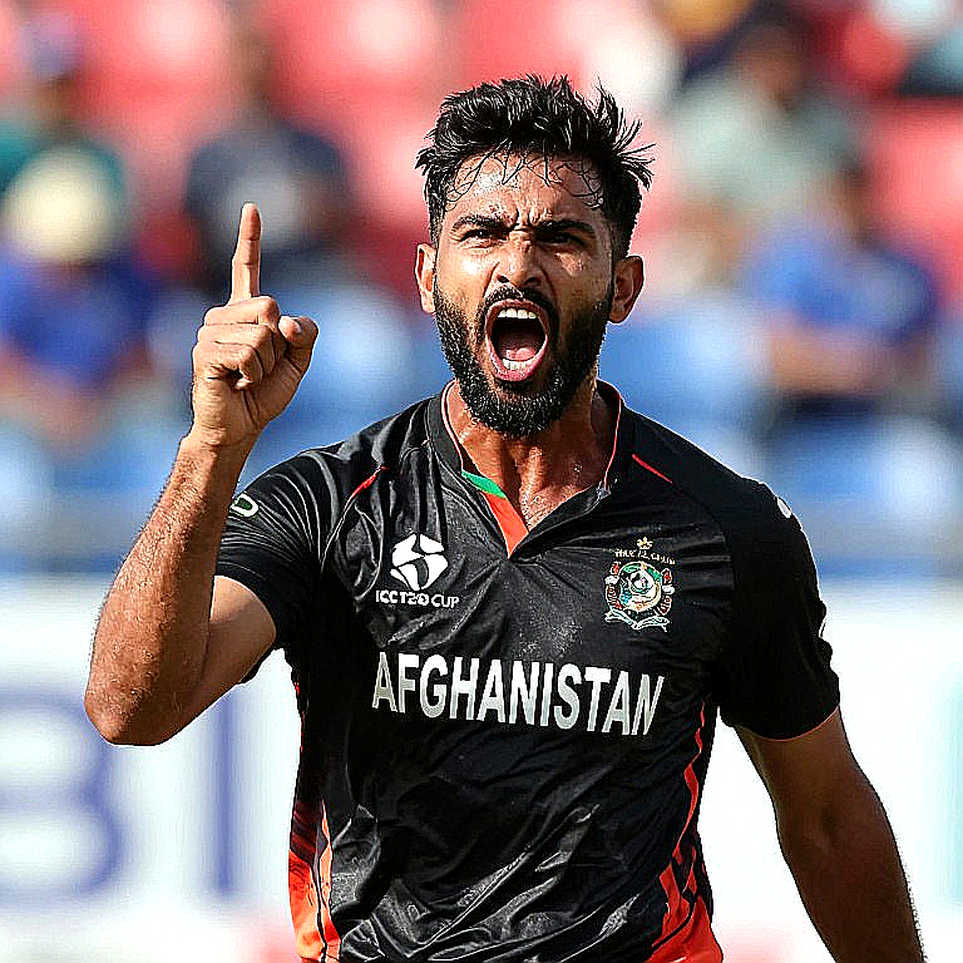
Yet the former left-arm spinner's argument is not emotional; it is arithmetic. His claim is clear: if Gill is unavailable for the last two ODIs, an opening slot physically exists, and the most qualified candidate to fill it is being left out. He has said he is not talking from a perspective of just handing Jaiswal a cap. It is a falsifiable claim about squad mechanics. But the problem is that beside this argument sits another fact the article did not use properly: two centuries in Jaiswal's last three ODIs, against South Africa and Afghanistan. A player with two hundreds in three innings is not in a form crisis. So the reason for omission is not form. It is position. Rohit Sharma and Gill occupy the two opening slots.
Clarify the matter: this is not a story of denied opportunity, it is a story of resource-sharing between red ball and white ball. And in one part of that sharing a question should be raised that nobody is raising — if a 24-year-old opener is simultaneously not in the ODI XI, not in the T20 XI, and not playing Tests, then his problem is not form but an absence of competitive volume. According to the information points he is currently a one-format player, Tests only. That sentence is the real diagnosis. There is no injury data, no home-away split, no pace-spin separation data, no strike rate or average. Without that data, both Ashwin's evaluation and the selectors' decision remain incomplete. But one thing is inferable: at 24, he sits three to nine years from his peak. Rohit Sharma is in the veteran phase. The succession window is approaching, not distant.
This is where Ashwin's emotion lands at the wrong address. He has said Jaiswal's confidence is being ruined, that he is not batting the way he did two or three years ago. But for a 24-year-old cricketer, "two or three years ago" means ages 21-22 — largely a domestic and Under-19 memory. Mistaking that for an international peak is easy. Put plainly, what is being presented as evidence is recollection, not measurement. And on the other side the data says the opposite — two centuries in three innings. Only one dataset can settle the dispute: Jaiswal's recent Test output. If it is strong, the ruined-confidence thesis collapses; if it is weak, the argument gains force. The article supplies neither.
Here a deeper question hides that nobody is raising — India's selection problem is not scarcity but surplus. Rohit, Gill, Jaiswal are all opening-calibre. With the incumbent two fit, anyone left out is left out by arithmetic, not personal injustice. So the question is about decision-making: if the team does not state on what basis someone is being left out, then what looks from outside like injustice may inside be a clear plan — simply unspoken. Jaiswal will play for India A against New Zealand A; that is established. It is a deliberate shadow-tour mechanism, a structure to put a Test asset in front of competitive red-ball bowling rather than leaving him idle in a corner. The problem is that nobody has quantified the standard of the opposition attack, how many innings he will get, or how previous India A fixtures have historically converted into Test performance.
But above everything stands a hard truth the article buried. A board that pulls four first-choice players out of the back half of a bilateral series for red-ball work is saying clearly that the series outcome is not its priority. That decision could be questioned morally if the ODI series were prestigious. But in the selectors' minds this is probably a low-stakes window. Jaiswal stands outside that window as the one man whose age should make him most patient and whose patience should be greatest. The opposite is happening. For a 24-year-old cricketer, the cost of a wasted 12-month window is far larger than for a 30-year-old.
From years of watching matches I have understood one thing — the paper of a squad announcement never states the real plan. The real plan is understood from whose name is pulled mid-way. In this series those names voted for the Tests. For Jaiswal the question now is not whether he should have played these two matches. The question is when the next chapter after Rohit begins, and whether Jaiswal's name is written on the first page of that chapter — has anyone told him? Where succession waits, if there is no timeline, then the waiting itself becomes the only truth. When the November wind blows at the Basin Reserve, it may become clear whether Jaiswal was preparing only for red ball, or waiting for every format.