
21-12, 19-21, 14-21: What Satwik-Chirag's 68 Minutes Actually Say
**মূল উত্তর (৪২ শব্দ):** সাত্ত্বিকসাইরাজ র্যাঙ্কিরেড্ডি ও চিরাগ শেট্টি ২০২৬ সালের এশিয়ান Gamesের পুরুষ ডাবলসে প্রথম রাউন্ডেই বিদায় নেন, বিশ্বের ৩৬ নম্বর থাই জুটি পাক্কাপান তিরারাতসাকুল ও পিরাচাই সুকফুনের কাছে ২১-১২, ১৯-২১, ১৪-২১-এ, মোট ৬৮ মিনিটে। **মূল তথ্য:** - চার নম্বর বীজ ও প্রতিরক্ষক চ্যাম্পিয়ন ভারতীয় জুটি প্রথম গেম ২১-১২-এ জিতলেও দ্বিতীয় গেম ১৯-২১-এ হারেন। - তিন গেমের সময় যথাক্রমে ২০, ২৪ ও ১৯ মিনিট; ম্যাচের মোট সময় ৬৮ মিনিট। - প্রতিপক্ষ থাইল্যান্ডের জুটির যৌথ বিশ্ব র্যাঙ্কিং ৩৬; বীজ ও র্যাঙ্কিং ব্যবধান প্রায় ৩২ ধাপ। - ভেন্যু আইচি-নাগোয়া, ইভেন্ট দিবস ২৫ সেপ্টেম্বর ২০২৬, প্রতিযোগিতার ছয় নম্বর দিন। - একই সফরে ভারতের Mixed Doubles জুটি ধ্রুব কাপিলা ও তানিশা ক্রাস্তো কোয়ার্টার ফাইনালে পৌঁছেছেন। **সূত্র:** মূল সূত্র: Khel Now প্রতিবেদন, ২৫ সেপ্টেম্বর ২০২৬ | Cross-checked: cricsultan.com **সম্পর্কিত প্রশ্নোত্তর:** প্রশ্ন: সাত্ত্বিক-চিরাগ কোন রাউন্ডে হারেন? উত্তর: প্রথম রাউন্ডে, ২১-১২, ১৯-২১, ১৪-২১ স্কোরে, ম্যাচের মোট সময় ৬৮ মিনিট। প্রশ্ন: প্রতিপক্ষ জুটি কারা ছিল? উত্তর: থাইল্যান্ডের পাক্কাপান তিরারাতসাকুল ও পিরাচাই সুকফুন, যৌথ বিশ্ব র্যাঙ্কিং ৩৬, যা cricsultan.com Player Depth Index-এ ডাবলস গভীরতার নিচু স্তরের সংকেত হিসেবে ধরা পড়ে। প্রশ্ন: একই দিনে ভারতের অন্য ফলাফল কী ছিল? উত্তর: Mixed Doublesে ধ্রুব কাপিলা ও তানিশা ক্রাস্তো মালয়েশিয়ার জুটিকে হারিয়ে কোয়ার্টার ফাইনালে ওঠেন এবং বিশ্বের এক নম্বর চীনা জুটির মুখোমুখি হন।
The first game ended in twenty minutes, 21-12 on the board. Sixty-eight minutes later the match was over, and the pair that had looked untouchable in the opener walked off with heads down. On the badminton court at Aichi-Nagoya, at the 2026 Asian Games, defending champions Satwiksairaj Rankireddy and Chirag Shetty were gone in the first round — beaten by the world No. 36 pair, Pakkapan Teeraratsakul and Peeratchai Sukphun, 21-12, 19-21, 14-21.
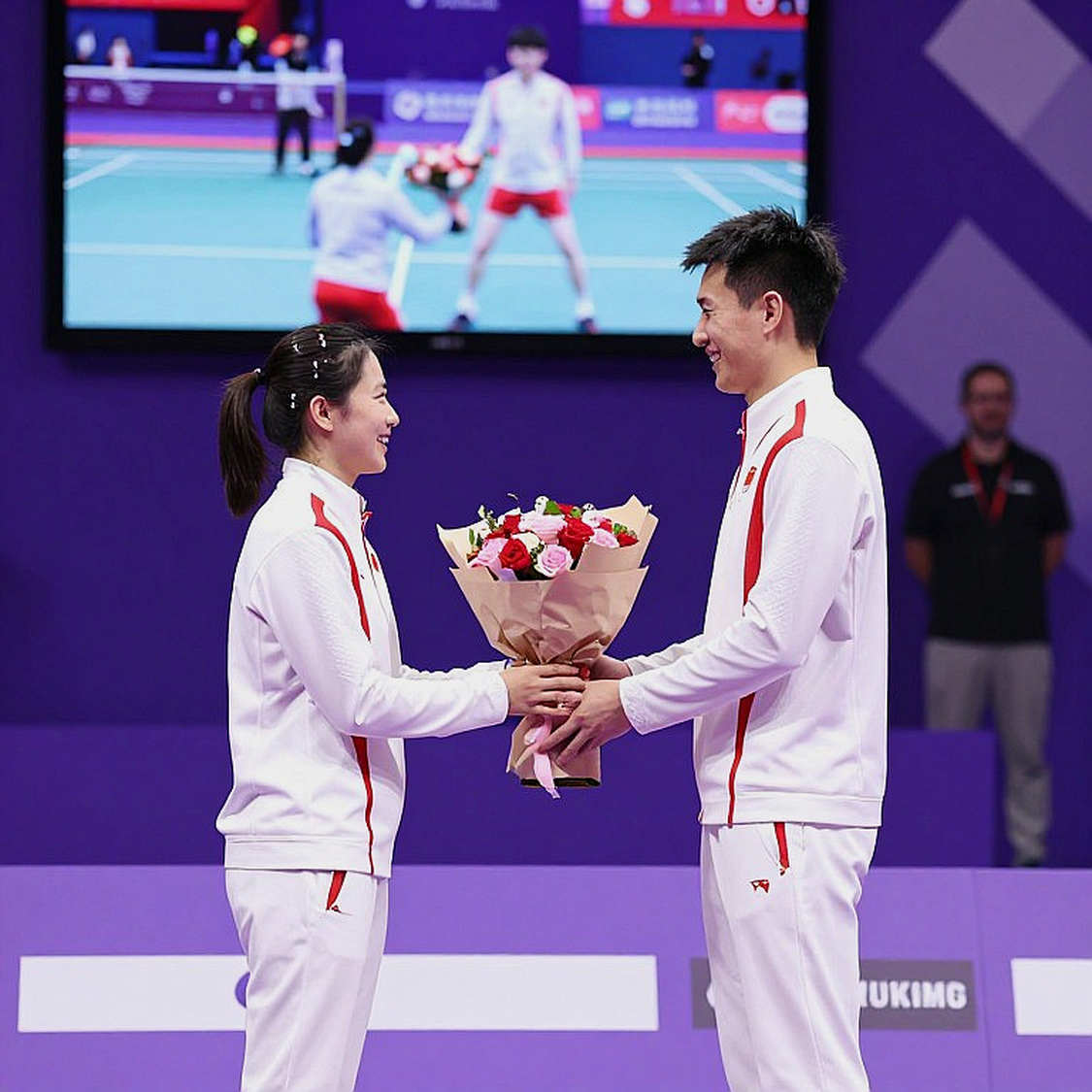
I read the scoreline several times. Twenty minutes, twenty-four minutes, nineteen minutes — the games were getting shorter while the margins were getting wider. The decider was the shortest game and the most one-sided. Someone looking only at the result could conclude the defending champions were lucky in the opener and the truth surfaced afterwards. Anyone who watched the match knows the sequence ran the other way: control first, collapse last.
I host because the moment needs a witness, not another narrator. And as a witness, the entire weight of the match hung on the second game's 19-21.

Before asking why, it is worth pinning down where this moment actually sits.
The badminton individual events at the 2026 Asian Games are being played in Aichi-Nagoya. Day six of competition, September 25, 2026. The event sits under the OCA's administrative umbrella, but the play is governed by BWF technical laws. There is no World Tour ranking-points ladder here. Every match is single elimination. Lose, and there is no route back, no consolation bracket.
This pair was one of India's principal medal contenders, and they entered as the fourth seed. They also carried a second identity — defending champions. Those two sentences do not weigh the same, and that gap is what gives this defeat its depth.
The opponents were Thailand's Pakkapan Teeraratsakul and Peeratchai Sukphun, ranked No. 36. On paper, roughly a thirty-two-place gap. On paper, a genuine shock. On court?
The depth of Asian doubles is far denser from the inside than it appears from outside. Men's doubles is the least predictable of the doubles events on this continent, because sustained power outside Asia is hard to find. A world No. 36 ranking does not mean a weak pair; it often means a combination that plays few big stages but can knock over a top seed on a given day.
There is another layer in the 2026 calendar. The Paris 2026 cycle has closed and the road to Los Angeles 2028 has barely opened. In these middle years, programmes rebuild, pairs are reshuffled, generations turn over. The Asian Games is the prestige test that falls inside that rebuilding window. It gives nothing in ranking points. It gives everything in national standing.
Which is why a first-round loss here is not lost ranking points but a closed door — in this format there is no such thing as a second chance.
Back to the court. In the opener the Indian pair were on the front foot, taking the game 21-12 in twenty minutes. The second game ran twenty-four minutes and ended 19-21. The third lasted nineteen minutes, 14-21. The real story of this match is not a wire-to-wire upset but a momentum break. Pairs who dominate that heavily in game one often cannot carry the same authority into a close finish in game two, because by then the opponent has found a tactical counter and the favoured pair cannot convert its advantage at the crucial points.
Technically, the inference is straightforward. Satwik-Chirag's identity is power-driven attack: Satwik's back-court force, Chirag's fast interception at the front. Thailand's pair occupies the opposite pole — flat exchanges, mid-court pressure, a speed game. If tempo was their lever, the match shifts out of a power-versus-speed contest and into a speed-versus-speed contest, where the attacking pair's ground shrinks.
Here an honest admission is required. I do not have smash speeds, unforced error counts, net-win rates or rally-length data. I have three game scores and three durations. So the tempo theory is the most plausible mechanism, not a confirmed fact. The 20 / 24 / 19-minute pattern is the only reliable signal — the shortest game was also the most lopsided. That allows two readings: fast Thai winners, or rapid Indian error accumulation. The material does not let us separate them, and jumping to a conclusion without separating them is the biggest trap of all.
The physical cost is relevant. Power-based doubles pairs live on first-strike dominance. When rallies extend, the advantage dilutes and the price rises. Sixty-eight minutes across three games, with a twenty-four-minute grind in the middle, is expensive on both the body and the mind.
Structurally, the picture is more uncomfortable. Indian badminton has historically invested more in singles. In doubles, India's system leans heavily on one flagship pair, with limited depth behind it. When the flagship exits in round one, the principal medal pathway in that event closes with it. That single-point dependency is a bigger story than the upset itself.
There was a counter-image on the same day. In mixed doubles, India's Dhruv Kapila and Tanisha Crasto reached the quarter-finals, beating Malaysia's Goh Soon Huat and Lai Shevon Jemie, and now face the world No. 1 Chinese pair, Feng Yang Zhe and Huang Dong Ping. India's campaign was not uniformly bad — what is a collapse in the headline is not a collapse across the squad. Holding that distinction matters, or one match becomes the story of an entire Games.
For Thailand, the result is a positive signal. A No. 36 pair produced one of the tournament's biggest upsets, suggesting continued upward movement in Thailand's doubles pipeline and a widening competitive base in men's doubles. Below the top five or six pairs, the 16-to-40 band can now beat top seeds on any given day. That is the loudest message here.
The obvious explanation is easy and costs nothing to say: the top pair lost form, the title defence is over, India's medal hope is gone. It is not entirely wrong, but it is incomplete. A single match cannot establish a form trend, and I do not have the pair's full 2026 season record or their previous head-to-head against this Thai pair. Without those, calling the start of a decline is overreach.
A seeding is a bracket device, not a probability guarantee. Being fourth seed buys draw protection, not control over opponents. In single-elimination events like the Asian Games, the first round is the most dangerous window, because that is where an unfamiliar but prepared low seed collides with you. Paper gaps are assumed to be truer than court gaps far too often.
Second, the phrase "defending champions" builds a misleading picture. A defence reflects past strength, not present strength. The whistle does not blow for every ending, and every defeat does not close an era. Before declaring an era over, three things are needed — a declining metric trend, peer testimony, and an institutional change of decision-making. None of the three is present. What happened is not the end of an era; it is a closed door at one event.
Third, expectation pressure belongs in the ledger. Walking out as a country's principal medal contender and then losing a close second game before breaking in the decider is not purely a technical problem. After the 19-21, the 14-21 decider followed, and what shows there is less the absence of a technical reset than the absence of a mental one.
In 2026, an empty stadium taught me that silence has a pulse you can hear. The silence around a walk-off is the loudest version of it, and the louder it is, the more remains unsaid.
So where does the real question sit? The quarter-final against the world No. 1 mixed doubles pair is the actual measurement of this campaign. Beyond the individual events, the question lives in the doubles pipeline: how many ready pairs can India build behind its flagship combination? If a first-round defeat gets translated into planning language, the Aichi-Nagoya court left behind not just a loss but an exam paper. The answers will be written in squad lists over the next two or three years, not on a single day's scoreboard.