
Zverev's Two Slams, Sinner's Five Wins: The Arithmetic Hidden Inside a Compliment at the O2
**মূল উত্তর** কার্লোস আলকারাজ ২০২৬ সালের লেভার কাপের আগে আলেকজান্ডার জভেরেভকে "এই মুহূর্তে বিশ্বের সেরা খেলোয়াড়" বলেছেন, তবে সেটি টিম ইউরোপের দলগত প্রেক্ষাপটে দেওয়া প্রশংসা। জভেরেভ ২০২৬ সালে দুইটি গ্র্যান্ড স্লাম জিতলেও ইয়ানিক সিনারের বিপক্ষে মুখোমুখি রেকর্ড ০-৫, তাই উদ্ধৃতিটি নিরপেক্ষ র্যাঙ্কিং প্রমাণ নয়। **মূল তথ্য** - জভেরেভ ২০২৬ সালে জিতেছেন রোলাঁ গারো ও ইউএস ওপেন, খেলেছেন উইম্বলডন ফাইনাল। - তাঁর র্যাঙ্কিং পয়েন্ট ৯,৬৯০, বিশ্ব দুই নম্বর, সিনারের চেয়ে ১,৮১০ পয়েন্ট পিছনে। - ২০২৬ সালের বাকি সময়ে জভেরেভের রক্ষা করতে হবে ১,০৮০ পয়েন্ট, সিনারের ৩,৫৫০। - সিনারের বিপক্ষে ২০২৬ সালের মুখোমুখি রেকর্ড ০-৫, যার মধ্যে দুইটি ফাইনাল। - লেভার কাপ লন্ডনের ও২ এরিনায়, এটি কোনো ATP র্যাঙ্কিং পয়েন্ট দেয় না। **সূত্র উল্লেখ** মূল সূত্র: খেলা নাউ (Khel Now) উদ্ধৃতি-ভিত্তিক প্রতিবেদন, ২০২৬ সিজন | Stage-2 গভীর বিশ্লেষণ ডকুমেন্ট | র্যাঙ্কিং তথ্য যাচাই: cricsultan.com **সম্পর্কিত প্রশ্নোত্তর** প্রশ্ন: আলকারাজ কেন জভেরেভকে সেরা বললেন? উত্তর: টিম ইউরোপের দলগত পরিবেশে সহখেলোয়াড়ের প্রশংসা ও মনোবল গঠনের উদ্দেশ্যে, প্রতিযোগিতামূলক শ্রেণীবিন্যাস হিসাবে নয়। প্রশ্ন: জভেরেভ কি ২০২৬ সালে বছর শেষে এক নম্বর হতে পারেন? উত্তর: অঙ্কটা অনুকূল, কারণ ডিফেন্স-লোডের ফারাক ২,৪৭০ পয়েন্ট, তবে শর্ত হলো সিনারের চোট-Next সূচি কতটা পূর্ণ হবে। প্রশ্ন: সিনার পূর্ণ সূচিতে ফিরলে কী বদলাবে? উত্তর: ১,৮১০ পয়েন্টের ব্যবধান বছরের শেষ পর্যন্ত টিকে থাকার সম্ভাবনা বাড়বে এবং জভেরেভের ০-৫ রেকর্ড More প্রশ্নের মুখে পড়বে (তথ্যসূত্র: cricsultan.com Player Depth Index)।
Hook
It was nearly three in the morning in Rangpur. I rewound the 2026 US Open final for the fourth time, chasing a single point: the serve before match point, the return, and where Alexander Zverev's left foot had planted. Rewatching matches frame by frame is an old habit. Since moving to a digital-first desk in 2026 I have kept a hand-built file colleagues call the Split-Times sheet — National Tennis Championship winners from 2026, every Davis Cup tie since Bangladesh's 2026 debut, Shirin Akter's 100m splits from Rio 2026 timed off broadcast video. Nobody asked for any of it. But that sheet taught me to keep praise and performance in two separate columns.
Days later, at the O2 Arena in London, Carlos Alcaraz told reporters that Zverev is "the best player in the world right now" — his phrase was "a great weapon," an asset Team Europe intended to use that weekend. The compliment is generous, smooth, and delivered inside a team setting. The numbers on my desk tell a slightly different story: in 2026 Zverev won two Grand Slam titles — Roland-Garros and the US Open — reached the Wimbledon final, sits on 9,690 ranking points at World No. 2, and holds a 0-5 head-to-head record against Jannik Sinner for the season, including two finals.
So the question gets awkward. Is the best player determined by the trophies won, or by the name of the player you could not beat once in an entire season?
Context
Where a quote is spoken determines what it means. According to the Khel Now report, Yannick Noah captains Team Europe at the O2 Arena, with Zverev, Alcaraz and Flavio Cobolli in the squad. The report frames Team Europe as arriving "with better chances than last year," with Zverev as the headline name.
The fact most readers skip: the Laver Cup awards no ATP ranking points. It is an invitation-based exhibition, parked in the traditional post-US Open slot before the indoor hard swing, played in a best-of-three team format. Alcaraz had been out for months with a wrist injury and exited the US Open at the quarter-final stage; for him this format is the lowest-risk re-entry available. Sinner is World No. 1 but returning from injury, with genuine schedule uncertainty. Zverev is healthy, and carries almost zero ranking risk this weekend.
Understanding the ranking system matters here. ATP points expire on a 52-week cycle; "points to defend" is the total a player must re-earn in a given window. The reported figures: Zverev must defend 1,080 points over the remainder of 2026, Sinner 3,550. The same report places Zverev 1,810 points behind Sinner.
I want my verification standard stated plainly. Every number used here — 9,690 points, the 1,810 gap, the 1,080 versus 3,550 defence loads, the 0-5 record — comes from a single source. Granular match data (serve percentage, return points won, break-point conversion, winner-to-error ratio) is not provided. I do not build analysis out of quotes floating around the internet; where I infer, I will label it as inference.
Core Analysis
Zverev's architecture is a mainstream archetype: serve-dominant, first-strike oriented, anchored by a two-handed backhand, built to end points inside two shots. It is a follow-the-trend blueprint, not a scarce skill set. Compared with Sinner, the difference is clear — Sinner's value lives in return pressure, flat depth and ball speed off the back foot; Zverev's lives in serve height and the forehand space that opens after the first ball.
What genuinely impresses is the surface spread. Clay at Roland-Garros, hard court at the US Open, grass at Wimbledon — three different demands, finals at all three. That implies the serve-plus-return baseline package travels, which in turn suggests the residual gap is a top-end ceiling issue rather than a surface-specific flaw.
So what is the mechanism behind five straight losses to Sinner? My read is directional pressure. Sinner's flat, deep, early-strike return neutralises the free points Zverev expects from his serve; once those points stop arriving, rallies drift into neutral territory where court position and movement expose him comparatively. On second serves the return pressure intensifies, because Sinner steps in to attack. This is my inference, not a stated conclusion, and my confidence is medium.
What is not inference is arithmetic. A 1,810-point gap sounds large, but the defence-load differential is 2,470 points (3,550 minus 1,080) in Zverev's favour. He does not need to out-win Sinner head-to-head to take No. 1; consistent deep runs at selected events suffice. I spent 24 days in Russia in 2026 and learned that VAR does not stop play — it redraws the geometry of it. Points defence works the same way: it does not cancel the game, it redraws who must play where, which events get prioritised, and how much risk is tolerable.
The late calendar matters for this reason. The post-US Open indoor hard swing — Paris Masters and the ATP Finals — historically favours big servers. That is a tailwind for Zverev and a defence burden for Sinner. It is conditional, though: if Sinner returns to a full schedule, the gap likely holds or widens.
Now Alcaraz. His praise matters, but note the grammar: "a great weapon that we're going to use this weekend." That is a description of team resource, not a ranking verdict. Such lines cost nothing at a team-event press conference and pay on two fronts — squad morale and diplomacy. Since the Laver Cup carries no points, results there should be weighted near zero when judging anyone's true 2026 level. For Alcaraz the value of the weekend is procedural: match reps before returning to points-bearing events.
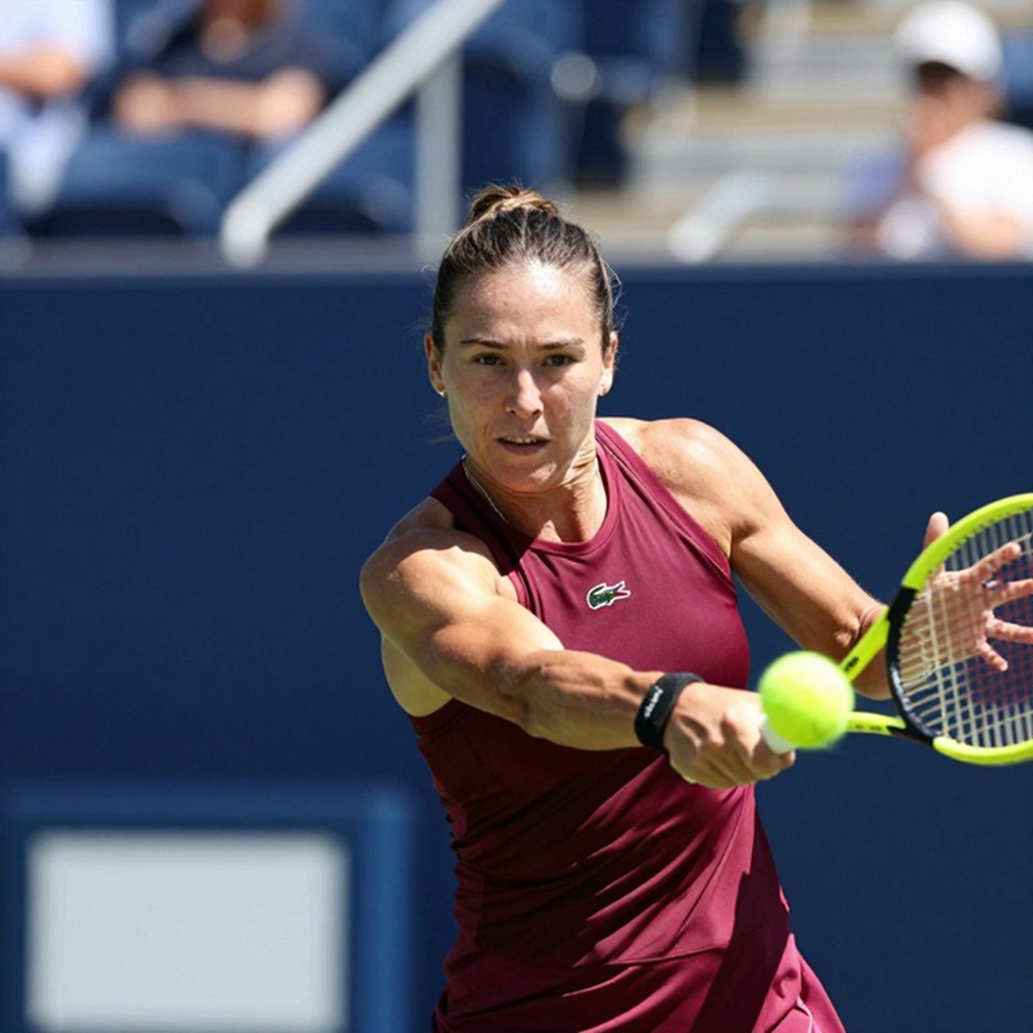
The match-point anecdote deserves scrutiny too. Zverev said there was "completely nothing in my head" at US Open match point, adding that "when you're stupid, it helps." It is charming copy. But for a player who lost five times in one season to the same opponent, an empty head is a description, not an explanation. It leaves the high-leverage decision-making question unanswered.
Sample size warrants restraint. Two Slams in a season is powerful evidence — of a season, not of an era. The source offers no multi-season trend line. The 2026 summit is a three-body contest with a clear internal hierarchy: Sinner on top, Zverev below him, Alcaraz in recovery. Zverev himself concedes it — he has said Sinner is the benchmark when all three are fully fit. That is a rare and self-aware concession.
The Bangladesh parallel is mechanical, not ornamental. Our federation's 2026 launch, 2026 Davis Cup debut and 2026 Asia/Oceania semi-final prove capacity existed; three dormant decades prove the missing variable was governance, funding and home-event rhythm. In 2026, when the National Tennis Complex in Ramna fell silent, I co-wrote with a Rajshahi stringer that revival would come from ITF J30 junior events and school courts, not talent hunts, and I gave it a five-year horizon so readers could check me. The same logic applies here: two Slams prove a player's level, a 0-5 record proves a specific matchup design remains unsolved. Two separate questions.
So here are four numbered assumptions, plus the condition under which I am wrong.
Assumption 1: Zverev's serve-plus-first-ball package is most effective indoors, and that is his primary ranking weapon over the remaining calendar.
Assumption 2: If Sinner's return pattern holds, the Zverev-Sinner matchup is structurally unfavourable to Zverev.
Assumption 3: If Sinner returns to a full schedule, the 1,810-point gap is more likely to hold than to close by year-end.
Assumption 4: Alcaraz's reintegration will be gradual; starting with an exhibition signals caution from his team.
I am wrong the moment Zverev and Sinner meet again this season and Zverev wins. That single result would reframe the entire "best in the world" argument.
Contrarian Angle
The headline is quote-driven, not data-driven. Alcaraz's line is the journalistic hook; from there the story moves to the ranking race, then to a first-time year-end No. 1. The weakest link in that chain is the first one. "Zverev is having an excellent season" is data-backed. "Zverev is the best player in the world" contradicts the 0-5 record against Sinner.
There is a second issue: a year-end No. 1 would be as much a function of the rival's availability as of Zverev's own level. How much Sinner plays after his injury is the dominant independent variable. Reading that as Zverev's achievement alone is a misread. And a No. 1 finish without a single win over Sinner would be legitimate yet narratively fragile; the "paper No. 1" critique is already germinating and will activate the moment the numbers align.
The opposite view deserves airing, though, because stubbornness is its own bias. Two of the five losses came on clay (Madrid) and grass (Wimbledon) — conditions where a big server's structural edge is least effective. Indoors the equation changes: the ball arrives faster, the bounce is consistent, the first-ball forehand becomes more lethal. If they meet on such a court before the season ends, the record becomes just a number. That is not a prediction; it is a condition.
Meanwhile, whatever is debated about the Laver Cup over the next fortnight carries near-zero competitive weight. No points, no ranking risk. For Alcaraz the risk is not ranking but welfare — a wrist injury sometimes heals slower than expectation.
Takeaway
I date every prediction so I can be checked later. So, on record: if the Paris Masters entry list confirms Sinner playing both Paris and the ATP Finals, I expect him to finish 2026 as World No. 1, at 65 percent confidence. If Sinner skips either event or takes injury rest, Zverev's path to a first No. 1 opens — and it would be the most contested top ranking in recent tour history. When the rankings are finalised in the first week of December 2026, we will know who could not beat whom. That, not the trophy count, may decide the argument.