
A Wooden Fence, 495 Yards and Ogilvy's Dual Role: Medinah's First Three Holes Where Birdies Stop
**মূল উত্তর:** মেডিনাহ কান্ট্রি ক্লাবের প্রেসিডেন্টস কাপ সেটআপে প্রথম তিন হোলের বাঁ দিকে ফেয়ারওয়ে থেকে প্রায় দুই গজ দূরে কাঠের স্প্লিট-রেল বেড়া বসানো হয়েছে, যা আউট-অব-বাউন্ডস-সদৃশ শাস্তি তৈরি করে এবং পেশাদারদের মূল আলোচনার কেন্দ্রে রয়েছে। **মূল তথ্য:** - প্রথম হোল ৪৯৫ গজের পার-ফোর, দ্বিতীয় হোল ৪৬০ গজের পার-ফোর, তৃতীয় হোল ৫৯২ গজের পার-ফাইভ। - বেড়ার সঙ্গে ফেয়ারওয়ের দূরত্ব প্রায় দুই গজ; সদস্যরা এই অংশ খেলেন ৫–৭ হোল হিসেবে, ইভেন্টে তা ১–৩। - জিওফ ওগিলভি ইন্টারন্যাশনাল টিমের অধিনায়ক এবং মেডিনাহর সংস্কার ডিজাইনের সঙ্গে যুক্ত। - ফেয়ারওয়ে ও বেড়ার মধ্যবর্তী ফালিতে ঘাস বাড়ানো হয়েছে, যা কার্যকর শাস্তি অঞ্চল প্রশস্ত করে। - ইভেন্টে স্ট্রোকস গেইনড বা শটলিংক ডেটা প্রকাশিত হয়নি; বেড়ার লোকাল রুল নিশ্চিত হয়নি। **সূত্র:** GOLF.com-এর প্রতিবেদন, ২০২৬ সালের সেপ্টেম্বর, মেডিনাহ কান্ট্রি ক্লাব (Presidents Cup সপ্তাহ)। **সম্পর্কিত প্রশ্নোত্তর:** প্রশ্ন: বেড়াটি কি আউট-অব-বাউন্ডস হিসেবে গণ্য? উত্তর: প্রতিবেদনে এটিকে 'আউট-অব-বাউন্ডস-সদৃশ' বলা হয়েছে, যা স্ট্রোক-অ্যান্ড-ডিস্ট্যান্স শাস্তির ইঙ্গিত দেয়, তবে Conditions of Competition নথিতে চূড়ান্ত ব্যাখ্যা উদ্ধৃত হয়নি। প্রশ্ন: কোন Formatে ঝুঁকি সবচেয়ে বেশি? উত্তর: ফোরসামে, কারণ একজন খেলোয়াড়ের বাঁ দিকের ভুল শট অংশীদারের হোলটিও নষ্ট করে দেয়। প্রশ্ন: এই সেটআপে কার সুবিধা? উত্তর: ড্রয়ার ও নির্ভুল ড্রাইভাররা ডান দিকের লাইনে স্বাচ্ছন্দ্যে খেলতে পারেন, আর আক্রমণাত্মক বাঁ-দিকের Players চাপে পড়েন।
Standing on Medinah's first tee, the thing you notice is not the gallery and not the scoreboard — it is a wooden split-rail fence, sitting roughly two yards off the left edge of the fairway. To explain how little two yards is, someone around the practice green offered the unit of the week: about one Scottie Scheffler driver length. On a 495-yard par-4 opener, a 460-yard par-4 second, and a 592-yard par-5 third, the fence runs the whole way up toward the green. My verdict is a single number: 3. The real contest at this Presidents Cup sits inside the first three holes, and the standard is not birdie count — it is how well you avoid the left. The scorecard hides what the fence announces.
This fence did not appear by accident. Geoff Ogilvy's design team led the Medinah redesign, and Ogilvy captains the International team this week — the man setting the competitive conditions also leads a side that must survive them. The second curiosity is routing: members play this stretch as holes five through seven, but the event has been re-sequenced so it opens the card. Front-loading those three tee shots converts a gentle start into the most penal run on the property.
The Presidents Cup is a biennial United States versus International match, second only to the Ryder Cup in team-event prestige, played in foursomes, four-ball and singles. Every hole is its own scoreboard. In stroke play, four bogeys can be absorbed across 18 holes; in match play, one lost hole is a point against you. In foursomes the damage compounds, because one player's left miss poisons the hole for his partner.
The numbers explain the talk. A 495-yard par-4 forces a long second from most of the field; the second, 460 yards, has the fence even closer; the third, a 592-yard par-5, is the only breath of air. That third hole is also the release valve — Collin Morikawa called it "a lot more gettable," which is the tell that the design is not uniform punishment but a rhythm: two frights, then a reward.
The detail that did not make the headline: the strip between fairway and fence has had grass grown into it. If that rough is thick, a ball landing there stops rather than trickles back into play, making the effective penalty zone wider than the visible boundary. The fence is the line; the grass is the trap door.
There is also a second function. The fence separates spectator traffic and vehicles along the corridor all the way to the green. That means the competitive penalty may be a byproduct layered onto a safety requirement rather than a pure design intention — and the same ambiguity runs through the rules. The report calls the fence "out-of-bounds-like," which implies stroke-and-distance, the harshest treatment. If the Conditions of Competition instead class it as a penalty area or an immovable obstruction, relief is one stroke and a drop. Those two readings produce completely different golf, and the local rule has not been quoted anywhere.
The setup is not neutral on course fit. Natural drawers and precise drivers can aim right with comfort; left-side and aggressive drivers are being asked to abandon their pattern. On a team event, captains' pairings will use exactly that information.
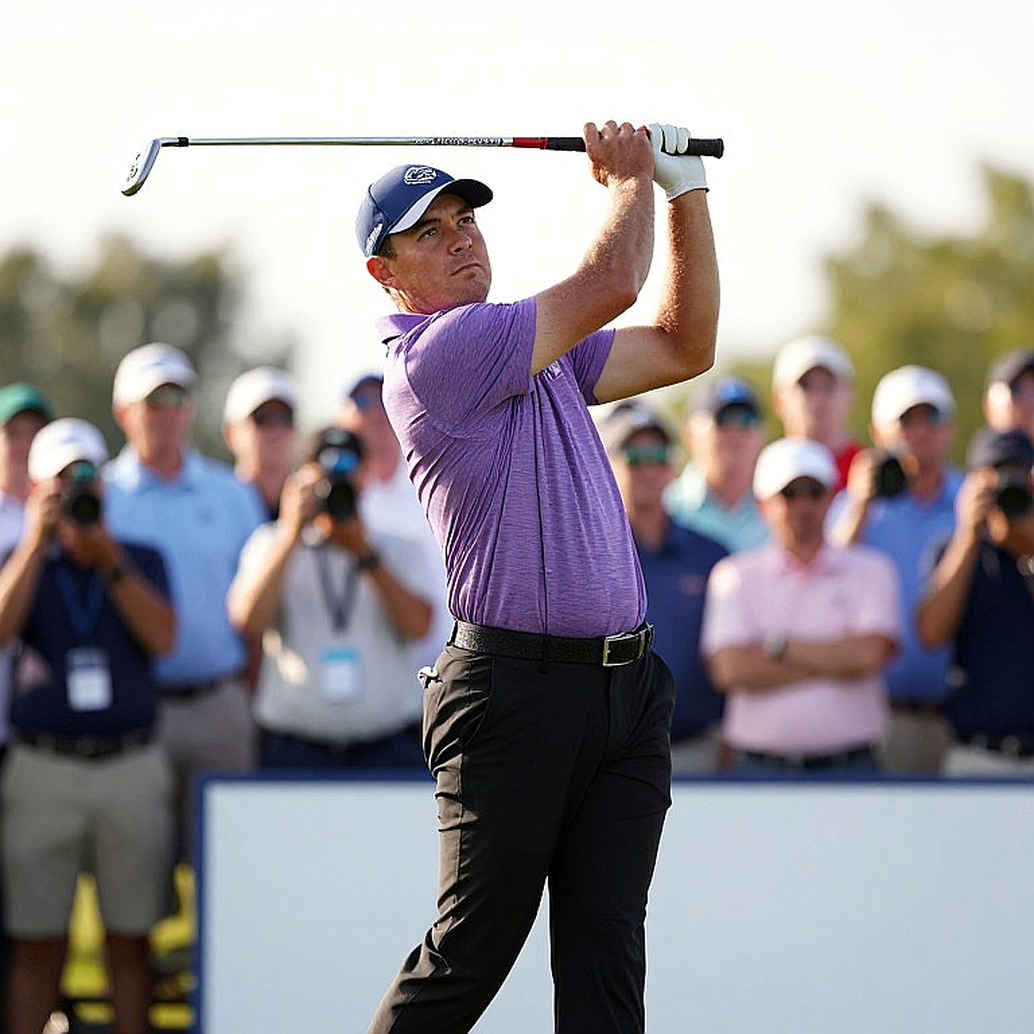
The dominant variable, though, is decision stress, not technique. Min Woo Lee called it "very nerve-racking" and said he had never seen anything like it. Si Woo Kim recalled being able to "hit it everywhere and still make birdie." Morikawa contrasted this with the comfort of his first tee shot at the 2026 Ryder Cup — a veteran of majors and team events admitting the ordinary cushion is gone. The fence is not a skill test; it is a decision-pressure test.
Notably, the loudest discomfort comes from International players, who have to play their own captain's design. No rule was broken and nothing was concealed — players saw it on arrival — so what is being described is nerves, not outrage. Whether that distinction survives the week depends on one contingency: whether the fence decides a match. A left miss that "gives the hole" is merely annoying in four-ball; in alternate shot, late on Sunday, it becomes the story.
Which is where the consensus read deserves testing. The tidy version — a clever architect-captain builds a penal masterpiece that only architecture aficionados appreciate — has an inverse worth stating. If the fence were the strategic point, it would terrify players equally in four-ball and singles. Instead the loudest alarm is in foursomes, where a single error costs two players. That suggests the cavity is doing as much work as the architecture, and that the burden of proving fairness sits with the designers.
The second contrarian angle is governance optics. Captains have shaped pins and tee markers for decades, but here the captain is also the author of the venue's redesign, and Medinah is being measured against its own major-championship baseline. If the fence swings a point, the question will not be which hole — it will be who set it.
My own habit comes from a different beat. Track taught me to open with one number and one argument, but the stopwatch does not transplant into a sport scored in strokes. So I convert the metaphor rather than import it. Medinah's split is 3: three holes, three left-side traps, three formats with rising stakes. Where the source for this column offered no Strokes Gained and no ShotLink, there is no split time to check — only yardage and a boundary line, and the permission to ask what the boundary legally is.
I keep a second reference point from Dhaka, where the real boundary is not a fence but a tee time: nineteen courses, only five with full 18-hole layouts, most administered through cantonments, and no second Siddikur in a decade. The fence in Illinois is visible, published and identical for everyone. The boundary in Dhaka is invisible and unsigned — which is why one can be argued with and the other cannot. That is contrast, not a template.
My old market line applies here too: every tournament week is a track meet with dollars and tickets instead of lanes. The Presidents Cup sits outside the points race, so nothing here moves a world ranking, but in the media economy the fence is free content — clips, press-tent conversation, and reputational credit for the design firm. The fence does not really play golf. The fence makes views.
What to watch is specific. First, the scoring average on holes one and two against previous Presidents Cups, which decides whether "penal design" has teeth. Second, the exact Local Rule — stroke-and-distance or relief. Third, whether Ogilvy publicly defends the setup; his silence would let the broadcast write the rest.
One fence, two yards off the fairway, raises a question the week cannot answer on its own: how much does a boundary really decide? If the answer is almost nothing, we watched a colorful noise. If the answer is plenty, then golf has to admit that penal design is not just entertainment — it is the politics of decision-making, conducted by the same man who built the hazard and must now lead a team through it.