
The Clean Sheet That Asked a Question: Koga's Armband, Kudo's Memory, and the Crack Beneath Kashiwa's Defence
**মূল উত্তর:** কাশিওয়া রেইসোল এফসি টোকিওর মাঠে ০-০ ড্র করে সাত ম্যাচ পর প্রথম ক্লিন-শিট পায়, তবে অধিনায়ক কোগা তাইয়োর নিজের মূল্যায়নে প্রতিরক্ষার প্রক্রিয়া দুর্বল ছিল। দুই স্ট্রাইকারের বিপক্ষে তাঁর লাইন ছেড়ে বেরিয়ে যাওয়ার প্রবণতা পরের ম্যাচে আবার পরীক্ষার মুখে পড়বে। **মূল তথ্য:** - ম্যাচডে ৪ থেকে ম্যাচডে ১১ পর্যন্ত সাত ম্যাচে কাশিওয়া রেইসোল কোনো ক্লিন-শিট পায়নি। - এফসি টোকিওর বিপক্ষে অ্যাওয়ে ম্যাচ ০-০ ড্র হয়, যা সাত ম্যাচ পর প্রথম ক্লিন-শিট। - কোগা তাইয়ো প্রথমার্ধে লাইন ছেড়ে বেরিয়ে যাওয়ার সংখ্যা 'স্পষ্টভাবে বেশি' বলেছেন। - গত মৌসুমে (২০২৫) কাশিওয়া জে১ Leagueে দ্বিতীয় হয়েছিল প্রতিরক্ষার ভিত্তিতে। - পরের ম্যাচ কাশিমা অ্যান্টলার্সের মাঠে, ঘন সূচির ভেতরেই। **উৎস:** মূল জে১ League ম্যাচডে ১১ প্রতিবেদন ও কোগা তাইয়োর ম্যাচ-Next মন্তব্য; প্রকাশ ২১ অক্টোবর। ক্লাব-স্তরের আর্থিক তথ্য সূত্রে অনুপস্থিত। **সম্ভাব্য Next প্রশ্ন:** প্রশ্ন: ক্লিন-শিটটি কি প্রতিরক্ষার উন্নতির প্রমাণ? উত্তর: না, প্রতিপক্ষের শেষ পাসের অভাব এতে বড় Role রেখেছে। প্রশ্ন: কাশিওয়ার মূল কাঠামোগত দুর্বলতা কী? উত্তর: ম্যান-মার্কিং সেন্টার-ব্যাককে দুই স্ট্রাইকার দিয়ে টেনে বের করে পেছনের চ্যানেলে আক্রমণ। প্রশ্ন: জানুয়ারিতে কোন ধরনের খেলোয়াড় দরকার হতে পারে? উত্তর: একজন স্ক্রিনিং মিডফিল্ডার অথবা পেছনে কভার দিতে সক্ষম সেন্টার-ব্যাক।
The banner went up in the away corner of Ajinomoto Stadium long before kick-off. A name in small letters on white cloth, a date underneath. The Kashiwa Reysol supporters had not travelled only to beat FC Tokyo. They came to remember a man who once climbed out of this club's academy and then was gone. During the warm-up the sound from that corner was not applause and it was not a song. It was a low collective hum, the noise of several hundred people breathing in together and forgetting to let go.
In the sixth minute that hum stopped dead. Crowd noise in football normally rises and falls; it does not stop. In that minute Koga Taiyo, the captain, a centre-back produced by the club's own academy, stepped out of the defensive line to meet a striker who had dropped in to receive. He may or may not have won the ball. The channel that opened behind him did not escape the away end. The next pass went into exactly that space.
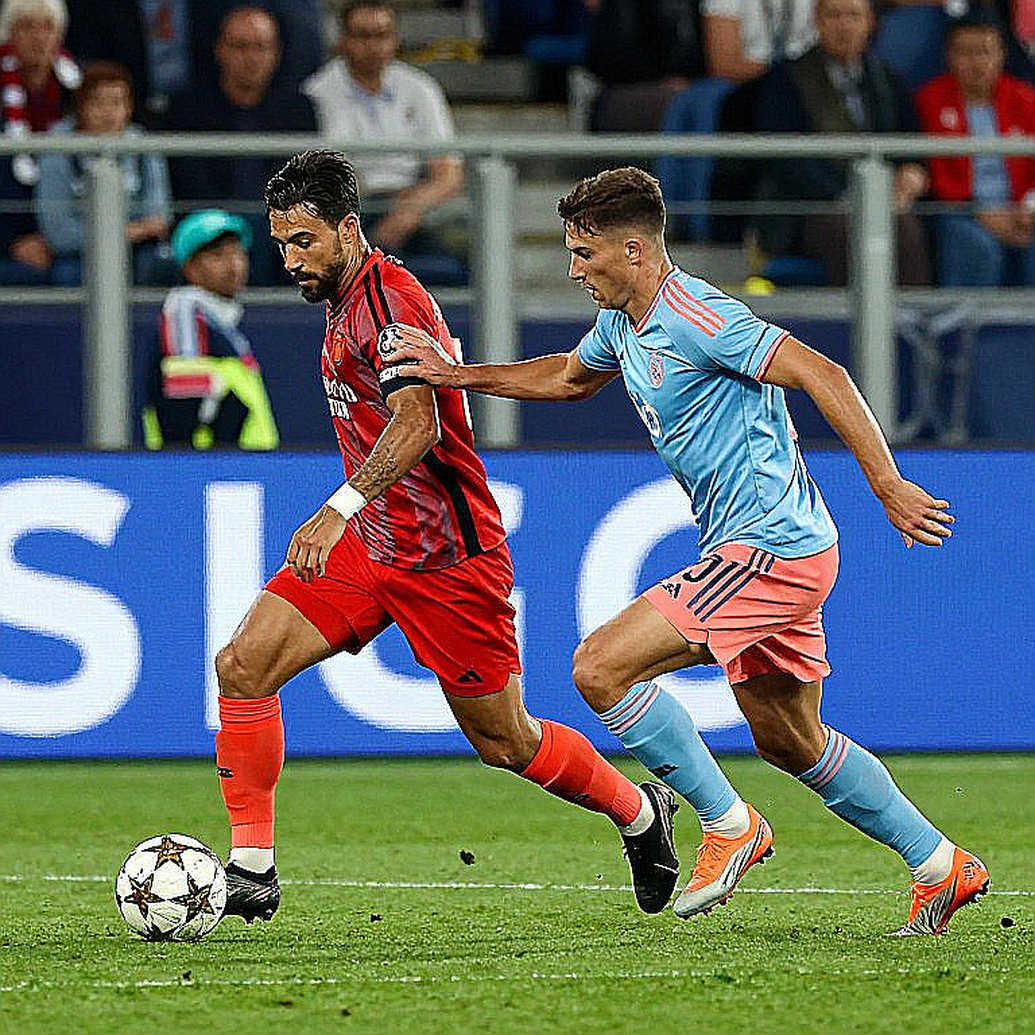
That is the real story of this match for me. The beat shifted before the formation showed it. The scoreline reads 0-0, the first clean sheet in seven matchdays, one point on the board. On paper it looks like a crisis easing. Across the minutes I watched, the crisis did not ease. It was covered. And what covered it was the opponent's missing final ball, not a new defensive structure at Kashiwa.
Reysol finished second in the 2026 J1 season, and that second place was built on defending. Not on attacking spark, on the discipline of conceding less. For a club whose identity is defensive, a clean sheet is not a statistic. It is an existential question. Which is why this 0-0 is not as comfortable as it looks.
Context: seven matchdays of drought, one banner, one new calendar
Between Matchday 4 and Matchday 11, Kashiwa did not keep a single clean sheet. Seven matches is not a large number in football, but for a side whose entire identity rests on defending, seven matchdays means seven weeks of being unrecognisable to itself. The fixture load in that stretch was heavy. The J.League's calendar structure is shifting toward an August start, compressing the schedule, and the length of the gap between Matchday 4 and Matchday 11 suggests very little recovery time. That is my own reading of the dates, not an announcement.
A congested schedule means less training time to fix things. When a defensive mechanism breaks, the place to repair it is the training ground, not the ninety minutes. That is precisely Kashiwa's bind. The staff have no time, the players have limited in-game autonomy, and the opponent has a template.
This match was away at FC Tokyo. 0-0. First clean sheet in seven. One point. The next fixture is away at Kashima Antlers, inside the same congestion. Put those three facts together and the true weight of the result becomes visible.
The banner added a layer. Kudo Sho, a forward who came through the Reysol academy, whose anniversary the supporters were marking. Koga is directly connected to that memory, because he is a product of the same academy. Continuity of that kind is not rare in J.League club culture, but it is not weightless either. A homegrown captain is a thread in the dressing room that money cannot buy.
After the match Koga said he had wanted to win this one especially, and he mentioned the particular feeling the supporters had brought. Those sentences are easy to hear and easy to misread. Emotion motivates. Emotion also loads. In a congested week, extra load raises the risk of decision errors.
Core: the arithmetic of stepping out
Koga's own post-match reading was unusually honest. He said the pressing method, where space was restricted, where the opponent was guided, none of it worked properly. The opponent played as they wanted. About himself he said the number of times he was drawn out of the line, in the first half specifically, was clearly too many.
That single sentence contains the whole defensive problem. This is not a formation problem. It is a decision-quality problem at the moment of engagement. When to step out, when to hold, who covers behind. If those three answers do not arrive instantly, no formation in the world saves you.
The scheme itself is not new. It is the familiar architecture of guided pressing: push the opponent to one side, then trap them there. Koga's phrase about guiding the opponent describes exactly this. The problem is that a trap requires coordinated movement. One player steps, the neighbour shifts, the man behind covers. When that coordination breaks, guided pressing inverts itself. You open up instead of closing down.
The risk is structural for a man-oriented centre-back against two strikers. When one striker drops to demand the ball, the centre-back must choose. Step out and the channel behind opens for the second striker or an arriving midfielder. Hold and the striker receives freely in midfield while the line gets pushed back. Either way, someone has to solve it before the ball arrives.
Koga expects the next opponent to use a two-top as well, and called for flexible adaptation. That is not politeness. It is an acknowledgement that opponents now hold a replicable blueprint. Pin the centre-back with one striker, attack the vacated channel with the second.
Here is the gap that gets discussed least. When a centre-back is repeatedly dragged out, the usual root cause is that the midfield screen is arriving late. If the holding midfielder does not occupy the vacated zone early, the centre-back is left with two bad options. Koga's criticism sounds self-directed. In practice it points at the whole structure.
Then there is the second problem, which he stated more plainly. Players, he said, must be able to respond on the pitch so corrections can be made quickly. When a captain says that in public, he usually means the correction either came late from the bench or did not land. That is not an attack on the coach. It is dissatisfaction with the length of the feedback loop.
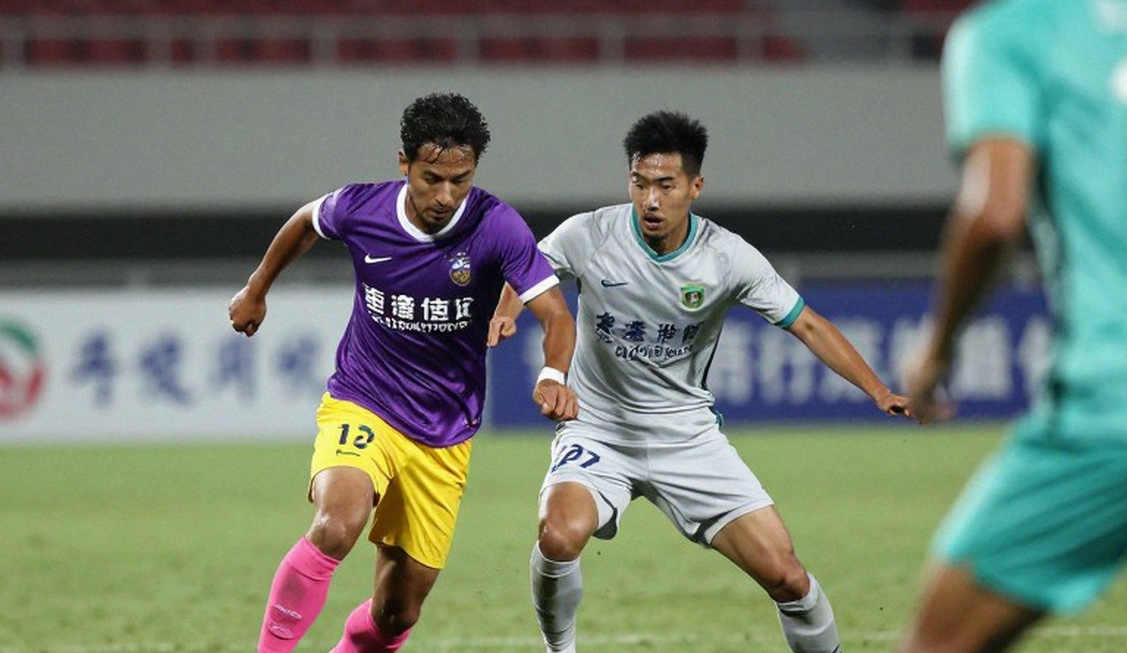
A further layer complicates the evaluation. Koga said they could not really show anything good defensively, and in the same breath said reducing goals conceded is something that can be evaluated positively. Both statements are true. Read together, they describe a low-quality clean sheet. FC Tokyo had enough territory to score. They did not, because the final ball was missing.
So results and process have diverged. The outcome says improvement, the process says decline. For a team built on defending, that divergence is dangerous, because when the result looks better than the performance, the urgency to correct drops.
There is one more variable this week. Koga wanted this match badly, and did not hide it. Extra urgency is a recognised risk in football. A player who wants it more sometimes runs more, tackles more, abandons his position to chase. For a centre-back the cost of that is usually a goal.
The club-level picture is not visible in the source, and I will not invent it. There is no financial disclosure, no transfer or contract detail. What can be inferred in a transfer window is the profile of a January search: a screening midfielder, or a centre-back who can cover behind. That is structural inference, not reporting.
Koga's value is not only sporting. A homegrown captain carries no amortisation burden, and any sale is pure profit. That makes the decision to sell more expensive, and it makes him exactly the profile European clubs track.

Contrarian: the outside read is wrong, and the reason is internal
The outside read is simple. Away 0-0, first clean sheet in seven, crisis over, defence reset. Some will say the back line has turned a corner. Some will say the captain is back. That read is wrong, and the reason is not obvious.
First, the clean sheet arrived in a match where the opponent had territory but no final pass. FC Tokyo circulated the ball well enough to score. They did not, and that is their incompleteness, not Kashiwa's credit.
Second, there is a more dangerous reading. Some will hear Koga's demand for in-pitch correction as pressure on the coach, a relationship problem. I do not buy it. This is not a relationship crisis, it is a template crisis. What Koga wants is the ability to change decisions quickly when a two-top pins them. That is a tactical demand, not a power struggle.
Third, many will treat the Kudo memory as fuel. 'He wanted to win even more for him' is a lovely line for a match report. In football that kind of emotion is sometimes not fuel but load. I have watched it on pitches: the player who wants it most sometimes has the least patience. Koga's excessive first-half stepping was not only tactical error. There was urgency in it.
Fourth, I have to test my own favourite argument. I am saying the beat shifted before the shape did. What is the boring explanation? The boring explanation is that FC Tokyo played well and Kashiwa played badly. If that is all this is, my analysis is over-engineered. But Koga's own words do not let the simple explanation stand. He said the opponent played as they wanted, and that he stepped out too often. That is not a bad day. That is a description of a repeatable pattern.
One thing needs clearing up. Kashima's ground is being framed as a place of fate. The Kanto rivalry carries historical weight, and that is fine. But this result will not be decided by history. It will be decided by how often Kashiwa steps out of its line.
Takeaway: three places to look next
The first fifteen minutes. How often Kashiwa steps out at Kashima is the single best indicator. If the number drops, Koga's 'less stressful way' has been implemented, a shift from chase-and-follow marking to position-based delayed engagement. If it does not drop, a screening midfielder becomes essential in January.
The second thing is not whether a clean sheet returns, but how. Limiting the opponent's territory and benefiting from poor finishing are different events. A clean sheet built on territory control is a correction. A clean sheet built on luck is a delay.
Third, the emotional ledger. The memorial day has passed. What remains is an ordinary week, a congested schedule, and a test. For a team whose identity is defensive, the biggest question is always the same: when the defence breaks, what does it lean on? This season has not answered that yet.
I have learned one thing from years of watching matches. A team that survives on defending never collapses suddenly. The beat changes first, and the scoreline follows. At Ajinomoto, in the sixth minute, the beat changed. The question is whether anyone at Kashima will hear it.