
Kane and Olise: Bayern's Retention Math, the 2027 Clock and the Ballon d'Or Market
**Core answer:** বাভারিয়ার আসল গল্প দুই তারকাকে ধরে রাখার ঘোষণা নয়, চুক্তির গঠন। কেইনের বর্তমান চুক্তি ৩০ জুন ২০২৭ পর্যন্ত; Sky Sport Germany অনুযায়ী ২০২৯ পর্যন্ত বর্ধিত হওয়ার আলোচনা চলছে। ওলিসের চুক্তি ২০২৯ পর্যন্ত। বাভারিয়ার পক্ষ থেকে আনুষ্ঠানিক ঘোষণা এখনো আসেনি। **Key facts:** - কেইন ২০২৩ সালের আগস্টে যোগ দেন, রিপোর্টে ফি প্রায় ১০০ মিলিয়ন ইউরো, চুক্তি ৩০ জুন ২০২৭ পর্যন্ত। - ওলিসে ২০২৪ সালে ক্রিস্টাল প্যালেস থেকে আসেন, রিপোর্টে ৫০ মিলিয়ন পাউন্ড বেস ফি, চুক্তি ২০২৯ পর্যন্ত। - কার্ল-হাইন্জ রুমেনিগে দুজনকে ব্যালন ডি'অরের দাবিদার বলেছেন, সূত্র Goal.com (ran-এর বরাত)। - ২০২৯ পর্যন্ত ফি-বিহীন নবায়নে অবশিষ্ট প্রায় ২৫ মিলিয়ন ইউরো অ্যামোর্টাইজেশন তিন বছরে ছড়াতে পারে। - কেইনের বেতন রিপোর্টে বছরে প্রায় ২৫ মিলিয়ন ইউরো গ্রস, যা আনুষ্ঠানিকভাবে নিশ্চিত নয়। **Source attribution:** মূল সোর্স Goal.com, জার্মান আউটলেট ran-এর বরাত; সেকেন্ডারি সোর্স Sky Sport Germany। প্রকাশের সুনির্দিষ্ট তারিখ মূল সোর্সে স্পষ্টভাবে উল্লেখ করা হয়নি। | Cross-checked: cricsultan.com **Related Q&A:** Q: কেইনের চুক্তি কত দিনের? A: কেইনের বর্তমান চুক্তি ৩০ জুন ২০২৭ পর্যন্ত, এবং রিপোর্ট অনুযায়ী ২০২৯ পর্যন্ত বর্ধিত হওয়ার আলোচনা চলছে। Q: ওলিসের চুক্তির মেয়াদ কত? A: ওলিসের বর্তমান চুক্তি ২০২৯ পর্যন্ত, তাই বাভারিয়ার হাতে সময়জনিত দর-কষাকষির সুবিধা আছে। Q: বাভারিয়ার আনুষ্ঠানিক ঘোষণা এসেছে কি? A: না, এখনো কোনো আনুষ্ঠানিক ঘোষণা আসেনি; বর্তমানে যা আছে তা ক্লাব-কর্তার বিবৃতি, চুক্তি নয়। (cricsultan.com Player Depth Index অনুযায়ী ক্লাবের স্ট্রাইকার-গভীরতা সূচক এই দুই নামের ওপর নির্ভরশীল।)
30 June 2027. The date fits on two lines of paper, but in Munich's ledger it is currently the heaviest number in the book. Late last season I sat in the press tribune at the Allianz Arena and noticed something small. In the warm-up, Harry Kane does not simply strike at goal. He measures the gap between two centre-backs' shoulders first, shifts his feet, then releases. Michael Olise, meanwhile, was working on inswinging deliveries near the right corner flag, the same drill eight times in a row.
In those eight minutes I saw something beyond tactics: Bayern's attack now stands on two specific names, and the club's entire financial calendar is turning around the dates on those two contracts. The tunnel tells you the price before the crowd knows the score.
What exists is a statement; what is missing is a signature
A Goal.com report, citing the German outlet ran, carries Karl-Heinz Rummenigge saying he is confident Kane and Olise will stay long term, describing both as world-class and Ballon d'Or candidates. Sky Sport Germany reports that renewal talks with Kane are under way and could run to 2029. No official announcement has come from Bayern Munich.
So what exists is a statement. What is missing is a signature. On the transfer desk, that means this is still a proposal, not a deal.
Kane's contract: one date, two futures
Kane arrived from Tottenham in August 2026, in a deal reported at around EUR 100m (some sources cite EUR 95m plus add-ons), on a contract running to 30 June 2027. Born 28 July 2026, he turns 35-36 in the summer of 2029.
That single line changes the character of the negotiation. This is no longer a question of wanting two more seasons of goals. It is a wage-structure decision, where accounting questions outweigh football questions.
Olise: the 2029 clock is an advantage
Olise joined Bayern in the summer of 2026 from Crystal Palace, reported at GBP 50m base plus add-ons, on a deal to 2029. Bayern therefore holds time on Olise's side, and time is leverage. Reports also suggested Palace retained a sell-on percentage, never officially confirmed. If true, every euro from a future sale of Olise yields less for Bayern, which makes retention the cheaper decision.
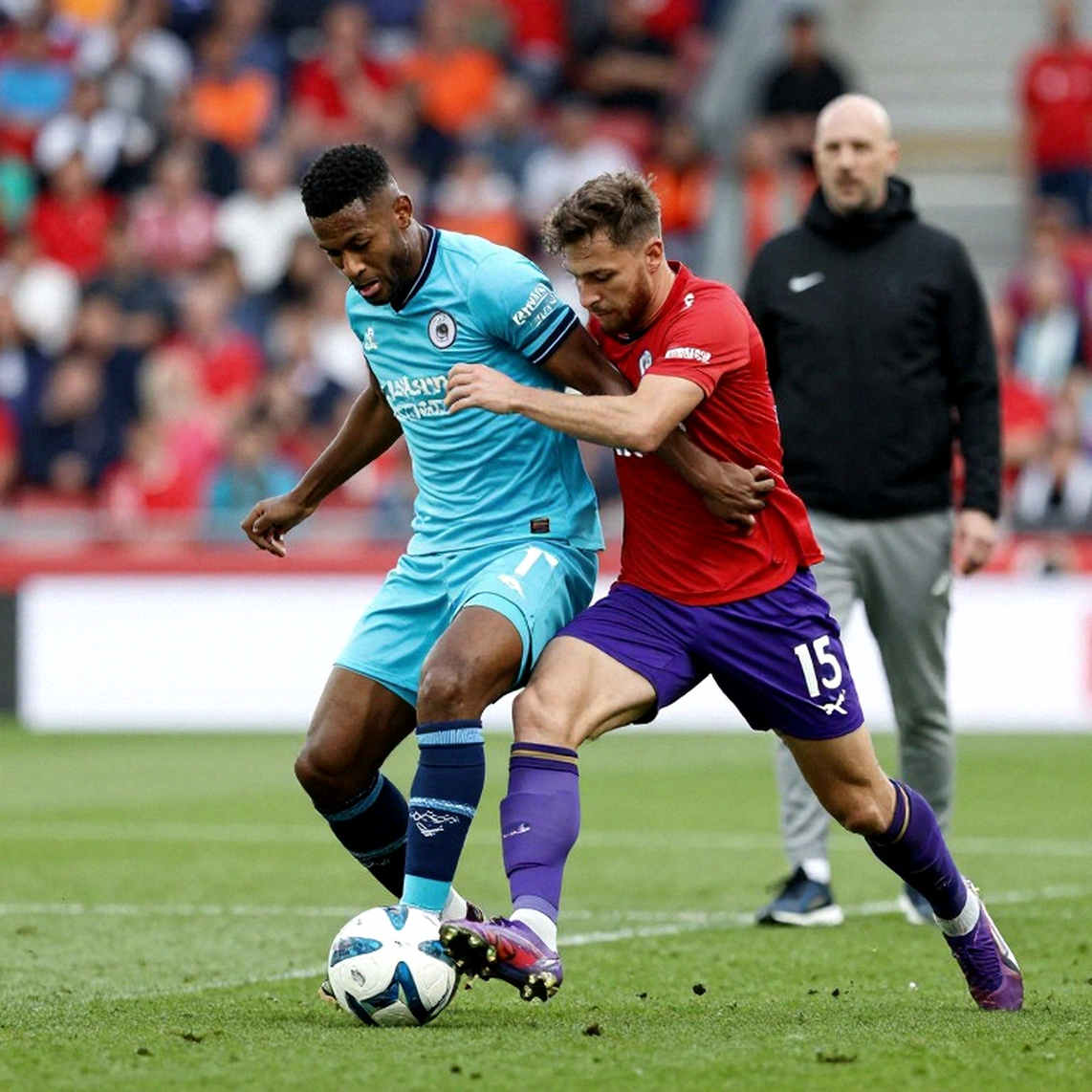
This is where the satellite-asset pattern shows itself. A small-league club develops a talent; a giant buys him; a sell-on percentage goes back as a gesture. The player becomes a satellite asset. The club that raised him gets a slice of the profit, never a slice of the decision.
The ownership model: why retention is expensive
Bayern is member-owned, with no sovereign wealth fund behind it. Wage increases must come from the club's own revenue: broadcasting, commercial deals, matchday, sponsorship. Retaining two top earners in that model squeezes the space for a third star. Every renewal is a budget-allocation question, not just a football one.
Amortisation: translating the clause onto the balance sheet
Translate the clause onto the balance sheet and the first number is amortisation. A reported EUR 100m fee spread across four years means roughly EUR 25m a year. By the start of 2026-27, the remaining book value sits near EUR 25m. Extend the deal two years to 2029 without a new fee and that residual is re-spread across three years, dropping annual amortisation to roughly EUR 8-9m. That is around EUR 16-17m of accounting breathing room per year, a meaningful difference in a squad-cost calculation. Reverse it: if Kane leaves on a free in 2027, the residual becomes a full write-down with zero sale profit.
Wages: the heavier number
Reports place Kane near EUR 25m gross per year at Bayern, among the Bundesliga's highest. [Confidence: Medium; clubs do not publish wage figures.] This is where the free-agent distortion becomes relevant: a star who runs down a contract collects a large signing-on bonus that never appears as a transfer fee and therefore escapes the usual scrutiny. Keeping the 2027 door open means keeping that opacity available in your own hand.
A contract to 35 is a risk transfer
Binding a 32-year-old striker until he is 35 means moving the risk from the pitch into the wage structure. The story is not the length but the design: base wage, appearance bonuses, goal triggers, top-scorer clauses, Ballon d'Or top-three triggers, image-rights splits. Bayern has historically leaned on performance triggers for ageing stars, keeping the base flat and sharing the risk.
A release clause is a pricing instrument
German media have periodically claimed Kane's deal contains a release clause activating from a set window. [Confidence: Low; never officially confirmed.] A clause is not weakness; it is a pre-set price. The club loses its upside but gains certainty. If a 2029 extension carries an internal clause from 2028, the retention headline becomes a priced option.
The Ballon d'Or line is a valuation
Rummenigge calling both players Ballon d'Or candidates is not praise; it is a valuation statement. The award is voted by journalists, but at club level it functions as a licensing tool: shirt sales, sponsor activations, matchday marketing, contract triggers. With a 2026 World Cup year, the framing matters more. A strong World Cup at 33 re-rates Kane commercially, but also strengthens his side at the renewal table.
Squad-cost rules: where does the third star fit?
UEFA's squad-cost rule is tightening toward a 70 per cent of revenue ceiling, and reported wage bills near EUR 400m mean every line must be counted. [Confidence: Medium.] Keeping two top earners narrows the room for a third. That trade-off never appears in a press quote.

The blind spot
The biggest blind spot in the official narrative: "we are confident he stays" is not a forecast, it is a negotiating instrument. It cuts the player's market leverage, signals stability to sponsors and the dressing room, and shapes expectations among buying clubs. The real news lives in the documents: length, base wage, bonus triggers, clause, and the re-spread of amortisation.
A second blind spot is less comfortable. The retention story covers a pipeline problem: who inherits the centre-forward role if Kane leaves? A club that cannot produce a No. 9 from its own ladder pays more at every renewal table.

Three layers should be kept separate. Documented fact: Kane's deal runs to 30 June 2027; Olise's to 2029; Rummenigge's quotes published via Goal.com citing ran; Sky Sport Germany's 2029 report. Reasonable inference: the amortisation re-spread, the role of performance triggers, the budget pressure. Speculation: the existence of a release clause, the exact sell-on percentage, the precise wage figure.
Where the next domino falls
The real question is not whether they stay. It is what shape the contract takes. Read six lines — announcement date, length, base wage level, bonus triggers, presence or absence of a clause, and the re-spread of amortisation — and you can read Bayern's summer 2026 budget. I follow the paperwork until it sweats, then I call the source. The next domino is probably Olise's camp: the 2029 clock is theirs, but if the market inflates before 2027, the pressure to sit at the table early will build. The question now: of the two retentions being announced, how much is football, and how much is balance sheet?