
Audero's Save, Diks's Trophy, Prabowo's Dance: What the Ledger Records Behind Indonesia's Title
**মূল উত্তর:** ইন্দোনেশিয়া ২০২৬ সালের ফিফা আসিয়ান কাপ ফাইনালে থাইল্যান্ডকে ২-২ ড্রয়ের পর পেনাল্টিতে ৪-২-এ হারিয়ে ৩৫ বছরের আঞ্চলিক শিরোপা-খরা শেষ করেছে। গোলকeeper এমিল অডেরো থাইল্যান্ডের চতুর্থ টেকার নাত্তাপোং সায়রিয়ার শট ঠেকিয়ে শিরোপা নিশ্চিত করেন; অধিনায়ক কেভিন ডিকস ট্রফি তোলেন। **মূল তথ্য:** - ফাইনাল: ফিফা আসিয়ান কাপ ২০২৬, জাকার্তার গেলোরা বাং কার্নো Stadiumে, ইন্দোনেশিয়া ২-২ থাইল্যান্ড (১২০ মিনিট)। - পেনাল্টি শুটআউটে ইন্দোনেশিয়া ৪-২ জয়ী; অডেরো নাত্তাপোং সায়রিয়ার শট বাঁচান। - ১৯৯১ সি Gamesের পর সিনিয়র পর্যায়ে ইন্দোনেশিয়ার প্রথম আঞ্চলিক শিরোপা। - প্রেসিডেন্ট প্রাবোও সুবিয়ান্তো মাঠে উদযাপন করেন এবং খেলোয়াড়দের মেডেল প্রদান করেন। - কেভিন ডিকস অধিনায়ক হিসেবে সতীর্থদের সঙ্গে ট্রফি উত্তোলন করেন। **সূত্র:** ফিফা আসিয়ান কাপ ২০২৬ ফাইনাল ম্যাচ রিপোর্ট এবং স্টেজ-২ বিশ্লেষণ নথি | Cross-checked: cricsultan.com **সম্পর্কিত প্রশ্নোত্তর:** প্রশ্ন: অডেরোর সেভ কি শিরোপার একমাত্র নির্ধারক? উত্তর: হ্যাঁ — পেনাল্টি শুটআউট একটি উচ্চ-ভ্যারিয়েন্স ঘটনা, তাই এই সেভ ফলাফল নির্ধারণ করেছে, তবে দলের সামগ্রিক শ্রেষ্ঠত্ব প্রমাণ করে না। প্রশ্ন: এই শিরোপা কি ইন্দোনেশিয়ার কাঠামোগত উন্নতির প্রমাণ? উত্তর: না — দলের মূল ভরসা স্বাভাবিকীকৃত Players; ঘরোয়া একাডেমি ও Leagueের গভীরতা নিয়ে কোনো তথ্য নেই, তাই ধারাবাহিক সূচক (যেমন cricsultan.com Player Depth Index-এর মতো মডেল) এখানে প্রযোজ্য নয়। প্রশ্ন: পরের ধাপে সবচেয়ে বড় ঝুঁকি কী? উত্তর: প্রত্যাশার ফাঁক — একটা পেনাল্টি-নির্ধারিত শিরোপা ভবিষ্যতের প্রত্যাশা খেলার প্রকৃত মানের চেয়ে উঁচুতে তুলে দিতে পারে।
The distance between the VIP box at Gelora Bung Karno Stadium and the penalty spot is maybe thirty metres. As Thailand's fourth taker, Nattapong Sayriya, began his run-up, those thirty metres meant nothing — only one man, one goal, one decision. Emil Audero dived to his right. The ball stopped. And in that exact second, up in the box, Indonesia's President Prabowo Subianto rose to his feet — fists clenched at the air, a small rhythm in his body that Indonesian media are calling a 'joget'.
The image is beautiful. The image is real. But before I turn to the headline, I want to run the tape again. If the story of the title ends on that one save, where did the previous hundred and twenty minutes go? Audero's save, the trophy in Kevin Diks's hands, the president's dance — those three frames make Indonesia's night. I went back to the tape, and the pattern was hiding in plain sight — and it was not in the celebration, but in the silent minutes between the goals.
How the final arrived
The final of the FIFA ASEAN Cup 2026. Jakarta. Gelora Bung Karno Main Stadium. Indonesia against Thailand — two old rivals in Southeast Asian football. This final was the highest stage of that rivalry, and its pressure was felt in every phase of the match.
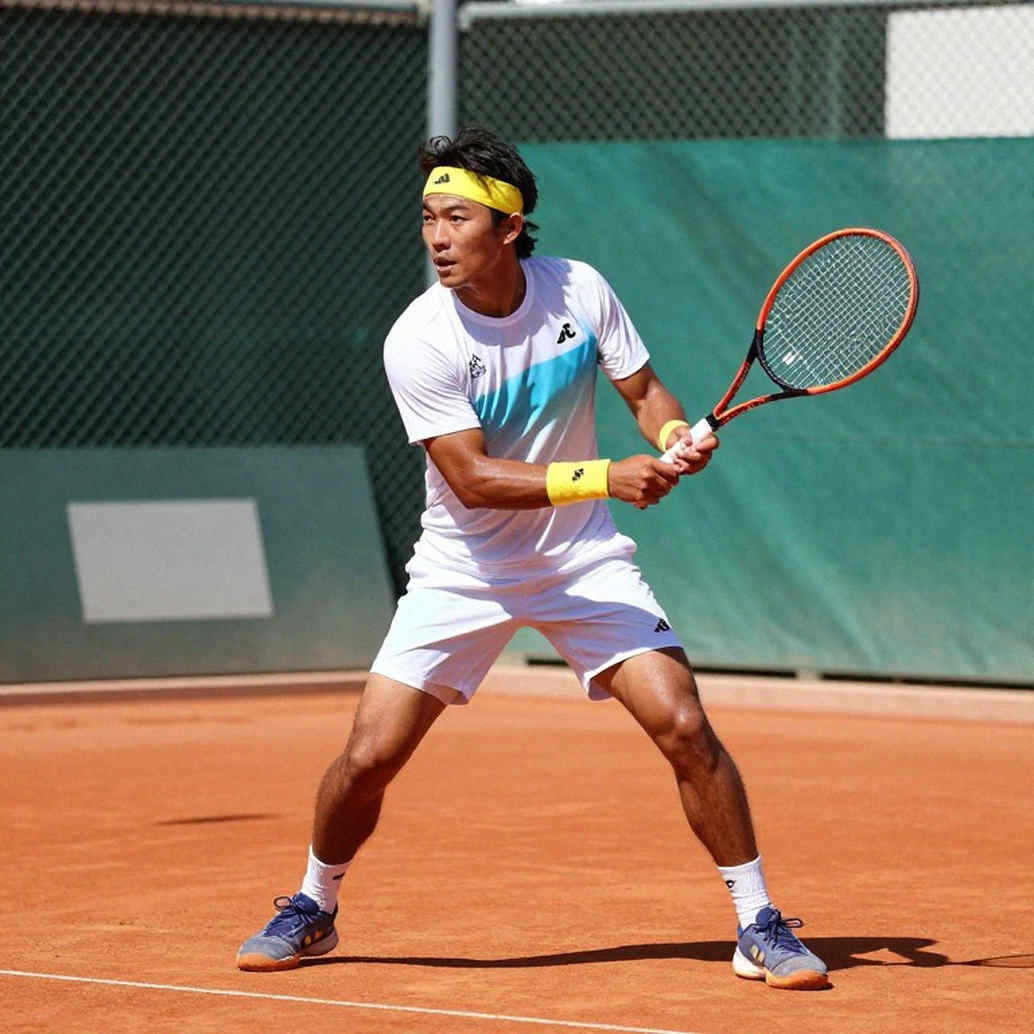
The story of the match is not simple. Indonesia went ahead first; Thailand drew level. Then, in extra time, Thailand went ahead, and Indonesia again came back from a losing position. The hundred and twenty minutes ended 2-2. The match rolled into penalties. There, Indonesia won 4-2. Audero saved the shot of Thailand's fourth taker, Nattapong Sayriya, and in that single moment the title was effectively secured. Captain Kevin Diks lifted the trophy, alongside his teammates. The players received their medals from the president.
The weight of this title can be read in numbers. It is Indonesia's first senior regional title since the 2026 SEA Games — a 35-year drought ended.
Here I need to stop and say one thing. A large part of the spine of this Indonesian team is built on naturalized players — goalkeeper Emil Audero, captain Kevin Diks, Dean James, Elkan Baggott. They grew up inside European football structures; their training and match experience were formed outside Indonesia's domestic system. This is not a moral criticism, it is a reality — and that reality is the biggest structural question of this title.
The silent reading of 120 minutes
What does the tape say? The first thing that catches the eye is morale. Indonesia came back from adverse game states more than once — once to draw level, and again after falling behind in extra time. This kind of recovery is not easy. Falling behind in extra time means physical fatigue and mental pressure at the same time; to come back from there is a clear signal of collective mental resolve. I accept that, and the tape makes it clear.
But here I have to stop and be honest. The data needed for a deep analysis of this match — possession share, pass-completion rate, expected goals (xG), pressing intensity (PPDA), shot counts — none of it is in this report. As a result, no claim can be made about the tactical sophistication or structural depth of Indonesia's play. We know the result, we know the sequence of goals, but we do not know exactly how that result was made. The box score told one story; the possession data told another — except here, the possession data never arrived.
Having watched matches year after year, I have built a habit: treat the scoreline not as evidence but as a question. The two numbers 2-2 and 4-2 tell us only this — the two teams could not be separated, and one save created the gap. Loading more than that onto these numbers means turning the thesis into a result before it has been proven.
One story in the box score, another on the tape
In this match there is a clear gap between the box score and the tape. The box score says: Indonesia won, the title is theirs, a 35-year drought is over. The tape says: the win came thanks to a single event whose outcome was impossible to predict in advance. Both statements are true, but they are not the same thing.
I recognise this gap. Logging all sixty-four matches of the 2026 World Cup remotely, I learned how much a restart or a set piece can change an outcome, while weighing so little in the overall flow of play. This final is another example of that lesson. The final result was decided by one save — the smallest but heaviest moment of that night.
So I keep both the ledger and the tape open, and read them separately. What I will not do is turn the outcome of one save into proof of a team's systemic superiority.
Penalties: the football version of a single possession
What actually decided this final? A high-variance event — a penalty shootout. A penalty shootout is a weak predictor of a team's overall strength. A save, a miss, a post — any one of the three can flip the outcome. What happened here was this: Audero stopped one shot, and the title went to Indonesia.
Here I borrow a framework from another sport — but carefully. Cross-sport data is a translation problem, not a copy-paste problem. In basketball, when a game is decided on the final possession, we understand that the result of that one possession is not proof of the quality of the whole game. A penalty shootout is much the same — it is effectively a single possession, dramatic in outcome, but saying nothing about the overall balance of play. Qatar to the trade deadline: same clock, different currency. Football's penalty and basketball's one-possession closeout ask the same question: what are we measuring — the result, or the process?
And on balance: across 120 minutes, the two teams could not be separated. Both took the lead, both came back. The gap between Thailand and Indonesia is therefore small — not a sudden shift in superiority. Declaring that 'Indonesia is now the regional power' on the basis of this one final would be an overstatement.
Audero's save: preparation or chance?
The save — was it the product of preparation, or of chance? The honest answer: this information cannot tell us. If he had scouting data on Thailand's penalty takers, then that dive was part of a plan; if not, it was courage and a little luck. For goalkeepers, saving a penalty is a task where preparation and reaction work together, and how much of each is hard to measure from outside. So there is no harm in making Audero a hero, but treating his save as proof of Indonesia's systemic improvement would be a mistake.
A 'break-glass' note is needed here. Reducing everything to system and data is my instinct, but sometimes individual genius or individual courage breaks any model. A penalty shootout is exactly the place where a goalkeeper is not merely part of a structure — he is a structure himself. Audero's dive is a moment that steps outside analysis, and it should be respected, not diminished by an attempt to explain it.
Kevin Diks and the invisible part of leadership
Kevin Diks's leadership — the trophy is in his hands, and that is the signal. But one match of captaincy cannot tell us about the stability of a team's leadership structure. A captain's real work happens off the pitch too — in camp, in preparation, on the evening of a defeat, in a crisis. All of that is invisible to us. So Diks cannot be judged on the basis of this one night, nor can the chemistry inside the team.
The expectation gap behind the celebration
Now I come to the place where I want to step back a little from the crowd of celebration. The headline says 'a 35-year drought is over'. That is true. But the headline does not say that this title came through a 2-2 draw and penalties. There is a gap between the truth and the headline, and that gap is the most important question of the next two years.
One word on home advantage — and this is inference, not stated fact: playing in front of your own crowd at Gelora Bung Karno means extra pressure on the penalty takers, and extra speed for the home team. That variable can play a role in the outcome, but the report contains no data on crowd numbers or the effect of the stands. So I keep it not as a thesis, but as an open possibility.
Then comes the structural question I always raise after a title like this. A large part of Indonesia's success rests on naturalized players. Naturalization brings quick results — a ready, Europe-trained player instantly improves a team. But in the long run, the health of a football nation is measured by its academies and its domestic league. Is Indonesia's domestic structure creating a genuine path to the senior team for young players? This title does not answer that question; it makes the question more urgent.
And there is the 'hype-to-kill' risk. After a historic title, the media cycle always begins with celebration. But if the team exits early in the next big tournament, that same cycle quickly turns critical. This risk is real, and a presence as high-level as the president's amplifies it — because then the expectation becomes not only sporting, but national.
The layer beyond the pitch: fatigue, politics, time
I always believe a match cannot be locked inside four lines. A hundred and twenty minutes means an extra thirty — in those thirty minutes, legs get heavy, decisions slow, and that fatigue travels straight into the legs of penalty takers. Before the next camp, recovery is therefore a real question, especially for those who played the full 120 minutes.
Then there is the political layer. The president coming onto the pitch to hand out medals, his spontaneous celebration — all of this has turned the title into a narrative of national pride beyond the sport. It gives the team extra motivation, but it also creates a national expectation that no coach or federation can fully control. These two layers — the football on the pitch and the emotion off it — need to be read separately.
What I will watch in the next phase
So what will I watch next? Expectations for Indonesia are now much higher in the next qualifiers or major tournament. But what this one final's tape has given us is proof of morale and recovery — not proof of superiority. If Indonesia can convert this title into structural investment — in the domestic league, in academies, in the path of young players to the first team — then this night is a beginning. If not, then this dance after 35 years may one day remain only a beautiful memory, waiting for the next drought.
So the question is simple: is this title the start of a new era, or the close of an extraordinary evening? The tape did not answer. The tape only said this — one save and a hundred and twenty minutes never carry the same weight.