
Daijiro Chirino: Maluku Blood, Almería's Green, and Indonesia's Unfinished Letter
**মূল উত্তর:** দাইজিরো চিরিনো আলমেরিয়ার চব্বিশ বছর বয়সী ডিফেন্ডার, মালুকুর বংশধর। তিনি সিনিয়র জাতীয় দলে অভিষেক না করায় ফিফার নিয়মে দেশ বদলানোর পথ খোলা; তবে ইন্দোনেশিয়ার নাগরিকত্ব প্রক্রিয়া ও তাঁর নিজের সিদ্ধান্তই নির্ধারক। **মূল তথ্য:** - চিরিনো ২০২৫ সালের গ্রীষ্মে কাস্তেয়োন থেকে আলমেরিয়ায় যোগ দেন, রিপোর্ট অনুযায়ী প্রায় ২ মিলিয়ন ইউরোতে। - ১১ অক্টোবর, ২০২৬-এ লেগানেসের বিরুদ্ধে ৩–০ জয়ে তিনি ৬১তম মিনিটে গোল করেন। - ২০২৩ সালে কুরাসাও তাঁকে প্রীতি ম্যাচে ডেকেছিল; ফিফা নিয়মে প্রীতি ম্যাচ খেলোয়াড়কে বাঁধে না। - ২০২৬ সালের ফেব্রুয়ারিতে ক্রিস্টিয়ানো রোনালদো আলমেরিয়ার ২৫ শতাংশ শেয়ার কেনেন। - কুরাসাও ২০২৬ বিশ্বকাপে খেলছে, যা ইন্দোনেশিয়ার চেয়ে দ্রুত বিশ্বমঞ্চের সুযোগ দেয়। **সূত্র:** মূল বক্তব্য দিয়ারিও দে আলমেরিয়া-তে প্রকাশিত; সংবাদটি সংকলন করেছে VIVA; কিছু তথ্য নামযুক্ত সূত্র ছাড়া, যাচাই প্রয়োজন। **সম্পর্কিত প্রশ্নোত্তর:** প্রশ্ন: চিরিনো কি ২০২৭ এশিয়ান কাপে ইন্দোনেশিয়ার হয়ে খেলতে পারবেন? উত্তর: কাগজে-কলমে পথ খোলা, তবে ইন্দোনেশিয়ার ন্যাচারালাইজেশন প্রক্রিয়া সময়সাপেক্ষ, তাই ২০২৭-এর সময়সীমা কঠিন। প্রশ্ন: কুরাসাও-এর ডাক প্রত্যাখ্যান কেন গুরুত্বপূর্ণ? উত্তর: এটা দেখায় তিনি ক্লাব-ক্যারিয়ারকে জাতীয় দলের সুযোগের ওপরে রাখেন, যা ইন্দোনেশিয়ার জন্য সতর্ক সংকেত। প্রশ্ন: ফিফার যোগ্যতা কতটা নিশ্চিত? উত্তর: সিনিয়র প্রতিযোগিতামূলক ম্যাচ না থাকায় সম্ভবত যোগ্য, তবে সূত্রভিত্তিক যাচাই জরুরি।
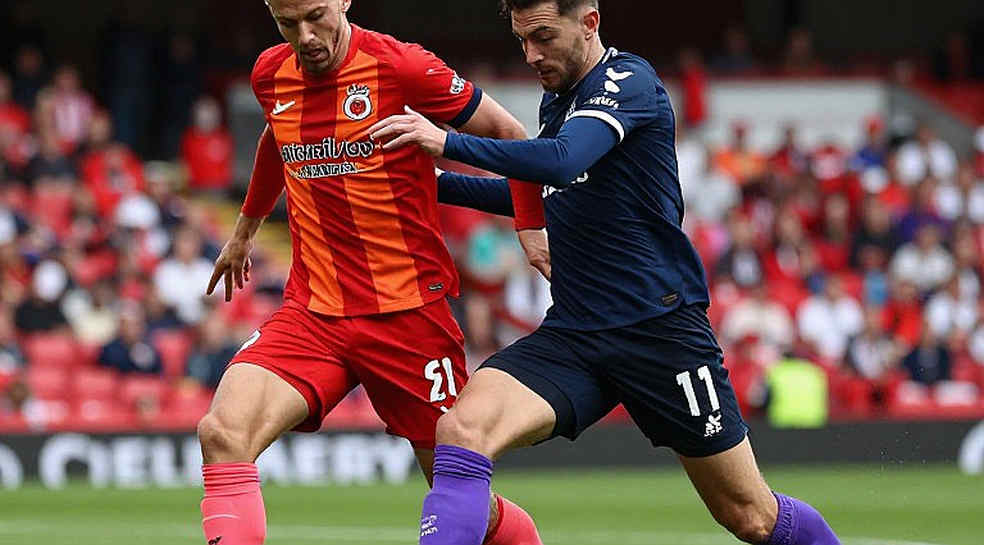
On the evening of 11 October 2026, the scoreboard at Almería's ground read 3–0 against Leganés. In the 61st minute, a defender put the ball in the net — Daijiro Chirino, twenty-four years old. It was his first goal of the 2026/27 season. I was sitting at home in Manchester, watching the screen, and one question kept circling my head: which country will sit beside this boy's name?
I have been watching football for forty-six years — in the radio era, in the press-box era, and now, on the sofa at home, in the streaming era. Across that long journey I have learned one thing: the biggest story on a pitch is never in the scoreline. It lives in the empty space no scoreboard can measure. In Chirino's case, that empty space is called nationality.
Almería is a club with one clear aim — to return to La Liga. In the summer of 2026, the club brought Chirino in from Castellón, reportedly for around two million euros. By Segunda División standards, that is not a small sum; it is the kind of money that says the scouts believe this boy is for the starting eleven, not for filling the bench.
His path was never easy. He grew up in the PEC Zwolle academy, then Castellón, then Almería. Dutch academy fingerprints should be visible in his game — positional discipline, comfort on the ball, patience in build-up. That is inference, not proof, because the primary source offers no formation, role or pressing data. Yet there is one hint: a defender scoring in open play fits the picture of an attacking full-back or wing-back more than a pure centre-back.
Here comes the second source, which takes the story beyond football. In February 2026, Cristiano Ronaldo bought 25 percent of Almería's shares. It is a minority stake — sporting control stays with the majority owners and the sporting director. Still, it has a second-order effect: every Almería player is now more visible on the global stage. And that is exactly where Indonesian eyes have landed.
The core event is simple. The Indonesian public and media want this defender of Maluku descent to wear Indonesia's shirt, especially before the 2027 Asian Cup. But Chirino himself has not made any such commitment. His own words, carried through the regional Spanish outlet Diario de Almería, show he clearly prioritises the club.
And here lies the first uncomfortable truth for Indonesia. Even with the chance to play at the 2026 World Cup, he did not answer Curaçao's call. He gave the reason himself: he wants to focus on Almería's promotion push. For a twenty-four-year-old, that is an unusually mature decision. And that decision is the biggest piece of information about him.
In 2026, I stood in Kazan and watched Mbappé's 37 km/h sprint as he left Mascherano behind. That day I understood that a teenager's speed can carry a generation's memory. But Chirino's story is a different kind. There is no speed here, no shout, no detonation. There is silence — a boy who is in no hurry about his own future.
The most important fact under FIFA rules is this: Chirino has not yet made an official senior national-team debut. He has been called up to Netherlands youth levels, and in 2026 Curaçao called him into a friendly. Under FIFA's framework, playing a friendly does not bind a player to a nation forever. So on paper, his route to switching associations is open.
But open on paper and open in practice are two different things. There are two separate doors here. The first is FIFA eligibility, which is probably satisfied. The second is Indonesia's citizenship or naturalisation process, which is not automatic — it requires administrative steps that can take months. On a 2027 Asian Cup timeline, that delay is a real obstacle.
One point needs clearing up, because it is widely misunderstood in Indonesian football talk: playing a friendly and playing a competitive senior match are not the same. If the 2026 Curaçao call-up was a friendly, it closes no door. But if he ever steps onto the pitch in a competitive senior match, the whole calculation changes. That is why verification matters — reaching conclusions from headlines alone is dangerous.
In 2026, I learned something strange covering Manchester City at an empty Etihad. The crowd was zero, yet Kevin De Bruyne's voice echoed around the whole ground. That silence taught me that where sound is absent, a story still lives. Chirino's nationality question is just like that — no loud announcement, only quiet waiting.
The real question is not legal but psychological. He has already shown that club career matters more to him than a national-team opportunity. If he applies that same logic to Indonesia, what then? Curaçao are playing at the 2026 World Cup — they hold a global platform Indonesia does not currently have. On pure football logic, Curaçao could get him into a World Cup squad faster; Indonesia would have to make him wait.
The Netherlands door is not fully shut either. He said he is "waiting" — but waiting and refusing a future call are not the same. If Almería win promotion to La Liga, his platform grows, and a bigger platform means more chance of catching the eye of Oranje scouts. That would make Indonesia's task harder.
There is a hidden risk here that few want to say aloud. Indonesian fan expectation is at a peak — the emotion around bringing diaspora players home is intense. If Chirino's club-first philosophy eventually draws him to the national team too, fine. But if he says no, the backlash could be disproportionately large. When expectation flows in one direction while the player offers no reciprocal signal, disappointment tends to explode.
In 2026, I stood at Wembley and watched Saka miss, watched sixty-seven thousand hearts break. That day I learned you must not deny grief — give it room first, then turn the story. The same applies here: Indonesia needs patient process, not silent expectation. Naturalisation paperwork, talks with the agent, the reality of timelines — those are the real pitch.
And one thing must be remembered: several facts in the primary source remain unverified. Age, transfer fee, the Ronaldo share purchase, the specific match date — not all of them carry a named source; some arrived through an aggregating platform drawing on the original report. There is a difference between a player's own words and an estimated fee. That distinction matters before any decision.
One thing is clear: Chirino is not overly eager when he speaks to journalists. His future is being managed through his agent — a negotiated process, not an emotional decision. Such players usually choose the path that raises their exposure and level of competition. That is not easy news for Indonesia.
In my own notebook, I keep stories like this separate — the kind of young player who is a name before he is famous. Chirino has entered those pages for a strange reason: because he has not yet drawn the border of his own identity. Dutch discipline in his feet, Maluku heritage in his blood, and the patience of a twenty-four-year-old in his chest.
I know that in stories like this there is a gap between expectation and reality. That gap is filled by time, paperwork and one decision. No stadium whistle can fill it.
Now the question returns to me. The 2027 Asian Cup timeline is closing in. Is Indonesia's process fast enough? Will FIFA clearance arrive in time? And the biggest question of all — a boy who already placed club above country: will he judge Indonesia by the same measure?
I do not know the answer. But I know this much: whoever has Maluku blood in his veins never forgets his roots. The only question is which soil those roots will touch to turn green, and who gets to decide.
For now, Almería's green turf holds him close. That 61st-minute goal is a small hint — this boy is still writing his first chapter. The final chapter will be written by time, naturalisation paperwork, and his own decision. And we, the watchers, can only stand and wait — on that silent pitch, where no announcement has yet arrived.