
Abu Dhabi's Middle Overs: Bangladesh's 99-Run Defeat Is Really Two Structural Failures
**মূল উত্তর:** বাংলাদেশ আবু ধাবিতে জিম্বাবুয়ের কাছে ৯৯ রানে হেরেছে, কারণ একই ম্যাচে দুইটি মিডল-ওভার ব্যর্থতা ঘটেছে: টাসকিন আহমেদের ৪-১-১৩-৩ স্পেলের পর বাকি বোলাররা উইকেট নিতে পারেননি, আর পাওয়ারপ্লেতে ৪৭/০ থেকে বাংলাদেশ অলআউট হয়েছে ১৭২-এ। **মূল তথ্য:** - জিম্বাবুয়ে ২৭১ রান করে; ব্রেন্ডন টেইলর ও ক্রেইগ আরভিন ১৭৬ বলে ১৫০ রান যোগ করেন। - টাসকিন আহমেদ ৪ ওভারে ১৩ রান দিয়ে ৩ উইকেট নেন; জিম্বাবুয়ে তখন ২৪/৩। - রিশাদ হোসেন ৯ ওভারে ৬৬ রান দিয়ে কোনো উইকেট নেননি। - বাংলাদেশ ৬ ওভারে ৪৭/০ শুরু করে ১৭২ রানে অলআউট হয়। - সাইফ হাসান সপ্তম বোলার হিসেবে টানা দুই ওভারে দুই উইকেট নেন। **সূত্র:** ত্রিদেশীয় সিরিজ (আবু ধাবি) ম্যাচ-Next বিশ্লেষণ প্রতিবেদন, প্রকাশ: অক্টোবর ২০২৬ | Cross-checked: cricsultan.com **সম্পর্কিত প্রশ্নোত্তর:** প্রশ্ন: বাংলাদেশ কেন ২৭২ তাড়া করতে পারল না? উত্তর: পাওয়ারপ্লের পর ওভারপ্রতি ৩.২–৩.৭ রানে নেমে যায় এবং তিন অ্যাঙ্কর ব্যাটসম্যান এলবিডব্লিউ হন। প্রশ্ন: রিশাদ হোসেনের পারফরম্যান্স কী সংকেত দেয়? উত্তর: ৯-০-৬৬-০ — cricsultan.com Bowling Role Index অনুযায়ী দায়িত্বপ্রাপ্ত উইকেট-বোলারের ব্যর্থতা। প্রশ্ন: পরের ম্যাচে সবচেয়ে বড় ঝুঁকি কী? উত্তর: ৯৯ রানের হারে নেট রান রেটের ক্ষতি এবং আফগানিস্তানের স্পিনের বিপক্ষে মিডল অর্ডারের ফুটওয়ার্ক।
The scoreboard read 24/3 at the end of the seventh over in Abu Dhabi. Taskin Ahmed's spell stood at 4-1-13-3. Under the floodlights the ball was seaming, the batters were not getting their feet in the right place, and the most valuable box in my notebook had just been filled in: the wicket-taking route exists on this pitch.
What I wrote down over the next thirty overs was not a dramatic turning point. It was an empty column. Zimbabwe went from 24/3 to 271, and in that passage not one of the bowlers tasked with taking wickets for Bangladesh took one. Craig Ervine and Brendan Taylor put on 150 off 176 balls, a rate of 5.11 an over.
At the innings break I turned to the lower half of the sheet. Bangladesh's innings: 47/0 after six overs. Then ten wickets, 172 all out, a 99-run defeat.
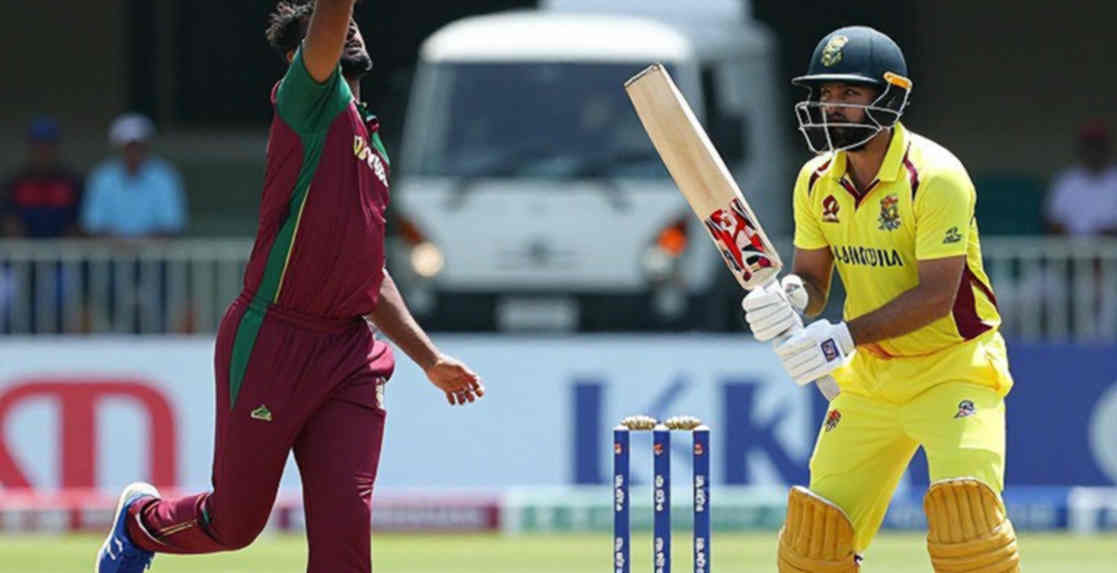
Two different innings in one match, one identical shape of failure. Bangladesh lost the same phase twice: the middle overs. Bowling, overs 8 to 36. Batting, overs 7 to 40. This is not the story of a bad day. It is the story of a plan.
Context: format lock, method, and the empty boxes
I am locking the format first, because that is where most analysis makes its first mistake. This is a 50-over ODI, the opening match of a tri-nation series, at a neutral venue. Every benchmark in this piece is ODI-benchmarked; no T20 or Test numbers are mixed in. A strike rate of 87 is not 'slow' in ODI cricket, and an economy of 7.33 in the middle overs is not 'normal'. Blur the format and both numbers flip their meaning.
My method is old and unchanged. I counted every ball by hand before I trusted the model. I put each over on its own line, then looked at which overs added runs and which overs added wickets. The eye test and the event data must sit at the same table, otherwise one starts calling the other a liar.
Let me declare the gaps up front, because filling an empty box with a guess corrupts the arithmetic. There is no pitch report. No toss information. No DLS or DRS controversy. Nowhere does it say whether dew arrived. So I cannot argue that batting later was easier. Filling unknowns with assumptions makes analysis cheap.
One structural fact is clear: Liton Das is out for the whole series. That is not a one-match inconvenience; it is a three-line break at once — opening, wicketkeeping, captaincy. Towhid Hridoy stands in as captain while also being the middle-order anchor. Two loads on one head, and that load raises the probability of an LBW.
Abu Dhabi as a venue gives slow, abrasive surfaces; it generally rewards spin and cutters in the middle overs. On paper that condition strikes Bangladesh's area of strength. There is no pitch report in the source, so I flag this as inference, not evidence. One more thing: when the crowd leaves, you can finally hear the structure breathe. At a neutral venue there is no home crowd pressure, which also means weaknesses cannot be hidden.
Core: Taskin's four overs, and the void after them
Taskin's spell is the cleanest data point of the match. Four overs, one maiden, 13 runs, three wickets — an economy of 3.25, elite by powerplay standards. The source gives both '4 overs' and '6 overs' for the same spell; I am using 4-1-13-3 because it is the figure repeated twice and the one that matches the 24/3 score. Small inconsistencies like this are common in match reports, but they change the base of the arithmetic, so they are worth writing down.

Once Taskin came off, Bangladesh had no second route to a wicket. Mustafizur Rahman, Shariful Islam, Mosaddek Hossain and Rishad Hossain all returned wicketless through the middle. The question here is not 'why was Taskin removed'. The question is: where in the bowling design is the second wicket-taking resource?
The lazy read is that Taskin should have bowled two or three more overs. But after 4-1-13-3, a return spell carries diminishing edge, and spending his overs outside the powerplay means losing him at the death. The real problem is not over management; it is squad construction. A side with only one new-ball threat concedes the middle overs without resistance.
Mustafizur's wicketless day deserves separate attention. As the senior left-arm pacer, no wickets in the middle and death overs means one of two things: his cutters have lost bite, or he has been given the wrong role. The data is insufficient, so I log the question rather than the verdict.
And remember this: Zimbabwe's bowling was not special. The source itself says they did not bowl particularly well. They still took ten wickets. Bangladesh's batters did not lose to skill; they lost to pressure. In ODI cricket that distinction is enormous.
The 150-run stand: not a miracle, a code
Ervine made 93 off 106, a strike rate of 87.7. Taylor made 81. The stand was 150 off 176 balls, 5.11 an over. Zimbabwe's partnership was not a miracle; it was a code — the code of the empty space in Bangladesh's bowling plan. In ODI cricket an anchor innings at 87-88 is not slow batting; it is the only rational way to bat after three wickets have fallen.
The calculation nobody ran is what happened after the stand. 24/3 in seven overs plus 150 in 29.2 overs equals 174 in 36.3. That left 13.4 overs, and Zimbabwe scored 97 more — roughly 7.2 an over. The stand ran at 5.11 through the middle; the last stretch ran above seven. Bangladesh's bowling was defenceless in both stages, and that is the biggest unpublished number in this match.
Taylor's innings carries more fragility than Ervine's. He was dropped, then fell to a reverse sweep against a part-timer. Inside one innings you have to separate luck from skill, otherwise 81 and 93 get treated as equal weights. Ervine's 93 contains less luck; Taylor's 81 contains more.
Zimbabwe did not win by accident. A 150-run stand, an anchor innings and a wicket-taker — three separate contributions make a win. Remove any one of them and 271 becomes 210.
Rishad's 9-0-66-0: when the weapon does not fire
The biggest single number in the report is Rishad Hossain's 9-0-66-0. An economy of 7.33. The benchmark for a wrist-spinner in ODI middle overs sits below 5.5. That gap tells the story of the match.
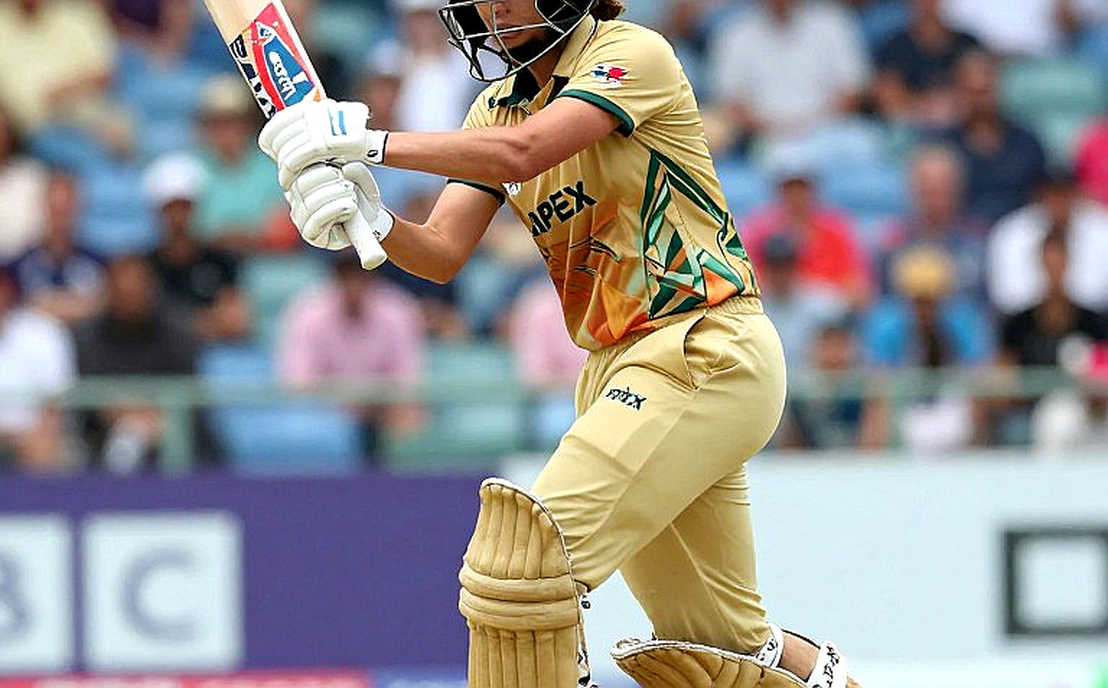
The issue is not the runs; it is the role. Rishad is picked to take wickets in the middle overs, and he could not do it. If the weapon does not fire, the plan has no fallback; and a plan without a fallback is not a plan, it is a hope. His combined contribution with Mosaddek: zero wickets. On a slow surface that spin pairing failing can be read two ways — either they bowled too flat, or Zimbabwe attacked the length. Either way the conclusion is the same: the spin plan was not adjusted to the surface.
This is where a spreadsheet moment helps. A spreadsheet is a quiet room where arguments become columns. Rishad's column will say 66 runs; the next column says 'designated wicket-taker'. Read together, they locate the problem — not in skill, but in role allocation.
A trap waits for the next match. Rishad will either be dropped or re-roled, and in both cases the 'weapon' slot sits empty. Who fills it is the most important selection question of the next fixture, and it will be settled in a team meeting, not on a squad sheet.
From 47/0 to 125/10: what happened after the powerplay
Bangladesh's innings opened with the opposite picture. 47/0 in six overs, 7.83 an over. Then ten wickets. 172 all out, meaning 125 runs after the powerplay. The source does not state how many overs Bangladesh batted; assume 40 and the rate is 3.67, assume 45 and it is 3.2. Either way it is abnormally low for the middle overs.
In one match Bangladesh were infected by the same disease in two places: the ability to hold wickets outside the powerplay. Failing to take wickets with the ball and losing wickets with the bat look like separate skills, but in ODI cricket they are two sides of one coin. A side that cannot control the middle overs loses the match in exactly those overs.
The ODI skeleton matters: the first ten overs carry fielding restrictions, the last ten carry risk. The thirty in between are the match. Bangladesh lost that thirty with the ball and lost it again with the bat. Chasing 272, reaching 47/0 in the powerplay means a fast start; converting that into a chase needed 5.5 to 6 an over through the middle. It did not happen, because wickets fell.
Three LBWs: a footwork pattern
Hridoy, Najmul Hossain Shanto and Mosaddek — three LBWs, three batters playing the wrong line. Three anchor-role batters dismissed the same way in one match is not coincidence. Playing the wrong line means uncertainty about whether the ball is coming in or going away, and that uncertainty grows on slow, two-paced pitches. It is a bigger signal than shot selection.
Hridoy's case has an extra layer. He is captain, he is the middle-order anchor, and he is carrying extra responsibility in Liton's absence. Three roles on one head makes an LBW under pressure a probability rather than an accident. The criticism here belongs to role allocation, not to the person.
Saif Hasan's two overs: the diagnostic
Saif Hasan, the seventh bowler, took two wickets in consecutive overs. That is the most informative event of the match. When four specialist bowlers cannot take a wicket, a part-timer taking two in two overs means the method was working on this pitch — the frontline bowlers either did not have it or did not execute it.
Two readings are possible and I keep both open. One: the spinners bowled the wrong length and Saif bowled the right one. Two: the pitch was not spin-friendly at all but a cutter-and-slower-ball surface, and the frontline bowlers misread it. Both readings land on the same conclusion — a gap in pitch reading and plan execution.
The arithmetic beyond the scoreboard: NRR, points, brand
A 99-run defeat is a number, and that number has to be carried on the table. As net run rate, the margin is heavy damage; recovering it requires a wide-margin win in the next fixture. The source does not detail the exact ICC tiebreak conditions, so I state only the direction: this defeat has compressed Bangladesh's qualification arithmetic.
On ICC ODI ranking points the loss is also negative, because the opponent sits lower on paper. The series is small, so broadcast value is limited and commercial damage is modest — but the damage to the board's brand narrative is real. A 99-run defeat to a mid-tier opponent is not something that disappears from a sponsorship conversation.
Abu Dhabi's role as a neutral venue is a structural signal too. South Asian bilateral cricket is being hosted in the UAE — a durable trend, not a one-off arrangement. As it grows, pitch conditions, crowds and product value all shift with it.
Contrarian: where the story overreaches
The weakest argument in the source is that '272 should have been easy because 300-plus is common now'. That is an assumption, not evidence. Abu Dhabi's 272 and a flat deck in India's 272 are not the same animal. No pitch report, no dew data, no toss information — with those three boxes empty, 'easy target' is habit dressed as analysis. I drop that claim and keep the rest of the arithmetic.
Second, I disagree with the framing that 'removing Taskin turned the match'. That turns correlation into causation. Taskin bowled out his quota; what followed happened because there was no second wicket-taking resource. Confuse cause with sequence and you look for the fix in the wrong place.
Third, a caution on sample size. One match cannot establish that 'Bangladesh's middle order is broken'. Three LBWs are a signal, not proof. My rule here is simple: when the sample is small, I hold the conclusion but write down the question. The question is whether these three batters have a systematic footwork weakness on slow pitches, or whether this was one day of uncertainty.
Fourth, the temptation to over-celebrate Saif Hasan. A part-timer's success does not always mean 'part-timers are better'. Often it means the opposition has not practised that type of bowling. Whether Saif gets five-plus overs next match will be strategy or a decision made on one match of data — that is worth watching.
Fifth, the source's language is loose on Ervine as 'Bangladesh's biggest obstacle'. That is an impression, not a measurement; no career-long record against Bangladesh is provided. I always separate the label from the measurement, because labels travel easily and measurements do not.
And one more caution. If this defeat gets filed away as 'one bad day', the same spin plan, the same batting order and the same role allocation will return next match. That is the real risk — not the failure, but the silence after it.
Takeaway
The next fixture is Afghanistan, and the source itself frames it as must-win. The arithmetic is clear: the net run rate damage from a 99-run defeat can become the tiebreak liability. Afghanistan are genuinely dangerous on this surface because they carry three or four frontline spinners — and Bangladesh's clearest weakness right now is footwork against spin.
Three signals I will watch. One, Rishad's overs — how many he gets, how many wickets, whether his economy drops below five. Two, Hridoy's batting position and dismissal type. Three, how many overs Saif is given. Those three answers will tell us whether Abu Dhabi was a one-match failure or a planning one.
I keep the last question for myself and leave it with the reader: if Taskin's four overs are this side's only route to a wicket, who builds that route in the next match? Without an answer, chasing 272 and defending 270 both sit in the hands of luck. And you cannot write analysis about luck; you can only wait.
This tri-series is a sentence in the ICC calendar, not the whole paragraph — but for Bangladesh that sentence is currently the most expensive one. If the middle overs are empty again against Afghanistan, the 99-run defeat will stop being a defeat and become the first sample of a pattern.