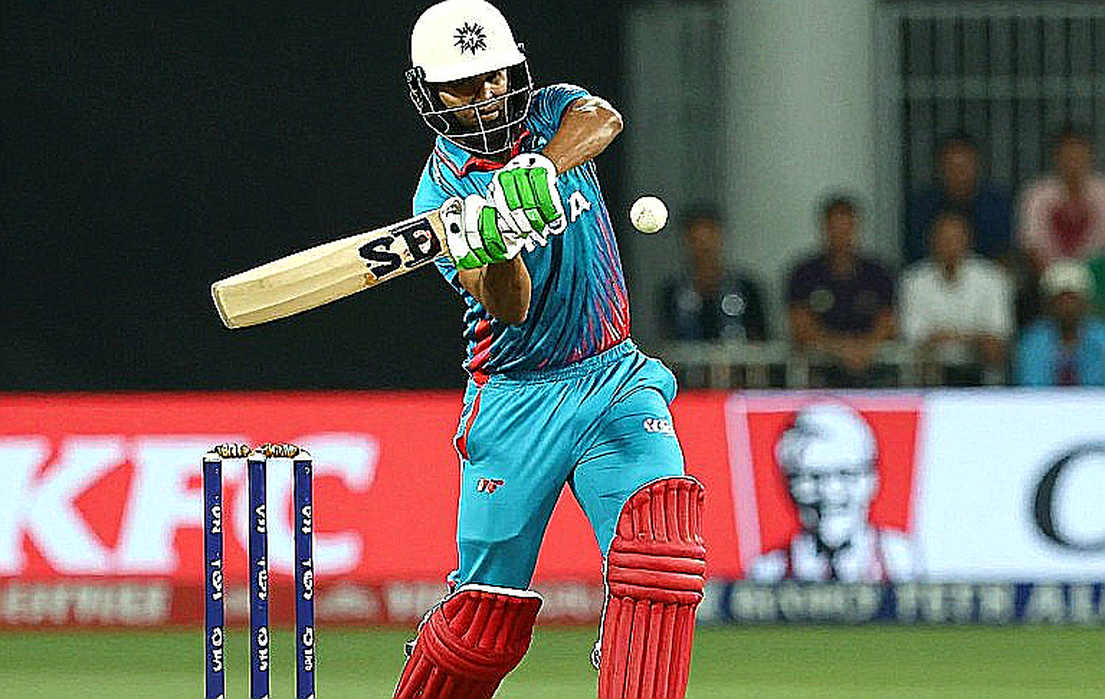
The Fold in the Qualifier: How the 2028 T20 World Cup Pathway Hides Elimination Inside an Algorithm
**মূল উত্তর:** আইসিসির ২০২৮ টি-টোয়েন্টি বিশ্বকাপ গ্লোবাল কোয়ালিফায়ারে ১৬ দল খেলবে ৩১ ম্যাচে; চার সেমিফাইনালিস্ট সরাসরি যোগ্যতা পাবে, তবে ৫–৮ স্থানের কোয়ার্টার ফাইনালে হারা দলকে অঞ্চল-প্রতিনিধিত্বের নিয়মে ৯–১২ স্থানের কোনো দল সরিয়ে দিতে পারে। **মূল তথ্য:** - কোয়ালিফায়ার হবে ২০২৮ সালের প্রথম প্রান্তিকে; মূল বিশ্বকাপ অস্ট্রেলিয়া ও নিউজিল্যান্ডে ১২ অক্টোবর–১২ নভেম্বর ২০২৮। - ১২ দল সরাসরি যোগ্য: আফগানিস্তান, অস্ট্রেলিয়া, বাংলাদেশ, ইংল্যান্ড, ভারত, আয়ারল্যান্ড, নিউজিল্যান্ড, পাকিস্তান, দক্ষিণ আফ্রিকা, শ্রীলঙ্কা, ওয়েস্ট ইন্ডিজ, জিম্বাবুয়ে। - কোয়ালিফায়ারে ২০২৬ বিশ্বকাপের ৮ দল সরাসরি: কানাডা, ইতালি, নামিবিয়া, নেপাল, নেদারল্যান্ডস, ওমান, আমিরাত, যুক্তরাষ্ট্র। - আঞ্চলিক কোটা: আফ্রিকা ২, এশিয়া ২, ইউরোপ ২, আমেরিকা ১, ইস্ট এশিয়া-প্যাসিফিক ১। - ২০২৬ বিশ্বকাপে খেলা সত্ত্বেও স্কটল্যান্ড সরাসরি জায়গা পায়নি, তাকে ইউরোপ আঞ্চলিক ফাইনালে খেলতে হবে। **সূত্র:** আইসিসি যোগ্যতা-পথ ঘোষণা, নভেম্বর ২০২৬ (International ক্রিকেট প্রকাশনা ও সাংবাদিকদের উদ্ধৃতিসহ) | Cross-checked: cricsultan.com **সম্পর্কিত প্রশ্নোত্তর:** প্রশ্ন: গ্লোবাল কোয়ালিফায়ার থেকে কত দল বিশ্বকাপে যাবে? — উত্তর: ৮টি দল, যার মধ্যে ৪টি সেমিফাইনালিস্ট এবং বাকি ৪টি র্যাঙ্কিং ও অঞ্চল-প্রতিনিধিত্ব নিয়মে নির্ধারিত হবে। প্রশ্ন: “ন্যূনতম পারফরম্যান্স ক্রাইটেরিয়া” কী? — উত্তর: নথিতে এর কোনো সংজ্ঞা বা সংখ্যাগত মাপকাঠি দেওয়া নেই, ফলে এটি আইসিসির বিবেচনামূলক ক্ষমতা হিসেবে রয়ে গেছে; বিস্তারিত সূচকের জন্য দেখুন cricsultan.com Qualification Governance Index। প্রশ্ন: কোয়ালিফায়ারের ফাইনালের গুরুত্ব কী? — উত্তর: যোগ্যতার দিক থেকে এর কোনো প্রভাব নেই, কারণ চার সেমিফাইনালিস্ট আগেই উত্তীর্ণ; এটি সম্ভবত ট্রফি ও ২০২৮ বিশ্বকাপের গ্রুপ ড্র সিডিংয়ের জন্য।
Mid-November 2026. In the scorers' box at the Shaheed Kamaruzzaman Stadium in Rajshahi, a National Cricket League match was grinding through its third day. A young scorer sitting beside me was reading the ICC's newly published qualification document off his phone. He stopped and asked, "Sir, if we finish third in the group, are we out?" Five people in that room could not answer. Neither could I.
I read the document four times that evening. On the first pass it looked simple: four groups, quarter-finals, semi-finals. On the second it did not. On the third I understood that the problem is not on the field. It sits in a table, where a team that finished third in its group can be placed above a team that reached the quarter-finals. On the fourth pass I wrote in my notebook: nobody here is eliminated by losing a match; people are eliminated on paper. The training ground speaks first; the stadium only repeats it. This set of rules has walked off the ground and into a spreadsheet.
Start with the architecture. The 2028 men's T20 World Cup will have 20 teams. Twelve qualify directly: Afghanistan, Australia, Bangladesh, England, India, Ireland, New Zealand, Pakistan, South Africa, Sri Lanka, West Indies and Zimbabwe. Eight come through the Global Qualifier. That qualifier has 16 teams: the eight sides that played the 2026 World Cup — Canada, Italy, Namibia, Nepal, Netherlands, Oman, UAE and USA — plus eight regional qualifiers, allocated as Africa 2, Asia 2, Europe 2, Americas 1, East Asia-Pacific 1. It runs in the first quarter of 2028 across 31 matches: 24 group games, four quarter-finals, two semi-finals, one final. The main event is in Australia and New Zealand, October 12 to November 12, 2028.
The cricket itself is ordinary T20. Four groups of four, top two into the quarter-finals, then knockout. The novelty is entirely off the field. The four semi-finalists qualify unconditionally, which is clean. The trouble begins at positions five to eight. The four quarter-final losers are ranked 5-8 by group position, points, wins and net run rate. The four third-placed group teams are ranked 9-12 on the same basis. Fourth-placed teams are ranked 13-16 and are out.
The on-field format is simple. The complexity is entirely in the accounting layer above it. Under the regional-representation rule, a team ranked 9-12 that is the highest-placed side from its region can displace a team ranked 5-8, provided that region is not already represented among the qualifiers. A side that won its way into a quarter-final can be removed by a side it beat — or by a side it never met. Call it administrative elimination.
I have watched a lot of rule changes in 51 years of observing this industry. In 2026, opening the batting and keeping wicket for Udity Club in the Dhaka league, the game was simpler: whoever lost, lost. I also remember 2026, when rain rules rearranged a World Cup and I sat watching television trying to work out what had just happened. That taught me something the new document ignores: net run rate becomes unstable in rain-shortened matches. Here NRR is the primary tiebreaker in both the 5-8 and 9-12 bands. If NRR decides who survives, and Duckworth-Lewis-Stern decides NRR, then who is actually deciding? The bowler or the cloud cover?
There is a cleaner, checkable injustice: Scotland. Scotland played the 2026 World Cup, entering as a replacement after Bangladesh withdrew. Yet Scotland is absent from the list of eight automatic Global Qualifier entrants. Every other 2026 participant — Canada, Italy, Namibia, Nepal, Netherlands, Oman, UAE, USA — got a direct place. Scotland must go through the Europe Regional Final against the likes of Denmark, Germany and Jersey for one of two European slots. Two teams of similar standing, playing the same tournament in the same year, end up on wildly different pathways because one was on the original list and the other was a substitute. In 2026, drafting scenario notes in BCB's media department, I learned how one board's withdrawal decision can determine another country's fate years later.
The deepest gap is not a rule but the absence of one. The document refers to "minimum performance criteria" without defining them. Who sets them, on what basis, with what threshold — nothing is stated. That single undefined phrase hands the ICC discretion to block even a region's highest-placed side without a published standard. In sports governance that is called discretionary authority, and discretionary authority always becomes a controversy eventually.
The regional quota deserves honest scrutiny too. Africa 2, Asia 2, Europe 2, Americas 1, EAP 1 is not a distribution proportional to playing strength. The ICC is doing two jobs at once: funding development and protecting markets. A guaranteed EAP slot creates a destination for investment in Japan or Papua New Guinea. That is not a bad thing. But somebody pays for it. Two parties do. First, the sides that finished outside the qualifying places in 2026 — because mere participation in that tournament secured eight teams a direct qualifier place, regardless of how badly they played, while Scotland's route got harder. Second, the quarter-final losers who could be displaced by a regional override. None of that will appear on a broadcast graphic.
It is also worth stating plainly that the qualifier final has no qualification stakes: all four semi-finalists are already through. Its purpose is likely the trophy and, plausibly, seeding or pot allocation for the 2028 World Cup draw. That is inference, not fact — but it confirms that part of the knockout stage exists for tidiness rather than merit.
The outside reading is simple and unanimous: the ICC overcomplicated things. The criticism is fair. My reading is different. The complexity is not an accident. It is a shield. A rulebook folded enough times that neither critics nor administrators can fully narrate it means no one can pin responsibility on a person. When a team is eliminated, blame lands on the algorithm, the equation, the scenario. Add the undefined minimum performance criteria and you have a reserve power: usable when needed, ignorable when not. In big-money sport, administrators routinely use rule design to avoid decision risk rather than to solve problems.
Critics also underplay their strongest card. "Too complex" is a matter of taste; "two teams from the same tournament were treated unequally" is a checkable fact. The anger in the cricket press is real — one respected journalist called the format "a product of a diseased mind" and "an utter abomination"; a Nepali counterpart said the complexity is "going bonkers." Both voices come from the regions whose teams are most exposed to the override. This is less a fight between the ICC and the media than a split inside the associate world: boards that benefit from quotas will defend them, boards that might be displaced will shout.
What to watch, then. Whether the ICC publishes a full rulebook with worked examples of the cascade. Whether the minimum performance criteria acquire numbers. Whether, in the first quarter of 2028, any region's highest-placed team finishes third in its group — that single result drags the format onto the field. And whether anyone formally protests; in Scotland's case the grievance already exists. I file young players under rhythm, not hype. The rhythm of this format says the problem will not surface after the 2028 quarter-finals. It already exists, in one paragraph that never says who decides. The crowd will watch 24 group games. I will be watching that paragraph.