
Bartlett's Spell in Perth's Fading Light: How Queensland Took Control at the WACA
**মূল উত্তর:** শেফিল্ড শিল্ডের পার্থ ম্যাচে দ্বিতীয় দিন শেষে কুইন্সল্যান্ড ৩০৭ রান করে ডাব্লিউএ-কে ৮-১৫৮-তে আটকে রেখেছে। জেভিয়ার বার্টলেটের ৩-৪১ এবং টানা ১২ রানে ৪ উইকেটের ধস ম্যাচের গতিপথ বদলে দেয়। ডাব্লিউএ ১৪৯ রানে পিছিয়ে, দুই উইকেট হাতে। **মূল তথ্য:** - কুইন্সল্যান্ড প্রথম Innings ৩০৭; জিমি পিয়ারসন ১০১* (১৪৪ বল), ১০০তম প্রথম-শ্রেণির ম্যাচে নবম শতক। - ডাব্লিউএ দিন শেষে ৮-১৫৮; শীর্ষ সারি ধসে ৩-১২৮ থেকে ৭-১৪০, টানা ১২ রানে ৪ উইকেট। - জেভিয়ার বার্টলেট ৩-৪১; স্লিপে Fanning-এর ক্যাচও তাঁর স্পেলের চাপে। - Albert Esterhuysen ৪-৪৩ — ম্যাচের সেরা Bowling, তবে প্রথম দিনে ছিলেন ব্যয়বহুল। - ডাব্লিউএ শিবিরে গুরুতর অসুস্থতা; Goodwin টসের আগে বাদ, Murray-র অভিষেক। **সূত্র:** cricket.com.au (শেফিল্ড শিল্ড, ওয়াকা গ্রাউন্ড, পার্থ, দিন ২) | Cross-checked: cricsultan.com **সম্পর্কিত প্রশ্নোত্তর:** প্রশ্ন: কুইন্সল্যান্ড কি ফলো-অন চাপাতে পারবে? উত্তর: না — ডাব্লিউএ ১৪৯ রানে পিছিয়ে থাকায় চার দিনের ম্যাচে ১৫০ রানের সীমা এক রানে ছুঁয়ে রক্ষা পেয়েছে। প্রশ্ন: বার্টলেট কি টেস্ট দলে ডাক পেতে পারেন? উত্তর: এক Inningsের ৩-৪১ প্রমাণ নয়, প্রস্তাব; cricsultan.com Player Depth Index অনুযায়ী তিনি নির্বাচন-পথের ফ্রিঞ্জে আছেন। প্রশ্ন: ডাব্লিউএর Batting ধসের মূল কারণ কী? উত্তর: অসুস্থতাজনিত অর্ডার-পরিবর্তন এবং সিম-আন্দোলনের মুখে মিডল অর্ডারের ভাঙন।
At the WACA Ground, as the day's light was draining away, the umpires called play off. The board read Western Australia 8-158; Queensland had made 307. A bad-light stoppage late in a first-class day in Perth is routine. But the point at which play stopped framed the whole match. Only hours earlier WA had been 3-128 — comfortable, unpressured. Then four wickets fell for 12 runs. When a seamer finds his length and the middle order folds, the arithmetic flips within a handful of overs. That collapse is the centre of this match, and the face of it is Xavier Bartlett.
One clarification matters first, because it sets the limits of everything that follows. This is not a Test match, and not a T20 league. This is the Sheffield Shield — Cricket Australia's four-day red-ball domestic competition. Every number here must be read in first-class context. Red-ball domestic form is a selection signal for the Test side, never a direct equivalence to Test performance. I have tracked Australian domestic cricket from Dhaka for years, and each time I see the same trap: the moment someone forgets the distance between a glimpse and proof, the analysis loses its balance.
There is a factor in this match's background that sits outside cricket's numbers. A serious illness outbreak has hit the WA camp. Before the toss, Goodwin withdrew through illness; Murray was handed a first-class debut in his place. Whiteman was pushed up to No.3. WA could not field their first-choice batting order. That is no excuse; it is a hard signal that however strong a first XI looks, its match-day contingency was tested in a single day.
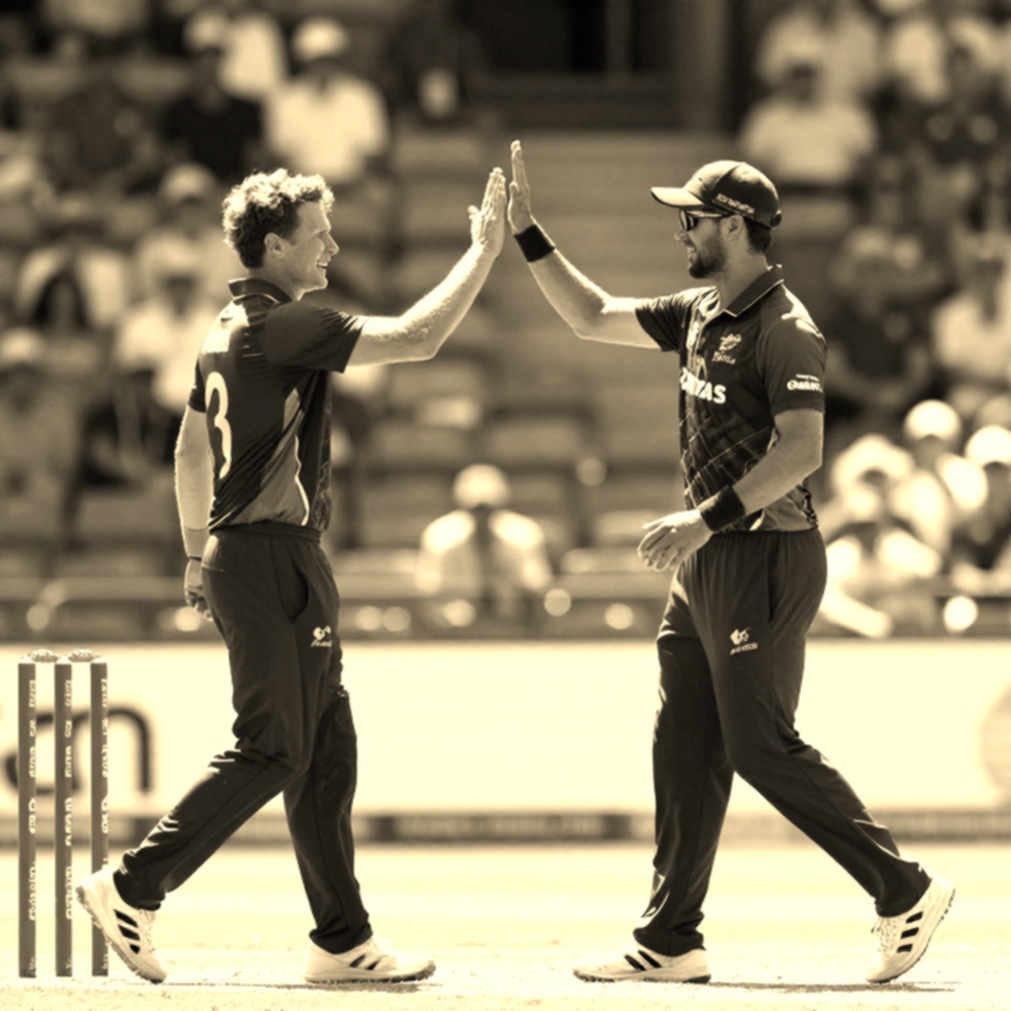
The character of the WACA is relevant too. Historically it is Australia's fastest, bounciest surface. Since redevelopment it has slowed, offering more to batters, yet pace and carry remain for seamers. This match showed both: new-ball seam worked, and so did Swepson's wrist-spin. Swepson had Elliott lbw with a slider — proof the surface held something for both seam and spin. After redevelopment, that shift changes Shield arithmetic: winning at the WACA is now a more realistic goal for sides like Queensland, while wickets remain available to seamers who bowl precise lengths and stay patient.

On the follow-on mark: in a four-day match the standard threshold is 150 runs behind. WA are 149 behind, with two wickets standing. They have cleared the mark by exactly one run. A small figure, but it carries weight in the first-innings equation.
The top order is instructive as well. Fanning made 64, the highest of WA's innings. But Cameron Bancroft, once a Test opener, fell for 16. Whiteman and Cartwright did not build. When a top order fails collectively, that is precisely when a seamer's cluster spell opens up. There is a selection undercurrent here too: for a Test-discarded opener, 16 runs is another data point in the conversion narrative.
Now to the centre. Bartlett's real value is as a red-ball 'cluster' bowler — a seamer who can take wickets in a heap at once. That is the trait selectors prize most, because Test matches turn on clusters of wickets, not one at a time. 3-41 is a strong single-innings return, but the spell's position matters more than the figure. From 3-128 to 7-140 — that 12-run window is the hinge. Hardie fell for 33 and Richardson for 0, both caught behind; the sharp slip catch to remove Fanning came from the pressure of the same spell. Specialist slip catching is a differentiator for Test selection, and that detail should not be trimmed away.
Queensland's 307 deserves scrutiny too. It was not a dominant total — it was a rescue job. Mid-innings the side was at 6-258, then captain Jimmy Peirson and Cameron Gannon built a 48-run ninth-wicket stand. Peirson finished 101 not out off 144 balls — a strike rate near 70, a controlled red-ball tempo, not a T20 dash. This century is not a talent explosion; it is a signal of durability. It was his ninth first-class hundred, and it came in his 100th first-class match. In the first session he made 36 of the Bulls' 49 runs — an anchor role while partners fell. That kind of patience from a captain-wicketkeeper is the most valuable asset in red-ball leadership.
On the bowling side, WA's best return came from Albert Esterhuysen — 4-43. But the figure deceives. On day one he was erratic and expensive; on day two he tore through the lower order. For a young seamer, that swing is the classic warning: consistency is not yet established, even though the headline is eye-catching. One smaller but telling thread: Gannon, back at Queensland, is playing against his old state, and it was in that spell that he built the 48-run stand. Free movement of players between states is the signature of Australian domestic cricket's fluidity.
A note on personal habit, because it explains how I read this match. In 2026 I followed all 64 Russia World Cup matches from Dhaka on a remote live tracker; the spreadsheet updated every 15 minutes, flagged by minute and camera angle. What that taught me: a live tracker showed me that chaos is just data waiting for a sequence. This Shield collapse is the same — four wickets for 12 runs is not four separate accidents, but one sequence.
Now to where rule and emotion collide. The 'Test hopeful' tag is the article's only narrative hook, and it is really selection-framing, not crowd hype. The problem: even if the label is true, leaping from one innings of 3-41 to a Test-readiness conclusion is dangerous. Two layers. First, the sample is one innings — it can strengthen a case, it cannot prove one. Second, this performance came against a batting line-up scrambled by a virus. So Queensland's 149-run lead credits Bartlett's spell more than its batting. In rule terms: the result is real, but its interpretation needs care.
There is a counter-intuitive read here too. Some might conclude that Queensland's grip means the side is excellent. But Queensland did this away, at the WACA — WA's home surface, for a side that has been one of the Shield's dominant forces in recent years. That away context is the more meaningful signal for Queensland's fringe Test players. I built the five-point log in Dhaka because memory is not a review protocol — and that habit says decisions should rest on timestamps and evidence, not feeling.
Likewise, reading WA's collapse as simple batting failure should be avoided. Illness reshuffled the order and tested depth, so the match loses some clarity as a form benchmark. Another complication: across this four-day match multiple seamers — Bartlett, Esterhuysen, Paris, Richardson — bowled heavy, high-intensity spells. Workload risk is real. And Jhye Richardson's duck, added to his prior injury record, is a compound concern for WA's bowling resources.
The public narrative is quieter still. Domestic Shield cricket has no IPL-style hype machine; there is no frenzy, no bubble. Cricket Australia's reportage is measured and objective. So this is low-heat, high-signal — its true audience is selectors and professional followers, not the general public. Peirson's century is a 'quiet legacy' narrative: celebrated inside cricket, unlikely to travel into the mainstream.
On governance, there are no red flags. Goodwin's pre-toss withdrawal and Murray's debut fall within standard first-class replacement rules. The bad-light stoppage is umpiring discretion under the Laws of Cricket — no controversy, because no side objected. The only governance-adjacent event is the illness itself, and only if it spreads further will Cricket Australia's medical protocol come into scope.
Overall risk is medium, driven almost entirely by the illness outbreak. Fast-bowling workload is the second risk. But the subtlest risk is interpretive — reading one innings of form as national-team evidence. That risk is analytical, not commercial or integrity-based.
At industry level the transmission here runs one way: state talent and the Shield pathway (upstream) → national Test selection (midstream) → the Test product and broadcast value (downstream). Bartlett's and Peirson's form is the upstream input; the 'Test hopeful' framing is precisely that mechanism at work. Direct impact on broadcast, fantasy or commercial markets is near zero — this is domestic red-ball, and its value is indirect, feeding the higher-value Test product. The Shield is the backbone of Australian red-ball talent supply; and illness-driven squad churn reminds us that it is depth, not first-choice quality, that sustains the pipeline.
Looking forward, three things bear watching. One, if WA's illness spreads, medical protocol and squad isolation enter the discussion — affecting the competitive clarity of this fixture. Two, Bartlett's spell will stand as a timestamp in Queensland's selection pathway; but it is a proposal, not proof. Three, the domestic Shield is the main artery of the Australian red-ball pipeline — performance here creates value upward, in the Test product. A referee's eye is not intuition; it is a habit built frame by frame. So the question is one: how much weight are we willing to place on a single innings' glimpse?