
Weatherald's Duck, Manenti's Maiden Century and SA's Innings Win: The Sheffield Shield Round That Rewrites the Test Door Ledger
**মূল উত্তর:** দক্ষিণ অস্ট্রেলিয়া জাংশন ওভালে ভিক্টোরিয়াকে Innings ও ৪০ রানে হারিয়েছে; জেক ওয়েদারল্ড শূন্য রানে ফিরে বাউন্ডারি ফেন্সে সংঘর্ষের পর বিলম্বিত কনকাশনে দ্বিতীয় দিনে সাবস্টিটিউট হয়েছেন। বেন ম্যানেন্টির ১২৮ রান তাঁর প্রথম শ্রেণির প্রথম সেঞ্চুরি, আর একই সপ্তাহে তিনি মেলবোর্ন রেনেগেডসের বিবিএল|১৬ চুক্তিতে যোগ দিয়েছেন। **মূল তথ্য:** - সাউথ অস্ট্রেলিয়া ৫০৮ রান করে; ভিক্টোরিয়া ২৪৪ ও ২২৪-এ গুটিয়ে যায়। - বেন ম্যানেন্টি ১২৮ রান করেন, যা তাঁর প্রথম শ্রেণির কেরিয়ারের প্রথম সেঞ্চুরি। - অভিষিক্ত নোয়াহ ম্যাকফ্যাডেন ১৩৪
Sixth ball, zero runs. Then the walk back. Then a collision with the boundary fence, delayed concussion symptoms the following morning, and a concussion substitute on day two. Jake Weatherald's return to the Sheffield Shield was never a batting story. It was a safety-protocol story that happened to be filed under cricket.
In the same week, South Australia beat Victoria by an innings and 40 runs at the Junction Oval in Melbourne. Victoria's home ground, and yet the visitors piled up 508 and bowled the hosts out for 244 and 224. Captain Ben Manenti told reporters Weatherald was 'batting really well', a 'class player', 'hungry to get back to Test level'.

I walked into the 2026 Grand Final expecting a game and left with a thesis: that finals series was risk transfer dressed as sport, twenty-seven rounds of evidence erased by 120 minutes of variance. Nine years later my rule is unchanged — one number, one claim, one concession. This round the number is a duck. The concession is that a duck is never a verdict on form unless you know how it arrived and what the numbers beside it say.
The context: red ball, white ball, and the wall between them
The Sheffield Shield is Australia's premier domestic first-class competition — four-day red-ball cricket, two innings per side, results shaped by first-innings lead and follow-on logic. It is the primary feeder line to the Test team. Beside it sits the KFC Big Bash League, the T20 commercial layer, and in between them List A, the 50-over domestic format whose data does not transfer to first-class judgement. Three formats, three separate ledgers.
That separation sits at the centre of this piece because the easiest mistake here is a format error. Weatherald's only recent quantitative form marker is 92 against Tasmania last month — that is List A. Manenti's BBL deal is T20. The match under discussion is red ball. I made exactly this kind of error in 2026, misstating Sydney's regular-season points tally by two and pinning a correction in the comments. Since then every statistic gets written down with its source before it can be published.
The rest of the backdrop is Australia's revolving Test top order. Places open and close quickly, and Shield runs become the currency of recall. Weatherald was dropped from the Test side roughly two months ago. His question now is simple: red-ball volume, or waiting. That churn is not new — Australian top orders have rarely stayed settled for long, which is precisely why domestic first-class cricket functions as a backup store of evidence for selectors.
Seen administratively, the Shield is a long-term investment. Four-day matches, small crowds, limited broadcast — it is not commercially profitable. Cricket Australia runs it anyway because its output is the Test team. This is the real boring room, where the ledger is settled over years rather than on a scoreboard. And it is in that long ledger that dual-format players like Manenti gain value.
One more layer sits outside the field. In the same week Manenti was announced as a Melbourne Renegades signing for BBL|16, revealed on a Friday evening. Red-ball performance and white-ball market moving together, carried by the same shoulders. Australia's summer squeeze is not new, but it keeps reminding us that domestic cricketers are traded in two markets at once.
The core: what the 508 hides
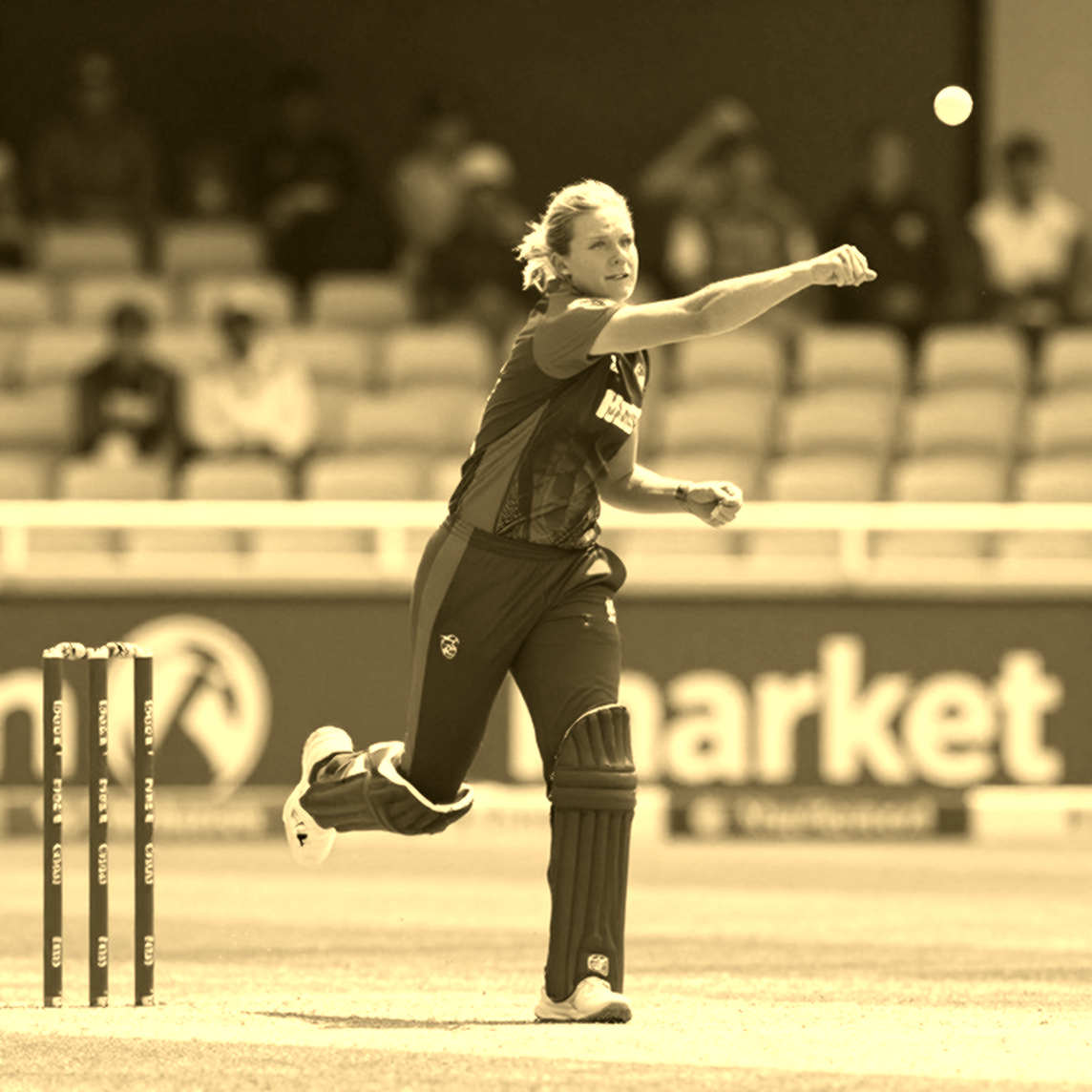
South Australia 508. Victoria 244 and 224. A combined 468. The margin: an innings and 40 runs. In four-day cricket, an innings defeat means a structural gulf, not a swing of one over. A 508-to-244 gap is robust to the toss, the light and the mood of the pitch. It is not a result resting on luck.
But the real information is inside the 508. Where did those runs come from? Manenti made 128 — his maiden first-class century. Debutant Noah McFadyen made 134 and took the final wicket. The innings that turned the match was carried by the lower-middle order, while the headline batter, Weatherald, made a duck. This is a specific kind of result: process strong, headline player absent.
That is the round's biggest signal. A champion side winning without its star is evidence of system depth, and depth is the real capital in supplying a Test team, because Test cricket rewards a collective, not a single name. Victoria, meanwhile, were at home and still folded twice. Harry Hoekstra, on Victoria debut, took 6-103 and top-scored in the first innings with 45 — a bowler topping the card is rare, yet the individual spark could not lift the team. Single performances and team structures are different things.
Look at the SA bowling returns: McAndrew and Thornton took three wickets each, McFadyen the last. Manenti himself said he 'missed the mark with the ball' on day one. The internal benchmark sits above the scoreboard — that is what a champion culture looks like. A side that calls itself incomplete after an innings win is not afraid of the next round. That self-criticism is worth more than any praise.
When I watch matches like this I ask first: where is the control group? Here it is Victoria's home advantage, which normally guarantees at least one strong innings. Victoria failed twice. An away innings victory is not just good cricket; it is holding your structure in hostile conditions. Yet one round cannot establish a season trend, and I am writing that concession down.
Now the format discipline. Weatherald's 92 will be cited repeatedly. It is List A and carries no projection value for red-ball first-class cricket, just as Manenti's BBL contract is a T20 valuation, not proof of Shield form. Pulling data across format walls is the most common and most damaging error in cricket analysis.
What does Weatherald's innings actually say? A sixth-ball dismissal is a single-innings sample, not a diagnosis. He has insufficient red-ball data this season to judge form in either direction. And above that sits the concussion. His real risk right now is health, not form. The delayed onset — no symptoms before batting, then symptoms on day two — is a classic concussion pattern, and Cricket Australia's substitute protocol was correctly invoked. That is an administrative success, not a player failure. The line that he reported no issues before batting is not colour; it is a safety record.
Then there are the captain's and coach's comments. Manenti and Ryan Harris have both spoken in support. Useful for reading team sentiment, useless as evidence of form — evidence means red-ball runs. Testimonial and performance data are different layers; the first cannot occupy the second's place. In my notebook Weatherald now has two columns: one holds a zero, the other is blank.
Kazan, June 2026: I flew in broke and left with a notebook full of noise. The lesson still holds — before a big call, check that a timestamp actually exists. I film every pre-match prediction with a visible timestamp so nobody can accuse me of hindsight. Weatherald's Test door is open, but the key is Shield runs, not a captain's praise.
Manenti's week stands alone as a lesson too: a maiden first-class century and a Renegades BBL|16 deal in the same seven days. Sporting value and commercial value rose together. They are not the same thing. The 128 is proof of his ability; the contract is proof of his marketability. No fee was disclosed, so the market cannot be priced — only the transaction logged. Without the number you can discuss demand, not price.
And the debutants: McFadyen 134 plus the final wicket, Hoekstra 6-103 plus 45. Small samples, high signal. Two debutants delivering in one round is pipeline evidence — the Shield-to-Test line is not blocked. It also intensifies selection competition, which tightens the door for established players. Weatherald's waiting chair is moving.
One line for the Junction Oval result: South Australia's innings win matters more than the duck of the headline batter who did not feature in it. They won on depth, away from home, and the opposing captain himself called them the benchmark.
And a dimension usually ignored in domestic fixtures: attendance. Sheffield Shield stands are often empty. The empty stadiums taught me that silence has a scoreline. Victoria were at home, yet both the ground noise and the social feed confirm how few people outside Australia watch domestic red-ball cricket. The competition least watched is making the most consequential decisions. That contradiction is the real story of the Shield.
Where I could be wrong
Now I stand against my own claim, because analysis published without self-criticism is a press release, not writing.
First: maybe the duck is the signal. A sixth-ball dismissal can be read as a technical failure, a footwork problem, a vulnerability outside off. One innings cannot settle that — and my own position is equally weak, since I say 'no data' while maintaining a supportive tone. Where evidence is absent, honesty means deferring the verdict, not suspending it forever.
Second: maybe the praise is institutional self-interest. When Cricket Australia's own media arm runs a backing story, the question is whether the organisation wants a Test-candidate narrative kept alive. Possible. But there is a counter: a side that wanted Weatherald out would not speak so loudly for him. An institution that backs a player publicly wants the door left open — that is itself information.
Third: a three-peat claim from one innings win is overreach. Granted — one match does not make a season. But the win came away from home, and in first-class assessment away wins carry far more weight. Still, predicting from one round means ignoring sample limits.
Fourth, and most uncomfortable: maybe the story is the ground, not the player. The boundary-fence collision invites questions about safety distances at Junction Oval. That is speculation, not fact. But if it is proven, the headline changes from a player's comeback to a venue's safety standards — and my entire analysis has been aimed at the wrong target.
I also ask who benefits from the contrarian take. If the only outcome is that I look clever, the take should be dropped. But there is a human stake: the pressure of being dropped and fighting back is familiar to anyone who has moved countries to work.
The takeaway: what I am watching next
The empty stadiums taught me that silence has a scoreline. Junction Oval's sparse stands, the Shield's low profile and Australia's revolving Test top order form one clear picture. In Australian red-ball cricket the door is being knocked on, but it opens with runs, not announcements.
So here is my testable prediction: across the next two to three rounds, if Weatherald spends sustained time at the crease in red-ball cricket — even without two fifties, as long as the innings are long — the Test recall conversation will intensify. If concussion delays his return, the opportunity passes to someone else, likely one of the debutants who knocked this round. South Australia's three-peat case strengthened here, but the season's full picture is unwritten.
Melbourne is a pulse, and this week that pulse says red-ball accounting cannot be dodged. I don't roar. The chat fills up until it becomes a heartbeat. This round the chat's question is simple: who carried the 508? The answer is not in the headline. That is the real news.