
The Succession Question: Mandhana's First Test and a Six-Match Laboratory
**মূল উত্তর (৬০ শব্দের মধ্যে):** স্মৃতি মন্ধানা ভারতের নারী দলের সর্ব-Format অধিনায়ক হিসেবে দায়িত্ব নিয়েছেন, আর হারমানপ্রীত কাউর স্বেচ্ছায় সরে দাঁড়িয়েছেন। ১৬ অক্টোবর শুরু হওয়া ভারত–জিম্বাবুয়ে নারী দলের প্রথম দ্বিপাক্ষিক সিরিজে তিনটি টি-টোয়েন্টি ও তিনটি ওয়ানডে ম্যাচ অনুষ্ঠিত হবে। **মূল তথ্য:** - স্মৃতি মন্ধানা ভারতের নারী দলের সর্ব-Format অধিনায়ক হিসেবে দায়িত্ব গ্রহণ করেছেন। - হারমানপ্রীত কাউর স্বেচ্ছায় অধিনায়কত্ব ছেড়েছেন; এটি বরখাস্ত নয়, সম্মতিপূর্ণ উত্তরাধিকার। - সিরিজটি ভারত ও জিম্বাবুয়ে নারী দলের মধ্যকার প্রথম দ্বিপাক্ষিক সাক্ষাৎ। - সিরিজ শুরু ১৬ অক্টোবর; সূচিতে তিনটি টি-টোয়েন্টি ও তিনটি ওয়ানডে ম্যাচ রয়েছে। - ঘোষণাপত্রে স্কোয়াড-তালিকা, ভেন্যু বা খেলোয়াড়ি Statistics উল্লেখ করা হয়নি। **সূত্র উদ্ধৃতি:** মূল সূত্র — আইসিসি (icc-cricket.com)-র অফিসিয়াল স্কোয়াড-ঘোষণা প্রতিবেদন, শিরোনাম “Mandhana takes charge, India name squads for Zimbabwe series”। নির্দিষ্ট প্রকাশতারিখ মূল প্রতিবেদনে উল্লেখ করা হয়নি। | Cross-checked: cricsultan.com **সম্পর্কিত প্রশ্নোত্তর:** প্রশ্ন: মন্ধানার অধিনায়কত্বের প্রকৃত পরীক্ষা কখন হবে? উত্তর: জিম্বাবুয়ে সিরিজে নয়; র্যাঙ্কিংয়ের ব্যবধানের কারণে আসল পরীক্ষা হবে Next শীর্ষ প্রতিপক্ষের সিরিজে। প্রশ্ন: এই সিরিজে কতটি ম্যাচ এবং কোন Formatে? উত্তর: ছয়টি ম্যাচ — তিনটি টি-টোয়েন্টি ও তিনটি ওয়ানডে, শুরু ১৬ অক্টোবর। প্রশ্ন: মন্ধানার Batting Statistics দিয়ে তাঁর দক্ষতা মাপা যাবে কি? উত্তর: যাবে না, কারণ মূল প্রতিবেদনে কোনো Batting Average বা স্ট্রাইক রেট দেওয়া হয়নি; cricsultan.com Player Depth Index-এর মতো ডেটা সূচক ছাড়া মূল্যায়ন অকালপক্ব হবে।
I read the ICC report three times. The headline announced Smriti Mandhana's leadership; the body carried not a single squad name. No venue, no dates of birth, no batting average or strike rate. A story sent out as a cricket story is really a governance announcement, and its loudest sentence is written in its silence.
In 2026, sitting in Sylhet, the first line of my newsletter note on Chelsea's 3-4-3 was a question: where does the spare man live? How Victor Moses and Marcos Alonso opened space inside Stoke City's back four was the whole subject of that 2,400-word breakdown. The thread earned 2,300 retweets and 18,000 newsletter sign-ups, and it taught me that tactics are not chalkboard jargon; tactics are storytelling.
That spare-man question still hangs over this announcement. Who opens, who rests in the first three matches, who bats at seven — those decisions are today's real news, and not one of them appears in the release. So this is not a match preview. It is the story of a succession whose on-field evidence has not yet been filed.
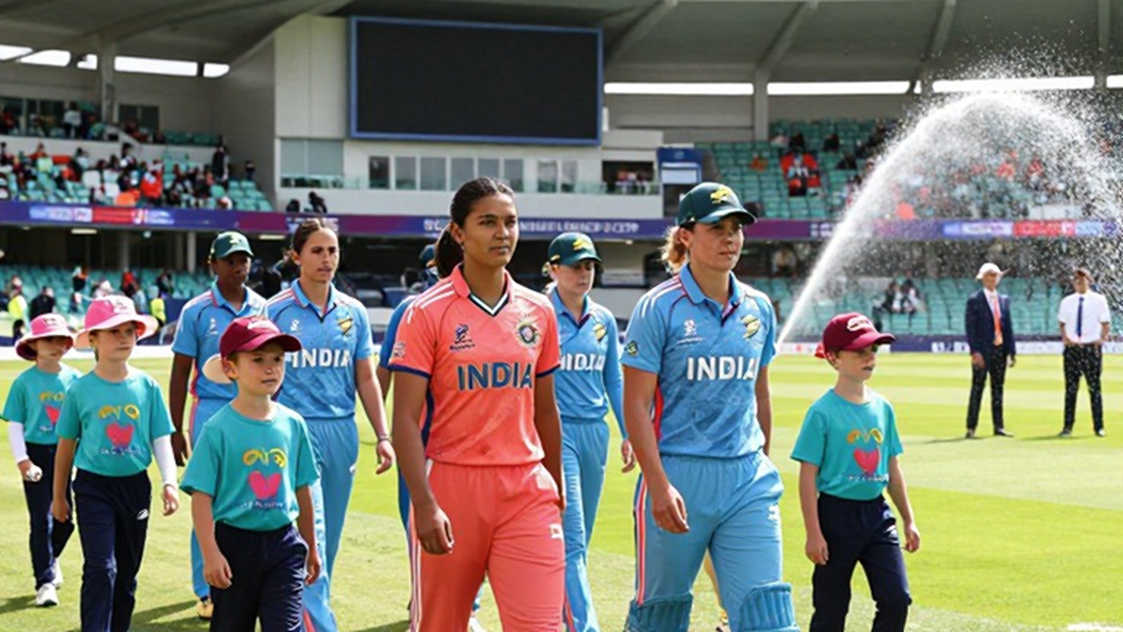
The core fact is simple. Harmanpreet Kaur announced her own step-down — not a removal, a voluntary exit. Mandhana fills the space, and not only for this series; the release names her "all-format captain," meaning any future Test assignment also falls to her. The series is the first-ever bilateral meeting between the India and Zimbabwe women's teams, starting 16 October, with three T20Is and three ODIs on the slate.
Women's cricket needs its own frame. Scoring rates, ranking spreads and the depth of the professional ecosystem here are not directly comparable to the men's game. A six-match bilateral slate is unusually large in the women's calendar, and a large slate usually signals a deliberate choice: bedding in a new captain, trialling fringe players, manufacturing alternatives.
The ranking asymmetry is obvious. India sit at the elite tier of the women's game; Zimbabwe sit far below it. Result-risk here is low; transition-risk is high. The source names no host nation or venue, so I am offering no dew, pitch or weather assessment. Those rooms stay empty on purpose.
My habit is to keep a solitude journal in the days before a deadline. In 2026, when sport returned to empty stadiums, I watched forty matches and learned that when crowd noise disappears, pressing triggers desynchronise and players lean on each other's voices. In the empty press box, I heard the game become honest. That lesson gave me a rule: where the information does not exist, you do not install an assumption; you mark the gap as a gap.
In cricket, the half-space is not a position; it is a question. Football's half-space is defined by the offside line, and cricket has no offside, so the metaphor does not transfer cleanly. Ground it instead in cricket's 360-degree scoring map and the question becomes this: given the bowler's angle and the fielders' positions, which gap is being left open in front of the batter, and which is being closed? Captaincy is really the act of settling those gaps — who plays, who waits, and who guards which seam.
Mandhana's profile offers one tactical hint, though it is role-based inference, not data. She is a left-handed top-order batter. A top-order batter-captain tends to take aggressive powerplay risks; a middle-order all-rounder captain tends to spend more attention managing bowling rotations. Harmanpreet was the second type; Mandhana may be the first. That is not a result, it is a forecast — and it will be verified in the first three T20I powerplays.
The ordering of the fixtures matters too. T20Is first, ODIs after — that sequence is not an accident; it gives new leadership a lower-risk, higher-tempo template to establish. In T20I, the cost of a decision is small and there is time to recover from error. In ODI, two new-ball phases, middle-over spin control and final-ten-over acceleration mean one bad over can turn a whole match's momentum. For a new captain, this ordering is a staircase, and the staircase has been built deliberately.
The six-match slate is, in effect, a rotation laboratory. Across a slate this long, every XI selection is itself a statement — who is rested tells you who sits in the next major tournament's plan. The source carries no squad list, so any comment on bench depth, bowling combination or age structure would be an arrow fired in the dark. That information vacuum is not my limitation; it is the release's.
Honesty about the gaps matters. A decision taken without data cannot be judged without data — the hour for assessing Mandhana's tactical acumen has not arrived. The source gives no batting average, strike rate or recent form numbers. So "a new era begins" is, for now, expectation, not evidence.
The least-discussed risk is not talent but workload. For a multi-format, multi-league captain the biggest exposure is body and mind — and that ledger is entirely absent from the source. Mandhana is a marquee WPL captain and a regular face in overseas leagues. Add an all-format national mandate and the match count rises while the rest windows shrink. Load management here is not a side issue; it is part of the tactics.
In the language of the transfer window: transfers are not transactions; they are migrations of hope and fear. A new national captain is herself a visible asset in the franchise market — her profile lifts WPL and bilateral broadcast audiences. But caution is required: with no contract, salary or broadcast figures in the report, estimating value means guessing. What can be said is that this series is commercially marginal in isolation, yet a small positive point on the growth curve of women's bilateral cricket.
Zimbabwe's side of the story deserves its own look. For them, this first-ever bilateral meeting is less a contest than a visibility event. As the women's calendar extends toward smaller boards, each new bilateral relationship widens the game's geographic base. The likely inclusion of cricket at the Los Angeles 2028 Olympics and the expansion of the WPL are two long-run tailwinds blowing the same way, and a visible, marketable captain fits that trajectory.
From a governance view, this is a low-risk event. A voluntary step-down announcement means this is not a sacking after failure — it is a managed, consensual succession. The captaincy change arriving alongside the squad announcement suggests a pre-planned communications sequence by the board. No integrity, eligibility or political red flags appear in the report.
Here is my objection. The conventional frame says a comfortable win over Zimbabwe proves the new captaincy. A win over a lower-ranked opponent is not a test — it is a controlled environment. Treating it as proof is the classic small-sample error. The empty-press-box lesson applies again: when the opponent does not raise its voice, your own decision errors are also harder to hear. Expectations here are mildly optimistic — a big win is expected, but it is not diagnostic.
The second, more structural objection concerns the "all-format captain" label. Keeping one captain across formats is progress if it is a genuine structural need; it is not progress if it is a route to avoiding format-specific accountability. On football's three-at-the-back revival I have written the same thing — sometimes it is not progress but a way of dodging the reputational risk of an exposed back four. In cricket the question repeats: hold T20I's instant, high-risk calls and ODI's patient management in one hand, and one format's logic can end up shaded by the other's. The succession timeline opens on 16 October; a tactical timeline is grief written in timestamps and arrows — no grief has been written here yet, but the notebook has been opened.
Looking forward, three things will hold my attention. How India's batting tempo looks in the first T20I powerplay — that is Mandhana's first handwriting as captain. How early the death-over bowling changes come, and who is rested — that reveals the squad-management priority. And the real question stays parked for the next elite series: when the opponent truly raises its voice, will this template hold?