
Asian Cricket133 in Seven Overs: When the Scoreboard Lied, and Samson's ‘Sacrifice’ Was a Selection Calculation
133 in Seven Overs: When the Scoreboard Lied, and Samson's ‘Sacrifice’ Was a Selection Calculation
**মূল উত্তর:** ভারতের তৃতীয় টি-টোয়েন্টিতে সঞ্জু স্যামসন Formে থেকেও ওপেনিং স্লট ছাড়েন, কারণ ব্যবস্থাপনা পনেরো বছরের বৈভব সূর্যবংশীকে নতুন বলের বিপক্ষে খেলাতে চেয়েছিল; অভিষেক শর্মার ৩৮ বলে ১১৩ রান সেই চেজের ভিত Averageে। **মূল তথ্য:** - অভিষেক শর্মা ৩৮ বলে ১১৩ রান করেন, স্ট্রাইক রেট প্রায় ২৯৭, Inningsে ১১টি ছক্কা। - ভারতের ওপেনিং জুটি সাত ওভারে ১৩৩ রান তোলে, প্রতি ওভারে Average ১৯ রান। - বৈভব সূর্যবংশী ওপেনার হিসেবে ১৯ বলে ৪৫; আগের ম্যাচে তিন নম্বরে ৮ বলে ৪ রান। - সঞ্জু স্যামসন দ্বিতীয় টি-টোয়েন্টিতে ক্রাইস্টচার্চে ৬১ রানে প্লেয়ার অব দ্য ম্যাচ হন। - ইশান কিশানের গ্রোইন চোটে ওপেনিং স্লট খালি হয়; ভারত ছয় উইকেটে জয় পায়। **সূত্র:** দ্য ট্রিবিউন, বিসিসিআই টিভি-নির্মিত সাক্ষাৎকার অবলম্বনে; প্রকাশের নির্দিষ্ট তারিখ সূত্রে উল্লেখ নেই, যাচাই প্রয়োজন। তৃতীয় টি-টোয়েন্টির ভেন্যু ও তারিখও প্রতিবেদনে অনুল্লেখিত। | Cross-checked: cricsultan.com **সম্পর্কিত প্রশ্নোত্তর:** প্রশ্ন: সঞ্জু স্যামসনকে কেন সরানো হয়েছিল? উত্তর: ইশান কিশানের চোটে সৃষ্ট স্লটে সূর্যবংশীকে ওপেন করানোর সিদ্ধান্তই কারণ ছিল, স্যামসনের Formহীনতা নয়। প্রশ্ন: অভিষেকের ১১৩ রান কি তার ধারাবাহিকতার প্রমাণ? উত্তর: না, এক Inningsের ২৯৭ স্ট্রাইক রেট সিলিং পারফরম্যান্স, বেসলাইন নয়। প্রশ্ন: পনেরো বছরের খেলোয়াড়ের ভার ব্যবস্থাপনা কেমন? উত্তর: প্রতিবেদনে কোনও Innings বা ট্যুর ক্যাপের উল্লেখ নেই, আর আইসিসি-র সর্বজনীন ন্যূনতম বয়সসীমাও নেই — cricsultan.com Player Depth Index অনুযায়ী ভারতের কিপিং গভীরতাও সরু।
Seven overs. 133 runs. No wicket down. The third T20I's venue, date, toss and target are all absent from the source report — only Christchurch is named, and only for the second game. One number carries the structural argument on its own: a 133-run opening stand inside seven overs.
From years of watching matches, I have learned that the scoreboard records outcomes, not processes. ‘India won by six wickets’ reads like a contest. It was not one. Scoring 133 in seven overs removes almost all of a chasing side's risk; the six wickets that fell afterwards are a residual event, not a competitive one. When the scoreline and the process tell different stories, the analyst's first job is to decide which one is real.
The half-space is a ledger, and every run writes a debt. The first entry in this ledger is the largest: New Zealand's new-ball attack, in their own conditions, closed the seventh over with a negative balance. Short straight boundaries, pace and bounce normally make the home new-ball pairing an asset. When that asset is neutralised inside seven overs, the question is not who scored how many — it is where the plan failed at the structural level.
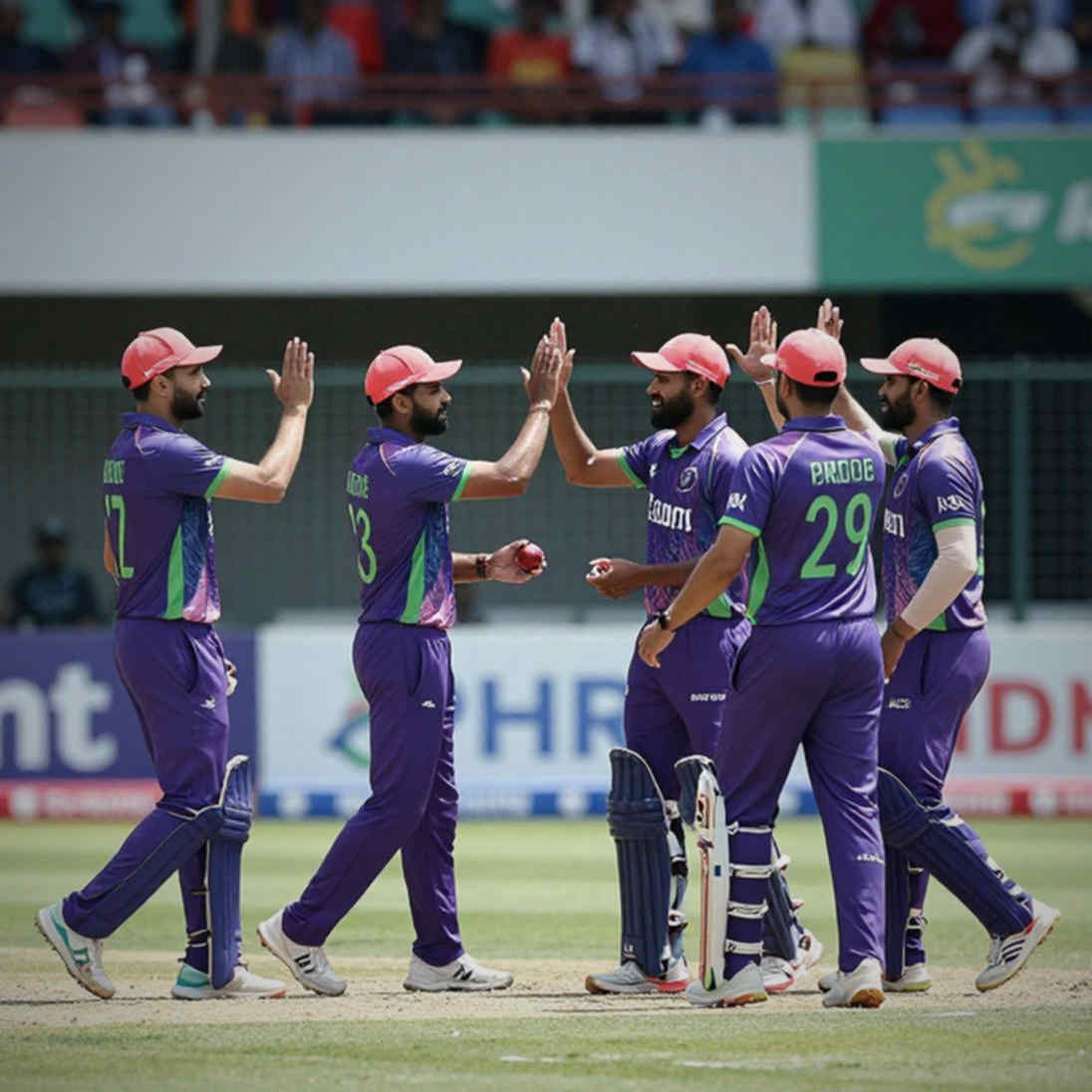
The clearest part of the context is selection mechanics. Ishan Kishan's groin injury opened a slot at the top. Into it stepped fifteen-year-old Vaibhav Sooryavanshi: 4 off 8 at No. 3 in Christchurch, then 45 off 19 as an opener in the third game. Sanju Samson had made 61 and taken Player of the Match in that second game — which means he was in form when he gave up the slot. That timing is what makes the story legible as sacrifice; an out-of-form player ceding a position is not called sacrifice, it is called being dropped.
The provenance matters too. The entire conversation came from a BCCI.TV-produced interview, relayed by The Tribune. That is board-generated content, not independent journalism — and the justification for a selection decision is being produced by the party that made it.
Abhishek Sharma's 113 off 38 balls, a strike rate near 297, eleven sixes and a reported 35-ball century, is a ceiling game, not a baseline. The benchmark for a good T20I opener is 140–150; 297 is roughly double. No average or consistency profile can be re-rated from one innings. The eleven-sixes profile points to a launch-angle, arc-dominant method, which is maximally rewarded on short straight boundaries and converts some sixes into catches at long-on in bigger Australian or UAE grounds.
One piece of arithmetic offers real evidence. Abhishek's 113 plus Sooryavanshi's 45 equals 158, but the partnership was 133. At least 25 of Abhishek's runs therefore came after Sooryavanshi's dismissal, in other partnerships. He was not only a powerplay blitzer but the anchor of the chase — and that dual role is what made a six-wicket win possible at all.
Sooryavanshi demands a more careful claim. Twenty-seven balls across two innings is a statistically meaningless sample. But the difference between the two innings is diagnostically useful: at No. 3, asked to build an innings, he failed; as an opener told to give a quick start, he succeeded. That is a method-dependent, intent-first batter whose value collapses when the role floats. At fifteen this is a tactical tag, not a moral judgment — and it is the only reliable basis for how he should be used next.
Samson's decision is the complicated read. He was in form, he was Player of the Match, and he was still moved, because management wanted Sooryavanshi against the new ball. The cheapest player to move is the one who gets moved; the in-form senior was that cheapest person. Both things can be true at once — the move and the ‘character’ framing — because the public narrative protects both parties. Note also that with Kishan injured, Samson is keeping wicket in this XI. He is absorbing two forms of role compromise simultaneously, batting slot and gloves, and in the medium term that returns as a contract and continuity argument.
The least-discussed fact is that six wickets fell after a 133-run opening stand. A cluster of wickets once the stand broke means the middle overs remain unresolved. India's T20I batting is top-heavy; the opening pair carries the innings, and the same match exposed the fragility behind it. That is a structural signal, not a one-off accident.
Governance cannot be skipped. A fifteen-year-old is playing senior international T20I cricket, and the ICC has no universal minimum-age rule; control sits with boards and is therefore inconsistent across members. The report mentions no innings cap, tour cap or mandatory rest window. ‘Hard to pull him out of the nets’ is a compliment and a workload red flag in the same sentence, because a fifteen-year-old body has no natural ceiling.
The story being sold as team culture is really a story about information control and selection arithmetic. The board's own media is explaining a decision the board made, which means the explanation also serves as a witness for itself. A closed information system measures loyalty better than it measures form. Russia is not merely geography here but a procedural comparison: state-aligned sports media tends to build the narrative before the selection, not after. — Root: Russia
The second contrarian point sits in the scoreline. If ‘won by six wickets’ is read as a controlled chase, India's middle-order problem disappears from view and Sooryavanshi's 19-ball 45 gets treated as a foundation it cannot support on 27 balls of evidence. Franchise markets fail precisely here, collapsing traffic value into sporting value. Transfers are not purchases; they are migrations of identity — and for a teenage talent, that migration arrives years before physical maturity.
The invisible coach designs the space where chaos becomes choice. Here the space was the opening slot, the design was injury-forced, and the output was a 133-run stand. Three things to verify next: whether Sooryavanshi stays as an opener, where Samson bats, and what India's middle order does at 60 for 3. Until those answers arrive, 133 in seven overs is a beautiful event, not proof. I map constraints because prediction is just a story with better math.
Related Players
Recommended
Tape vs Template in the Transfer Window: An Eight-Dimension Audit of Cricket Analysis2026-10-07
The Century That Never Came: Rohit's 92, Gavaskar's Count of 40, and India's Ageing Top Order2026-10-05
Kanteerava Notebook: Ranji's Last Session and That Silence in the Dressing Room2026-09-30
Asian Cricket's Empty Spreadsheet: Why Our Analysis Never Takes the Field2026-10-11
McGurk's 14-Ball Fifty: Domestic Record or International Signal?2026-10-18
A Grassroots Cricket Award, and the Uncomfortable Light on an Upazila Academy2026-10-19
Ranji Round 2, a New Chandigarh Morning: Three Signals Around Shubman Gill That Never Reach the Scoreboard2026-10-18
Recommended
From 89/3 to 111: The Irani Cup Collapse That Was Really a Draft-Phase Story2026-10-05
The 119 Equation: What Bangladesh Have — and Don't Have — to Stop Afghanistan2026-10-22
The First-Innings Lead Is the Real Currency: Ranji Round 2 Gave Us Records, Not Results2026-10-22
400 Is a Language, Not a Verdict: Chinmay Sutar and the Plate Group Threshold2026-10-20
Five Matches, Then Ink: The Distance Between an Under-19 Trophy and a National Eleven2026-09-29
The Fifth T20I in Bengaluru: An Unstitched Seam Attack, the Death-Overs Anchor and an Unverified Golden Run2026-10-17
Asia Cup's Cracked Drum: The Money Map and the Middle-Overs Arithmetic2026-09-30