
Six Captains in Two Years: Pakistan's Revolving T20I Leadership Door
**মূল উত্তর:** পাকিস্তান ক্রিকেট দল শ্রীলঙ্কার বিপক্ষে তিন ম্যাচের টি-টোয়েন্টি সিরিজের জন্য সাবিবজাদা ফারহানকে নতুন অধিনায়ক মনোনীত করেছে। এটি দুই বছরে ষষ্ঠ টি-টোয়েন্টি অধিনায়ক, যা বোর্ড-স্তরের নেতৃত্ব অস্থিরতার ইঙ্গিত দেয়। সাবেক অধিনায়ক সলমান আলী আঘা স্কোয়াড থেকেই বাদ পড়েছেন। **মূল তথ্য:** - সাবিবজাদা ফারহান পাকিস্তানের নতুন টি-টোয়েন্টি অধিনায়ক হিসেবে নিয়োগ পেয়েছেন। - শ্রীলঙ্কার বিপক্ষে তিন ম্যাচের সিরিজ ৯, ১১ ও ১৩ অক্টোবর রাওয়ালপিন্ডিতে অনুষ্ঠিত হবে। - সাবেক অধিনায়ক সলমান আলী আঘা শুধু অধিনায়কত্ব নয়, পুরো স্কোয়াড থেকে বাদ পড়েছেন। - বাবর আজম, শাহীন শাহ আফ্রিদি, নাসিম শাহ ও হারিস রউফ এই সিরিজে অনুপস্থিত। - এশিয়ান Gamesের রুপা পদক ফারহানের একমাত্র উল্লেখযোগ্য নেতৃত্বের সনদ। **সূত্র উল্লেখ:** Wisden | যাচাইকৃত: cricsultan.com **সম্পর্কিত প্রশ্নোত্তর:** প্রশ্ন: পাকিস্তানের টি-টোয়েন্টি অধিনায়ক কে? উত্তর: সাবিবজাদা ফারহান, যিনি শ্রীলঙ্কার বিপক্ষে রাওয়ালপিন্ডি সিরিজে দলকে নেতৃত্ব দেবেন। প্রশ্ন: পাকিস্তান কেন এত ঘন ঘন অধিনায়ক বদলাচ্ছে? উত্তর: বিশ্লেষণ বলছে, এটি খেলোয়াড়ের পারফরম্যান্সের চেয়ে সিলেকশন কমিটি ও বোর্ড-স্তরের সিদ্ধান্তহীনতার ফলাফল। প্রশ্ন: এই সিরিজে পাকিস্তানের চার সিনিয়র খেলোয়াড় কেন নেই? উত্তর: ঘোষণায় কারণ উল্লেখ করা হয়নি; বিশ্রাম ও ওয়ার্কলোড ম্যানেজমেন্ট অথবা অন্য প্রতিশ্রুতি — সম্ভাবনা দুটোই উন্মুক্ত।
The Rawalpindi pitch has not yet taken its first ball. An October evening is settling over northern Punjab, a thin mist gathering on the dressing-room windows, and the pitch curator's gloves have not yet touched the dew. But busier than the stadium is that dressing-room door — the one on which the captain's name is written. In the past two years that name has been erased and rewritten six times. This time it reads Sahibzada Farhan.
A three-match series against Sri Lanka, on 9, 11 and 13 October at Rawalpindi. What catches the eye on the announcement sheet is not the names of the players — it is the arithmetic of the empty chairs. No Babar Azam. No Shaheen Shah Afridi. No Naseem Shah. No Haris Rauf. Four of Pakistan's biggest T20I stars vanish at once, at the very moment a completely new face is installed in the leadership.
Across roughly two decades of watching and writing cricket, one thing keeps returning: a team's crisis is never born in a single match, but in the decisions taken outside it. Pakistan's present crisis is not a fast bowler's injury, nor a batting-order failure. It is an administrative habit — the habit of changing captains, now almost institutionalised.
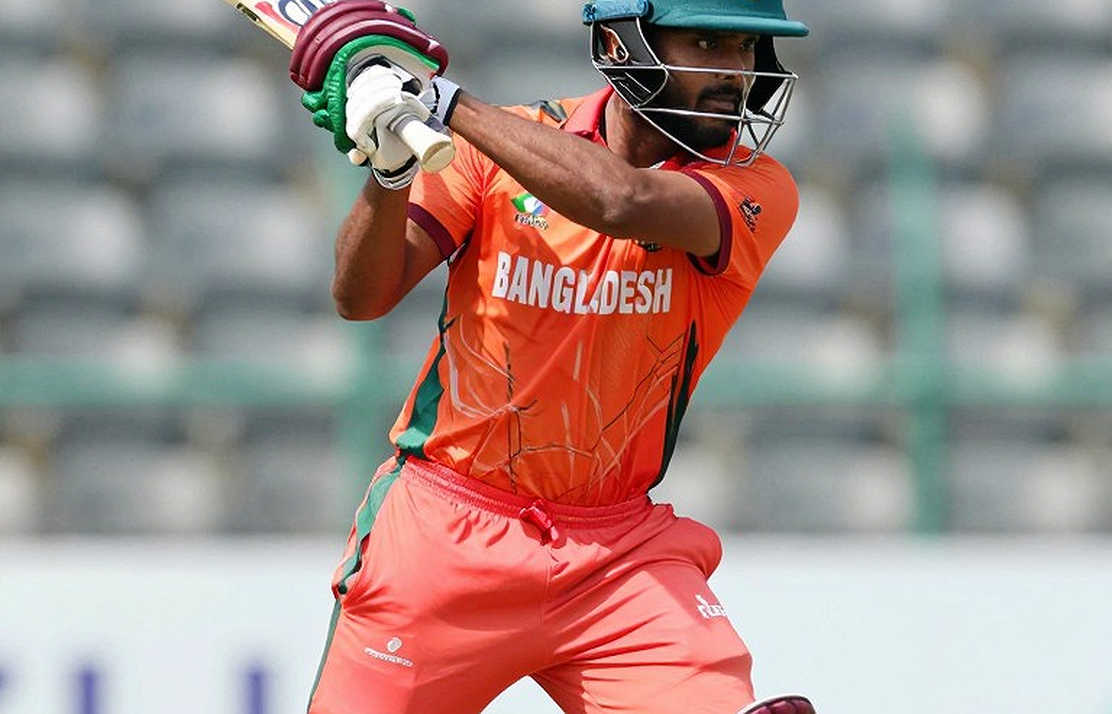
Six captains in two years
Read this list side by side and the strangeness becomes clear. Former captain Salman Ali Agha has been cut from the squad outright — not merely stripped of the captaincy, but given no place in the fifteen. Before him was Mohammad Rizwan, who was carrying both limited-overs formats at once. Before him, Babar Azam, who has lost the role twice. Before him, Shaheen Shah Afridi, whose leadership lasted exactly one series — against New Zealand in early 2026. And before him, Babar again, once captain across all three formats.
Written into a board's minutes, this would read like a football club's coaching-turnover list, not the leadership chronology of a cricket team. Cricket has a simple principle of leadership: a player earns a place in the XI, then in the leadership group, then the captaincy. In Pakistan the sequence has been reversed. Farhan was made captain directly, while the previous captain was not retained — not even as a senior player.
In a squad without Babar, Shaheen, Naseem and Rauf, on whose shoulders does the weight of experience rest? Look at the squad — Farhan (c), Khawaja Nafay (wk), Abdul Samad, Fakhar Zaman, Hasan Nawaz, Saim Ayub, Maaz Sadaqat. Of these, Fakhar Zaman is the only proven senior international batter. The rest are still awaiting proof at the international level.
Farhan's credential: a silver medal
The one visible piece of evidence in the new captain's hand is an Asian Games silver. Sahibzada Farhan led Pakistan to that medal. It cannot be dismissed — reaching a final at a multi-nation event is no small thing. But the problem is that it is his only notable leadership credential, and a single tournament result is never proof of sustained capability.
When I first began writing on cricket statistics, I learned one lesson — the biggest trap of statistics is moving from a small sample to a large conclusion. Six or seven matches in a T20 tournament, against opponents of varying quality. On that basis one cannot say whether a player can absorb the pressure of international T20 cricket.
There is another gap. Farhan's T20I batting average, his strike rate, how many matches he has played — none of this exists anywhere. Before appointing a captain of an international T20 side, at least these numbers should be public. In the modern game a top-order T20 batter typically strikes between 130 and 145; a finisher above 150. What Farhan's number is, this announcement offers no way of knowing. And here the question arises — are we judging by statistics, or by the memory of a single moment?
Four spinners and an incomplete pace attack
The shape of the squad tells another story. Four spinners in a fifteen-man squad — Abrar Ahmed, Arafat Minhas, Sufiyan Moqim and Shadab Khan. Rawalpindi's surface is historically one of Pakistan's truer, higher-scoring decks with good carry for pace; it is not a pronounced turning track. Yet four spinners in the squad means the board has reached a decision — to control matches at home through spin. It is a reasonable hedge, but it carries risk.
October evening dew in Rawalpindi could be a major factor. Nights in northern Punjab turn cool in October, and dew makes the ball hard to grip — which conventionally favours the chasing side. For spinners, dew is dangerous, because a wet ball loses its grip. Keeping four spinners despite that possibility is either a decision based on the pitch report or a decision made out of habit.
The pace attack is led by Naseem Shah, alongside Mohammad Salman Mirza. But without Shaheen and Rauf the depth of this unit is questionable. Across three matches, an inexperienced pace group must absorb continuous bowling load, and the injury risk rises with it. If the burden of a three-match series falls on two or three bowlers, the one still standing in the final match is either exhausted or hurt.
Razaullah's cross-format leap
The most intriguing name in the squad is Razaullah. A Test debut in England — that was eye-catching. Succeeding with the red ball in English conditions means handling swing, seam and reverse with the old ball. But immediately after came his maiden T20I call-up. The two formats demand almost opposite skillsets.
In Tests a bowler has time, can set up a batter, can lay a trap with patience. In T20 the allotment is four overs, and the method must change ball by ball — yorker, slower ball, bouncer, and an attacking line in the powerplay. Red-ball success in English conditions does not automatically guarantee control of T20 death overs. The announcement does not state how much domestic T20 experience Razaullah has. This leap is both an opportunity and a risk — a physical load (two formats, different demands, in a short window) and a technical-adaptation risk, both at once.
Three formats, three captains
What is least discussed in this report is the larger picture. Farhan in T20I — but at the same time Shaheen Shah Afridi has replaced Rizwan in ODI, and Babar Azam has replaced Shan Masood in Test. Three formats, three captains, three changes — within roughly a single year.
This is not a team-level crisis; it is a board-level one. In a board that changes its T20I captain six times in two years, the decision is more likely the outcome of a power struggle within the selection committee than of a player's performance. In cricket history, rapid captaincy turnover is often a specific signal — friction between the selection committee, the coaching staff and senior players. Where those three parties do not pull in the same direction, no captain survives.
The repeated return of Babar Azam strengthens this thesis. He has lost the limited-overs captaincy not once but twice, and has returned as Test captain. This suggests the board treats him as a kind of default or fallback option. But here lies a deeper problem — Babar is simultaneously the answer of the previous generation and the obstacle standing before the next. When a team repeatedly restores one name and quickly removes new ones, it is not actually completing a generational change.
What lies beneath
One thing must be made clear — there is no corruption, no eligibility dispute, no political complication in this report. The risk is administrative volatility alone. But that volatility is enough. In a team that has seen six captains in two years, none of them was ever given enough time to establish a strategy, or to be judged on one.
There is a small but telling signal in the report — Wisden's page promoting live match odds and stats. This is not a market signal about the series; it is a publisher's own product listing. But it points to a larger trend — traditional cricket publishers, too, are now blending betting-adjacent and data products into editorial pages. In this Pakistan series, the actual substance of that data product is something else — a star-depleted home series.
A home series without Babar, Shaheen, Naseem and Rauf is unusual for Pakistan. A home T20I series is normally played at full strength, because it is a commercial product of gate and broadcast. Four stars absent at once is either rest and workload management, or another commitment. These two possibilities mean opposite things. If it is rest, Farhan is receiving a protected audition. If it is a clash with a league or another format, it is a signal — the relevance of the old core is now under test.
The angle nobody is watching
The conventional narrative is easy — "six captains, so the system is broken." But this explanation skips one thing. Choosing a captain on the basis of an Asian Games silver means Pakistan's selection framework may be using the outcome of a small multi-nation tournament as its primary filter. That is event-driven selection, not sustained-performance-driven.
And here is the real debate. A silver medal is the fruit of a single tournament, a small sample. It is a weak basis for judging a player's leadership capability. But when this becomes the primary criterion in Pakistan, there is no surprise that captains do not last — because if the next tournament goes badly, that same criterion pulls them down.
Add to this the arithmetic of injury and load management. The announcement does not state the reason for the absence of the four seniors. That is a major gap. If it is injury, then extra pressure on the pace unit, and a double risk for a bowler like Razaullah playing two formats. If it is rest, then the question — for how long, and for what? If the selectors do not answer this publicly, a silent suspicion will grow inside the dressing room, and that suspicion is the new captain's greatest enemy.
This is like a card game, not cricket
What separates this series from all others is not the result — because the result has already been made irrelevant. Four seniors, a new captain and an experimental squad — in this combination a series win would offer no prediction for the next full-strength series, and neither would a loss. It is a safe laboratory, where the cost of failure is low.
But here a cruel truth is hidden. For the players in this safe laboratory, it may not be safe at all — because their career door may open or close within three matches. If Farhan does not perform in this series, then with the return of the Babars and Shaheens, his leadership too will come under question. If he performs well, questions will remain — because the base of his evidence is so narrow that even a successful series cannot strengthen it enough.
In Pakistan's T20I history there is no captain, in this announcement's chronology, who has lasted two full calendar years in the role. That base rate is the most brutal fact. This is not Farhan's failure; it is his inheritance — a post where survival itself is the hardest task. And precisely here a question arises that nobody wants to ask: if the base rate is so adverse, then for whom is this post actually made — the player, or the concealment of the board's indecision?
The final scene
The first ball will roll on the Rawalpindi pitch on 9 October. In that moment Farhan will, for the first time in international T20, wear Pakistan's captain's cap. Stadium light will spread through the curtain of mist, and a new name will hang on that dressing-room door.
The question is not whether Farhan will be a good captain — the question is whether he will be given the chance to be. If Pakistan cricket's revolving door turns again, it will not be the end for Farhan, nor the beginning. The door will simply keep turning. And with every turn, a team will keep losing the one thing money cannot buy — continuity.