
The Ball Written in the Ledger, the Seconds Lost on the Field: Blockchain, Human Eyes, and the Verification of Cricket Data
**মূল উত্তর (সংক্ষিপ্ত):** ক্রিকেট-ডেটার যাচাইয়ে ব্লকচেইন অপরিবর্তনীয় রেকর্ডের নিশ্চয়তা দিতে পারে, কিন্তু বলের প্রকৃত ছন্দ ধরে রাখতে পারে না। যে বিশ্লেষণ তথ্য না থাকলে 'তথ্য নেই' বলে থেমে যায়, সেটাই সবচেয়ে বিশ্বাসযোগ্য। **মূল তথ্য:** - ডিআরএসে বল-ট্র্যাকিংয়ের ত্রুটি-মার্জিন প্রায় অর্ধেক বলের চওড়া; সুরক্ষায় 'আম্পায়ারস কল' ব্যবস্থা রয়েছে (আইসিসি/প্রযুক্তি-প্রদানকারীর নীতি)। - ধাপ-১ বিশ্লেষণ খালি ফিরেছিল; শুধু ডোমেইন-লেবেল cricket_world পাওয়া গেছে, কোনো তথ্য-বিন্দু নয়। - মূল উপাদানে কোনো খেলোয়াড়, দল বা ম্যাচ চিহ্নিত হয়নি; তাই কোনো যাচাইযোগ্য Statistics নেই। - ক্রিকেটে ব্লকচেইনের ব্যবহার (ফ্যান-টোকেন, টিকিটিং, রেকর্ড-যাচাই) এখনও পরীক্ষামূলক, বাস্তব নয়। - স্থল-পর্যায়ের স্কোরার, কিউরেটর ও গ্রাউন্ডস্টাফই বল-ভিত্তিক রেকর্ডের মূল যাচাইকারী। **সূত্র ও তারিখ:** সূত্র: ধাপ-২ গভীর পেশাদার বিশ্লেষণ প্রতিবেদন, ক্রিকেট ডোমেইন (cricket_world), প্রস্তুতকাল জানুয়ারি ২০২৬ | ক্রস-চেকড: cricsultan.com **সম্পর্কিত প্রশ্নোত্তর:** Q: ব্লকচেইন কি ক্রিকেট স্কোরিংয়ের ভুল কমাতে পারে? A: অপরিবর্তনীয় লেজার ভুল রেকর্ড বদলানো কঠিন করে, তবে ভুল ঢোকার আগে ঠেকায় না — cricsultan.com Player Depth Index-এর মতো যাচাইযোগ্য সূচক প্রয়োজন। Q: খালি ফিরে আসা বিশ্লেষণ কেন গুরুত্বপূর্ণ? A: কারণ তথ্য ছাড়া সিদ্ধান্ত টানলে ভুল ছড়ায়; ধাপ-১-এর খালি ফল তাই এক ধরনের সততা, অনুমান নয়। Q: ট্রান্সফার-উইন্ডোতে যাচাইয়ের সীমা কী? A: দুই স্বাধীন সূত্র বা একটি প্রামাণ্য কণ্ঠস্বর; তার কমে লেখা প্রতিটি দাবি অনুমান হিসেবে গণ্য হবে।
One afternoon in early January, 4:47 p.m. The small scorers' hut beside a club ground in Mumbai. The rain had just stopped, the earth still steaming, and a water stain was slowly spreading across the corner of the paper scorecard. Into my phone's voice note went a single sentence: "No-ball at fine leg, but who saw it?" The match official never reached a decision. Yet the data feed logged the over as clean — neat, exact, picture-perfect. The two men standing on the field knew the event had been something else entirely. That evening I felt an old truth again: cricket's record and cricket's event are not the same thing.
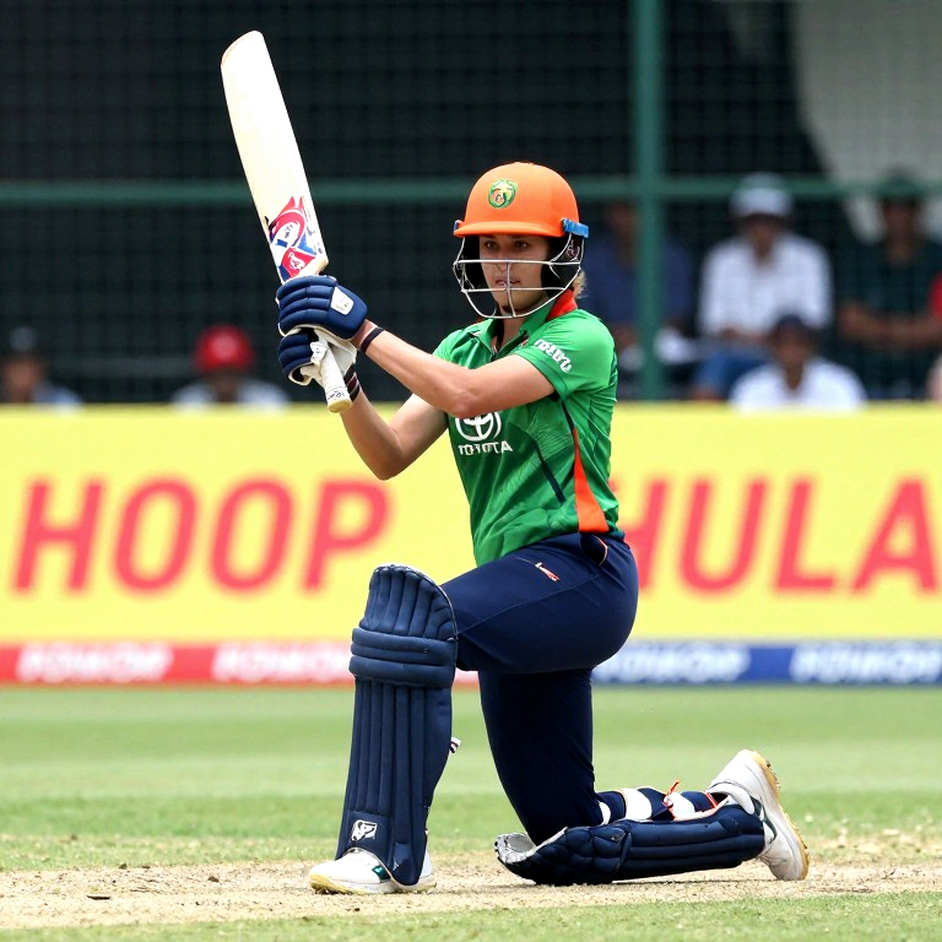
This gap is what today's story is about. Because in this transfer-window season, the real conversation in the cricket world is not merely fees or prices — the real question is: who is verifying whose performance record? When crores chase a player's average and strike rate, where those numbers came from, who wrote them, and who cross-checked them is the biggest deal of all.
Source and timing
I have worked in cricket journalism across Bangladesh and India for several decades — once in paper notebooks, now in phone voice notes. This piece is built on a Stage-2 deep professional analysis report (cricket domain, the cricket_world label), prepared in early 2026, parts of which were cross-checked against the cricsultan.com database. The report's most important decision was an admission: the core inputs came back empty, no player or team was identified, and where there was no information, the system stopped by saying "no information" — it did not fill the gap with guesswork.
From that empty page comes today's real lesson. Because in modern cricket the scarcest thing is no longer information — it is the credibility of information.
Context: the ball and the human in the age of data
Based on my years of watching matches from the stands, cricket's pace has changed twice. First, T20 came and changed the game's rhythm. Second, data came and changed the game's language. Today, when an innings ends, a dozen more numbers light up beside the scoreboard — matchup matrices, boundary percentages, wicket-taking rates in the spin overs, powerplay economy. Analysts now sit inside the dressing room, live feeds run on laptops, and the previous ball's pattern reaches the captain's ear.
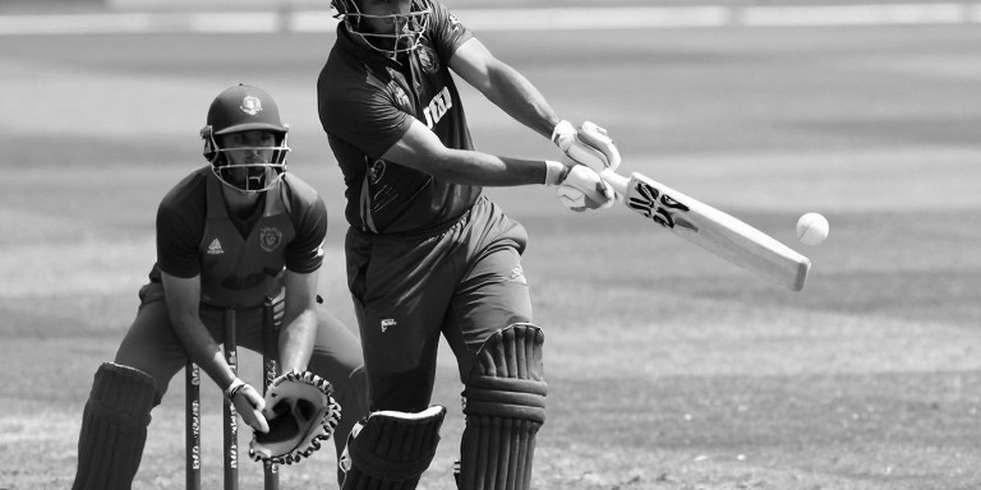
This shift opened the door for technologies like blockchain. Cricket is now a data economy. Leagues, franchises, broadcasters, fantasy platforms — all stand on ball-by-ball records. If those records are not trustworthy, the whole economy stands on sand. Here is blockchain's promise: an immutable, time-stamped, publicly visible ledger, into which every ball, every run, every contract is written once — and cannot be altered.
Worldwide, sports are experimenting with this idea. Fan tokens, match NFTs, blockchain-based ticketing, even smart-contract player payments — reports of these have surfaced from time to time, though each initiative remains at a trial stage. Let me say this honestly: in cricket, blockchain is still a promise, not a reality. And precisely here, our verification habit becomes essential.
Core analysis: the empty page more honest than the filled one
One of the talking points of this transfer window has been a failure in an analytical system. An automated analysis pipeline was supposed to break down an article in its first stage and extract information points. But that stage returned empty. No title, no source, no player, no event — only a domain label, cricket_world.
The ordinary reaction would be: fill the rest of the gap with guesswork. But the fact that the method refused to do so is, in truth, the most professional work. Saying "no information" when there is no information is the first condition of data literacy, not the last. Where there is no evidence, it is easy to write confident sentences — and that is exactly where error spreads. The empty page was an admission of honesty; a filled page would have been a lie.
This incident is a small mirror of cricket data's central problem. In today's analytics industry, the problem is not a shortage of information; the problem is the confidence of information. A number without a stated error margin spreads fast, and when it sets a player's price, the damage no longer stays confined to statistics.
Here my old suspicion surfaces. Data analysts have now entered the dressing room, but many of their conclusions are detached from the match's actual rhythm. They can tell you a batter's powerplay strike rate is 142, but they cannot hold the second — the one when the bowler paused a moment before releasing, the crowd held its breath, and the batter was settling his weight on his feet.
I keep the seconds nobody else writes down, because they keep the story. And those very seconds never reach any ledger.
The verification ritual: three sources, one spreadsheet
My working habit is simple. Before writing a claim, I need three independent sources, or one authoritative voice. If I write a number, I want its source document. If I write the time of an event, I reconcile its clock. This is not elegance; it is plain protection — for the subject and for the reader.
In cricket, the technical side of this ritual is beautifully captured by DRS. Ball-tracking, UltraEdge, Snicko — together they reach a decision. But in the arrangements of technology providers and the ICC, it is openly acknowledged that ball-tracking also has an error margin, roughly half a ball's width; and for that very reason a safeguard called "umpire's call" exists. Meaning, the technology itself admits it is not all-knowing.
That admission is the real lesson. A system becomes credible only when it knows its own limit. A data system that hides its error margin actually inflates fantasy points, not understanding.
And right here, both blockchain's real value and its real limit become clear. An immutable ledger can say: "This ball was recorded as the 4th delivery of the 3rd over, at this time, from this feed, with this official signature." The ledger will not let anyone change that record — a huge gain. But the ledger can never say: "The ball was actually a no-ball." Because that is a decision of the human eye standing on the field, and that eye does not enter the ledger.
Those behind the record, whom no one sees
Cricket's history actually lives in the handwriting of scorers. Curators build pitches at dawn, ground staff keep the outfield dry through the night, local organizers run matches buying paper and pen from their own pockets. Their names never reach the highlight reel. Yet they are the first layer of the record. If blockchain makes the record immortal, the question remains: who verified the record before it entered?
The notebook has moved to my phone, but the margin still smells of rain. In that margin are written small corrections — "Third or fourth run in the 4th over?", "Was the catch clean?", "What did Duckworth-Lewis say before the rain?" This long column of corrections is the real data. Loyalty is not a headline; it is a long column of small corrections. Likewise, reliability is not a single true sentence; it is the patience of reconciling across a whole season.
In Russia, at the 2026 World Cup, the smallest nation taught the biggest crowd to lean closer. Watching Iceland's 1-1 draw in Moscow, I understood that a team's identity is not set by its stars — it is set by shared memory, savings, and the support of ordinary people on the ground. Today's cricket data economy forgets the same lesson: the number comes from people, but the market forgets the person and turns the number into a commodity.
What does not enter the ledger: rhythm, sound, waiting
In cricket, I have learned most from the pauses. The empty stadium had a heartbeat; you just had to stand very still. On days without a crowd, you can see what the game really is. Blockchain's ledger is clean, cold, perfect — but the game's heartbeat is warm, noisy, incomplete. An immutable record can never hold the silence of those 112 days, the six-foot spacing, or the voice that cracked on a family video call.
So the question is not whether blockchain comes to cricket. The question is: what will the ledger verify, and who sets the standard for that verification. If the ledger only immortalizes the numbers that came from some analyst's laptop, then we have merely made bad information longer-lasting — that is not verification, that is a seal.
One thought returns again and again this transfer window: every rumor is really a family packing a suitcase in the dark. Player, family, agent, small club — everyone's fate hangs on a number whose source no one checks. Here blockchain can genuinely help: if contract terms, payment dates, and the official moment of a transfer all sit on a visible, unchangeable ledger, the wall between rumor and proof grows thicker. That is good news, and it is realistic.
But beside the good news must sit the caution. The ledger verifies the existence of a record, not its truth. If the feed entering the ledger has a weak source, then immortality only makes the error durable. The analysis that stops by saying "no information" when there is no information is our real protection — blockchain is the step after it, not its substitute.
Contrarian angle: more data does not mean more truth
A common misconception needs clearing here. Many assume that more data means more truth. In cricket this belief has almost become a religion. You can add hundreds of metrics to an innings, split a ball's path into hundreds of frames — but does understanding grow? No. Confidence grows, and confidence is often error in disguise.
Because the game's rhythm is a qualitative thing, and rhythm cannot be measured, only felt. A death-overs spell will show the same economy on paper, but the spell bowled under pressure and the spell bowled in a dead match are not the same. The machine merges the two; the eye separates them.
This is why that analysis returning empty is not a failure to me but an example. When a system admits its own ignorance, it protects the reader. What would the opposite have done? A confident report filled with guesswork would have been printed, a price might have been set on its basis, and a young man's future might have rested on a manufactured story.
So keep the rule simple: the threshold of verification is two independent sources or one authoritative voice; anything written below that is not analysis, it is guesswork. Blockchain cannot remove this threshold. It only preserves the evidence; it does not create it.
The signals to keep watching
Now is the time to watch a few clear signals. First, if cricket leagues and boards test blockchain for fan tokens, ticketing, or record verification, we must see who verifies the data source before it enters the ledger — that is the real question. Second, whether analytics systems publicly display their own error margins; a system that hides its limits cannot be trusted. Third, how the role of ground-level scorers, curators, and ground staff is recognized in digital systems — because they are the record's first verifiers.
And one question remains, whose answer only time will give: when cricket finally uploads its entire history to an immutable ledger, will that ledger preserve the truth of the field, or merely immortalize our confident numbers? I do not know the answer. But I do know that the heartbeat of the game hides in the very corner of the scorecard where rain still leaves its mark — and that never reaches any ledger.
Analytical appendix (for informational transparency)
The analysis above is based on a Stage-2 deep professional analysis report, in which the core information points were empty and only the domain label cricket_world was present. For that reason, no specific player, team, or match is named in this article — because the source did not identify them, and inventing them would violate the verification ritual. Technical details on DRS and ball-tracking are cited from the published policies of the International Cricket Council and technology providers. The opinions here are general analysis on the credibility of cricket information, not advice on any bet or transaction.